
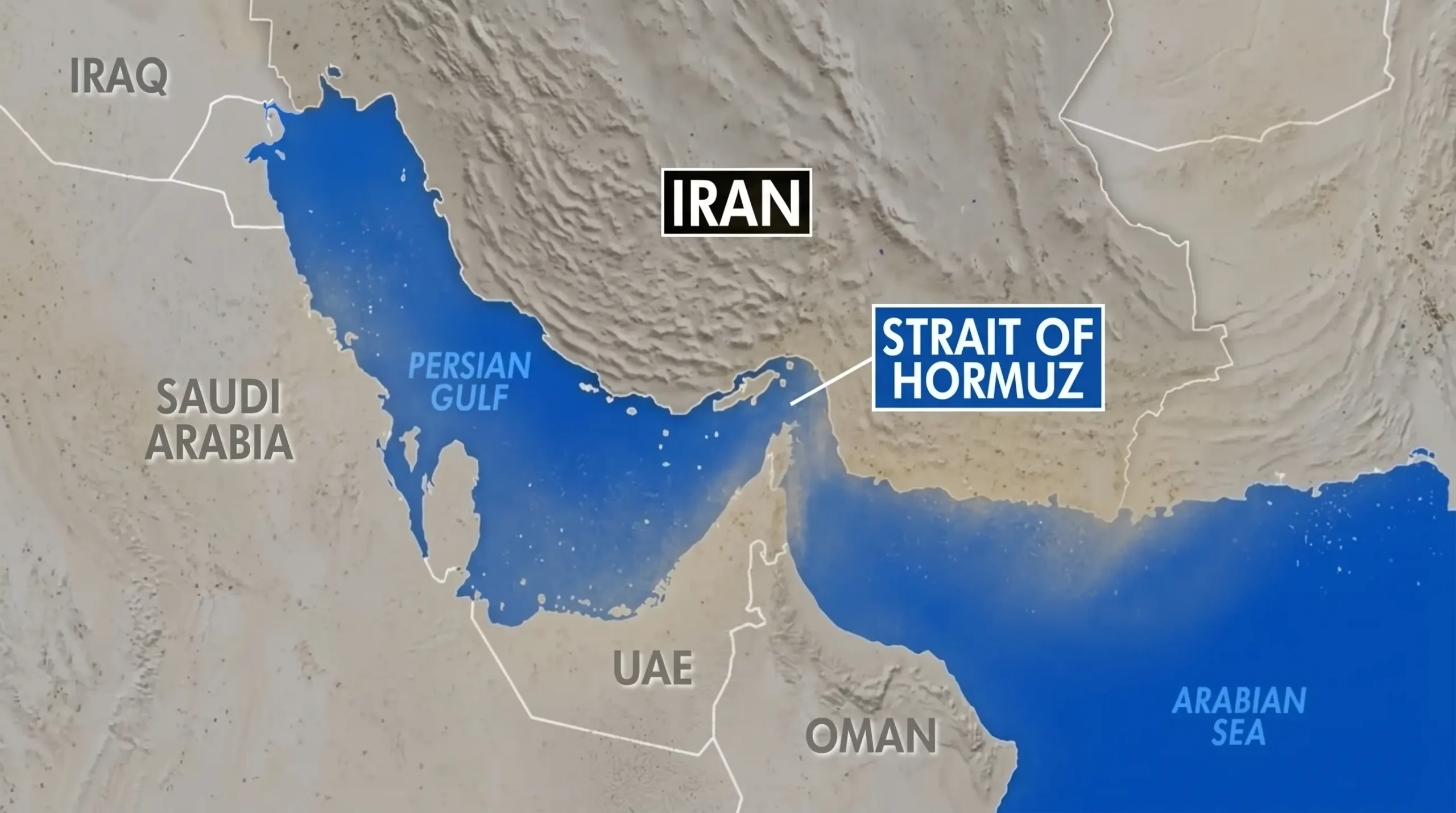
Iran has quietly offered to loosen its grip on the Strait of Hormuz in exchange for the U.S. ending its blockade and calling off the broader conflict — with the small detail of its nuclear program politely scheduled for some future episode.
The proposal, relayed through Pakistani mediators over the weekend, essentially suggests the two sides first stop squeezing each other’s economic windpipes before tackling the harder questions. President Donald Trump appears distinctly unimpressed, given that one of the war’s main stated goals was preventing Iran from ever going nuclear.
The narrow waterway, through which a fifth of global traded oil and gas normally flows, has become a floating parking lot since the conflict erupted on February 28. Iran’s ability to choke traffic has met the U.S. blockade aimed at starving Tehran of oil revenue. The result? Brent crude hovering near $108 a barrel — nearly 50 percent higher than pre-war levels — sending gasoline prices into orbit just as midterm elections loom.
Gulf allies who rely on the same route are feeling the pinch too, while ripple effects have lifted costs for fertilizer, food, and pretty much anything that moves by ship. Consumers worldwide are discovering that geopolitics makes an expensive grocery bill.
Details of the back-channel talks emerged Monday as Iran’s Foreign Minister Abbas Araghchi touched down in St. Petersburg for consultations with Russian President Vladimir Putin. Moscow has been a longtime supporter, though exactly what assistance it might offer in this stalemate remains foggy.
A fragile ceasefire, extended indefinitely by Trump last week, has paused most fighting that has already claimed thousands of lives. Yet the dual blockade persists, turning the strait into a high-stakes staring contest. Iranian officials insist nuclear discussions can wait until the immediate pressure eases; the White House has shown little appetite for postponing what it sees as the core issue.
For now, tankers remain stranded, prices stay elevated, and diplomats continue the delicate dance of who blinks first in a conflict that has already rewritten the region’s pain tolerance.


Leave a Reply