
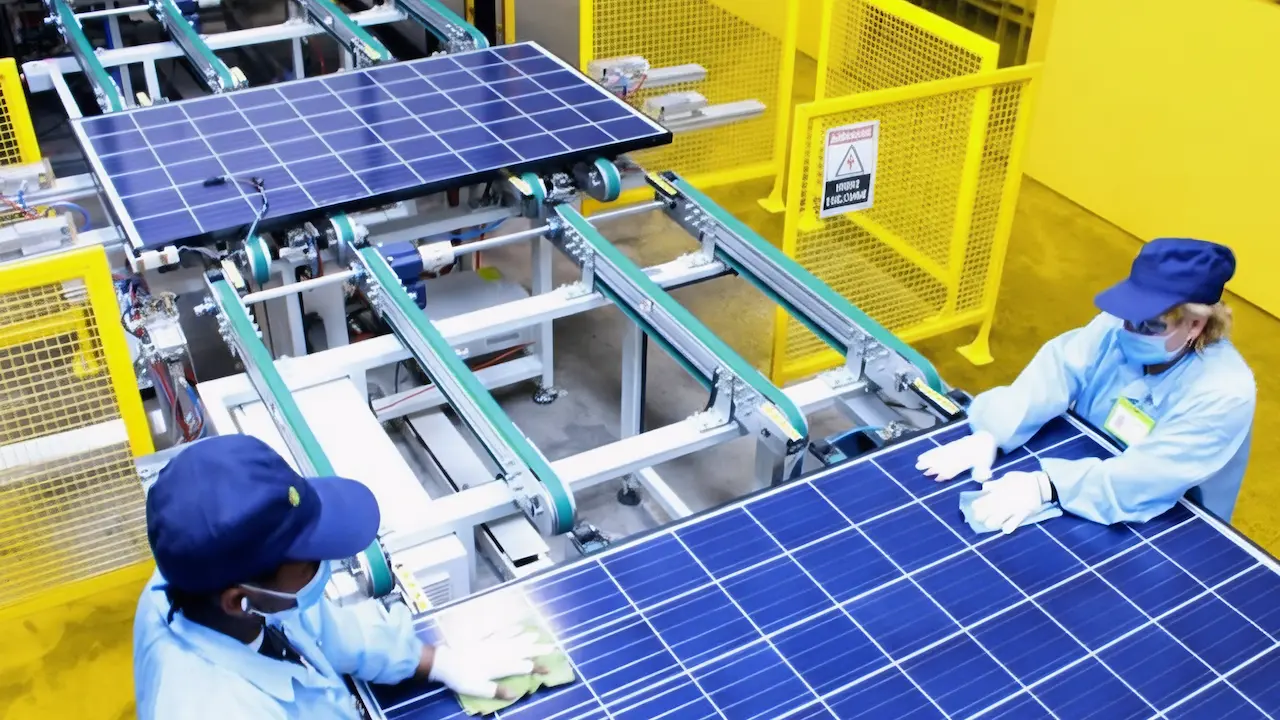
Chinese officials have quietly begun talks with solar equipment makers about possibly blocking the fanciest gear from heading to the United States, according to people familiar with the discussions. Just when Elon Musk was gearing up to supercharge American solar production, Beijing appears ready to dim the lights on those plans.
The potential clampdown lands at a delicate moment in the U.S.-China tech rivalry, where solar panels aren’t just about rooftops anymore—they’re powering dreams of orbital data centers hungry for AI electricity. China dominates over 80% of global solar components and supplies the world’s top equipment makers, so any serious restriction could ripple far beyond factory floors.
If the limits take shape, they would complicate expansion blueprints for companies like Tesla, which has been eyeing $2.9 billion worth of Chinese machinery to hit a bold 100-gigawatt manufacturing goal on U.S. soil by 2028. Musk has long claimed solar could cover the entire country’s power needs; now regulators in Beijing are reviewing high-efficiency tools, including HJT technology that squeezes more juice from sunlight by layering silicon like a very expensive sandwich.
The timing adds a layer of diplomatic spice. Talks surfaced just ahead of a planned summit between Xi Jinping and Donald Trump, where both sides hope to keep trade tensions from boiling over. Meanwhile, Chinese firms are wrestling with overcapacity after years of rapid growth, making the idea of handing advanced tools to a rival even less appealing.
Analysts note that Musk’s push to snap up equipment and talent during China’s solar slowdown has raised eyebrows in Beijing. One industry executive publicly urged local companies to guard their technological edge more fiercely. Regulators have already paid visits to key suppliers like Suzhou Maxwell Technologies following reports of Tesla’s shopping spree, focusing discussions on curbing shipments of premium gear to American buyers.
No final rules have dropped, and the conversations remain early-stage. Yet the mere possibility highlights how intertwined global supply chains remain, even as nations scramble for energy independence. Other U.S. giants like Google and Amazon are pouring money into ground-based solar too, all while betting on future space-powered computing.







Leave a Reply