
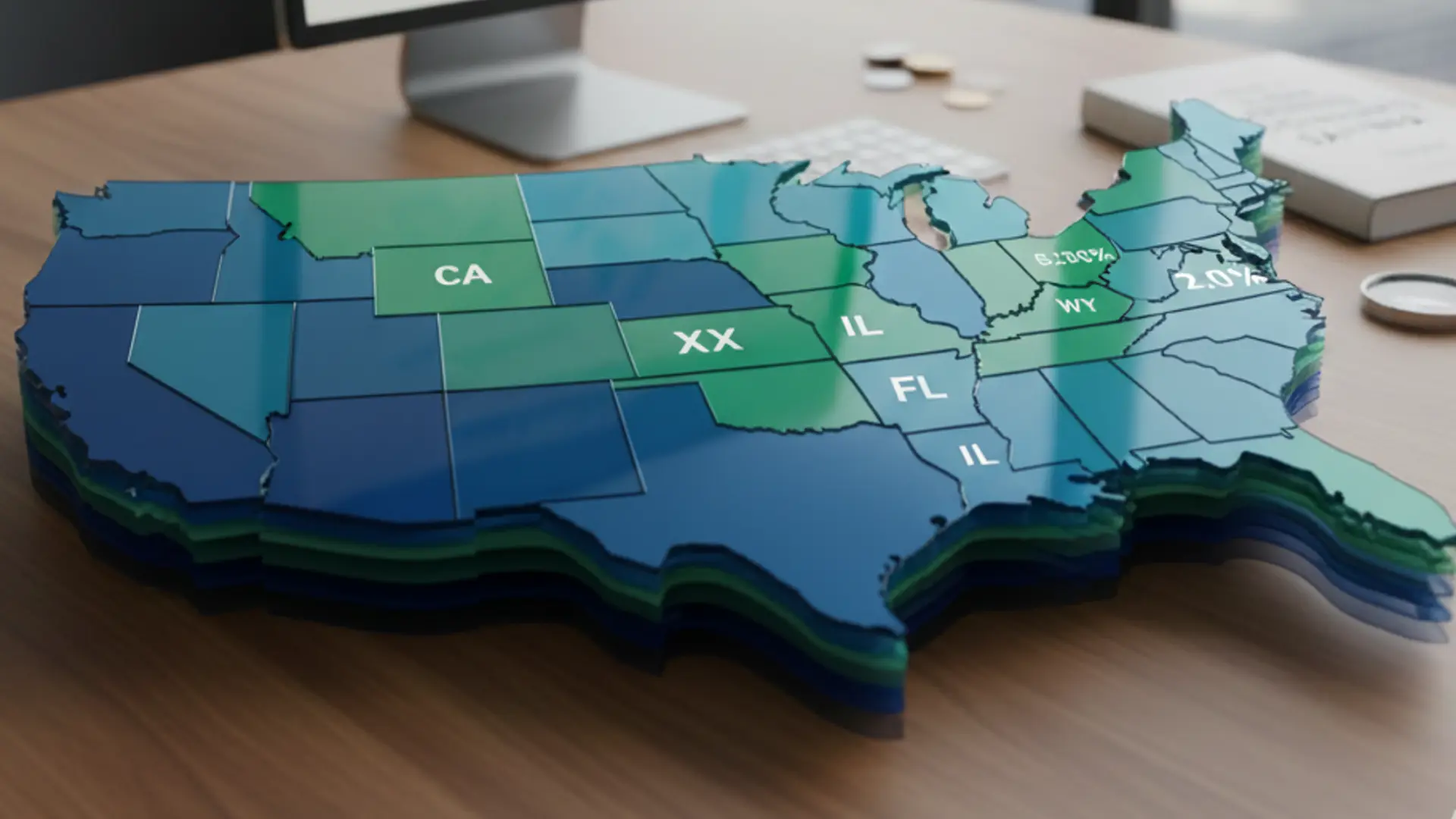
Moody’s Analytics chief Mark Zandi has declared 22 states either knee-deep in recession or flirting dangerously with one—like a bad blind date that won’t end.
Spanning from the rainy shores of Washington to the lobster-loving lanes of Maine, these economic laggards account for a third of the nation’s GDP, proving that misery really does love company, or at least a good chunk of the map.
Zandi’s crystal ball? A custom index mimicking the National Bureau of Economic Research’s recession radar, blending jobs data with industrial production models, personal income tallies, and housing starts that are more “stop” than “go.”
It’s like the NBER’s eight wise elders, but solo-style, with Zandi playing both referee and halftime analyst—because who needs a committee when you’ve got spreadsheets and a sense of impending doom?
The culprits read like a villainous trio from an economic thriller: slowing immigration that’s cramping growth like skinny jeans after Thanksgiving, tariffs jacking up costs faster than a barista upsizes your latte, and federal job cuts slicing through budgets with the precision of a politician’s promise.
Zandi crunched the numbers through August’s end, just in time for the government shutdown to turn fresh data into a game of economic hide-and-seek.
States landing in the “recession bucket” with negative index scores, while others paddle furiously in “treading water” territory or bask in expansion’s kiddie pool.
Zandi admits to a dash of judgment calls here—peeking at credit card delinquencies (rising like bad cholesterol), credit scores (dipping like enthusiasm at a tax seminar), port activity (sluggish as a sloth on vacation), and migration patterns that scream “anywhere but here.”
No full-blown national nosedive yet—the overall economy’s humming along, with August’s unemployment at a respectable 4.3%, low enough to make you think twice before panic-buying canned goods.
But zoom in on the recession roster, and irony winks back: Iowa’s farmers are trade-war casualties, yet their 3.8% unemployment beats the national average, as if saying, “Sure, crops are wilting, but hey, at least we’re employed while complaining.”
Kansas and South Dakota join the ag-angst club, their prairies pining for pre-tariff glory, while Georgia, Illinois, and Oregon’s manufacturing muscle flexes weakly under the weight of global gripes.
Then there’s Virginia and Maryland, federal job-cut casualties so severe that D.C.’s 6% unemployment crowns it the nation’s stress capital—because nothing says “recession chic” like lobbyists lining up at the unemployment office.
Texas and Florida are strutting with robust population booms, their economies swelling like a well-fed balloon animal at a state fair. Immigrants flock, jobs multiply, and GDP giggles—all while their northern neighbors nibble nervously on fiscal fingernails.
New York and California, treading water with the grace of a hippo in a kiddie pool, buoyed by stock market highs that pamper their wealthy zip codes like VIP lounge treatment.
California’s 5.5% jobless rate hasn’t budged since last year—stagnant as a screenwriter’s career in Hollywood—while New York’s 4% idles just shy of the average, whispering, “We’re fine, really, pass the artisanal kale.”
“If New York and California tip, the whole nation’s taking the plunge—like Jenga with the economy’s bottom blocks.” Agriculture and manufacturing states bear the brunt, their tariff tantrums and immigration ice-outs turning bounty into blah.






Leave a Reply