
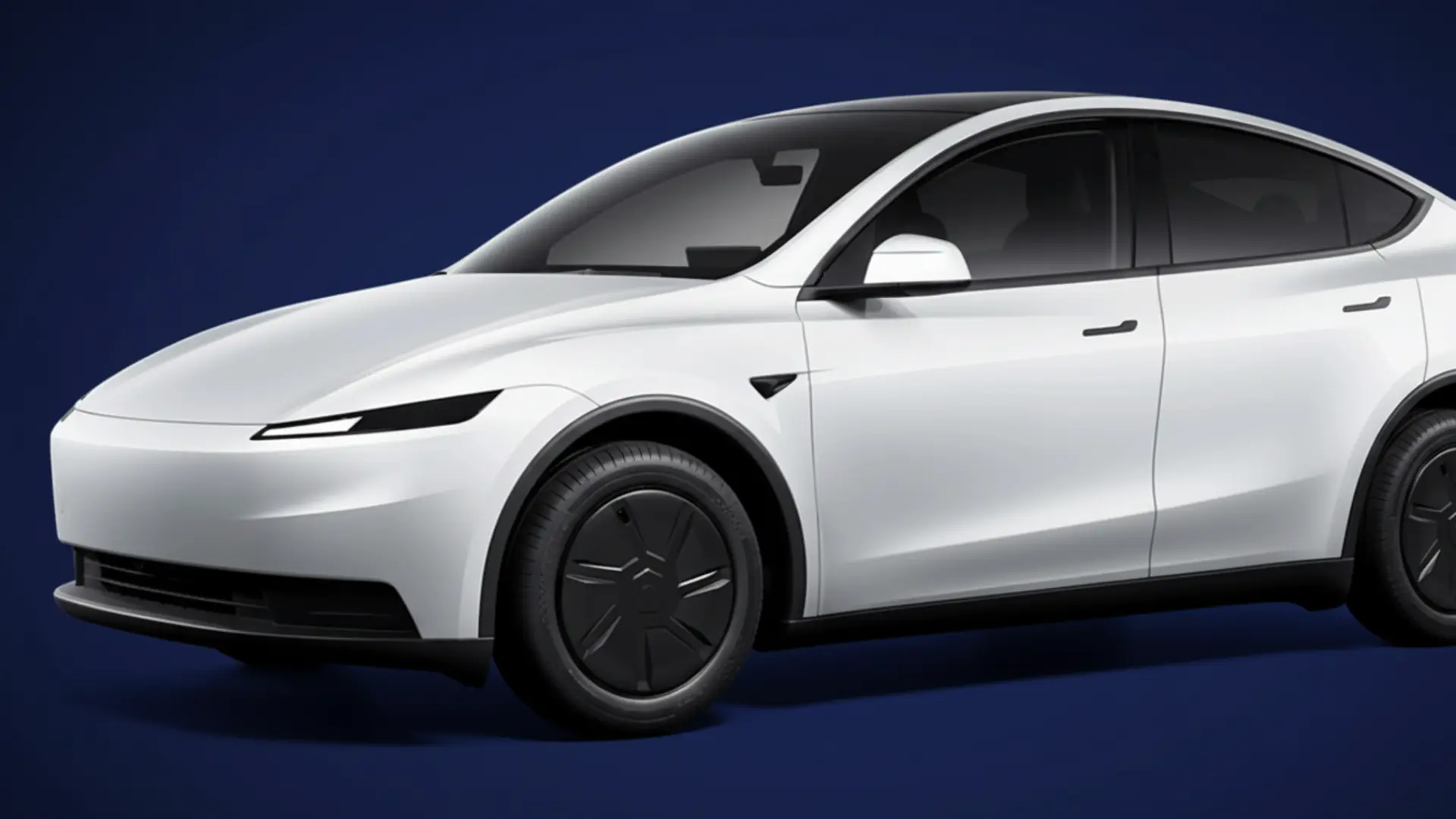
Tesla has finally unveiled its long-teased “more affordable” electric vehicles—stripped-down versions of the Model 3 and Model Y starting at $37,000 and $40,000—only for buyers to discover they’re actually pricier than the same cars were just a week ago, thanks to a federal tax credit vanishing act that CEO Elon Musk himself helped orchestrate.
The rollout feels like Tesla’s version of a magic trick: promise the moon, deliver a moon pie, and charge extra for the crumbs.
After years of hype around a mythical $25,000 “Model 2” that was abruptly canceled—first scooped by Reuters, then denied by Musk like a bad tweet—the company pivoted to these “standard” trims, which hit the configurator this week amid leaks and a missed production deadline from earlier this year.
The new base Model 3, once a sleek speed demon, now rolls out with all the glamour of a budget motel room. Gone are the front and rear light bars that made it glow like a cyberpunk fever dream; in their place, 18-inch wheels that whisper “practical” instead of “phaser.”
It’s like Tesla hired Marie Kondo to declutter with extreme prejudice. The modified console is simpler than a kindergarten desk, fewer speakers mean your road trip playlist sounds like it’s filtered through a potato, and no ambient lighting ensures your cabin stays as moody as a rainy commute—without the cozy glow.
Oh, and that rear screen for backseat passengers? Poof—vanished, because apparently, arguing over navigation is now a family bonding exercise. The smaller 69kWh battery dials back range and acceleration, turning your zippy EV into a leisurely cruiser that sips power like a polite guest at a cocktail party.
Color choices add their own dash of absurdity: monochrome only, with grey as the free “stealth mode” option, white for a $1,000 upcharge that screams “I care just enough,” and black for $1,500, because nothing says luxury like paying extra to hide the bird droppings.
Compared to yesterday’s “premium” trims—now rebranded at $42,500 for the Model 3 and $45,000 for the Model Y—these standards shave off a respectable $5,500 and $5,000, respectively. It’s a win for the wallet, if your wallet hasn’t been checking the news.
These “affordable” wonders are $2,000 to $2,500 more expensive than last week’s effective prices, post the $7,500 federal EV tax credit’s dramatic exit. That credit, born from President Biden’s Inflation Reduction Act, once knocked thousands off at purchase—turning a $34,990 Model 3 into an even sweeter deal.
Enter Elon Musk, the plot’s mischievous puppeteer, who reportedly funneled $288 million into political efforts that helped Republicans axe the incentive. It’s like burning your own house down to sell fire extinguishers—brilliant strategy, if you’re in the extinguisher business.
Tesla’s vague spring 2024 promises of “more affordable models”—hinting at fresh designs, not just gutted existing ones—fooled no one with a pulse, least of all us skeptics who called it a Model Y diet plan. Yet, the surprise inclusion of a Model 3 refresh adds a sliver of mercy, like finding an extra fry at the bottom of the bag.
For the tax-credit crowd—those everyday folks eyeing EVs as a sensible swap—the math stings like a plot hole in a sequel. The old base Model Y dipped to $37,490 after credits; now the “standard” starts at $39,990, a net loss that makes you wonder if Tesla’s affordability meter is calibrated in Dogecoin.
Historically, these are the lowest pre-credit stickers Tesla’s flaunted—the Model 3 under $39,000, the Y below $44,000—edging out past deals, if you squint past the fine print. But ignoring credits is like reviewing a steak by weighing the cow: technically accurate, hilariously incomplete.
As Tesla’s configurator buzzes with would-be buyers poking at virtual no-frills rides, one can’t help but chuckle at the irony. In a world craving green machines that don’t break the bank, Elon delivers vehicles that are cheaper in theory, pricier in practice, and funnier than a stand-up routine about quantum physics.






Leave a Reply