
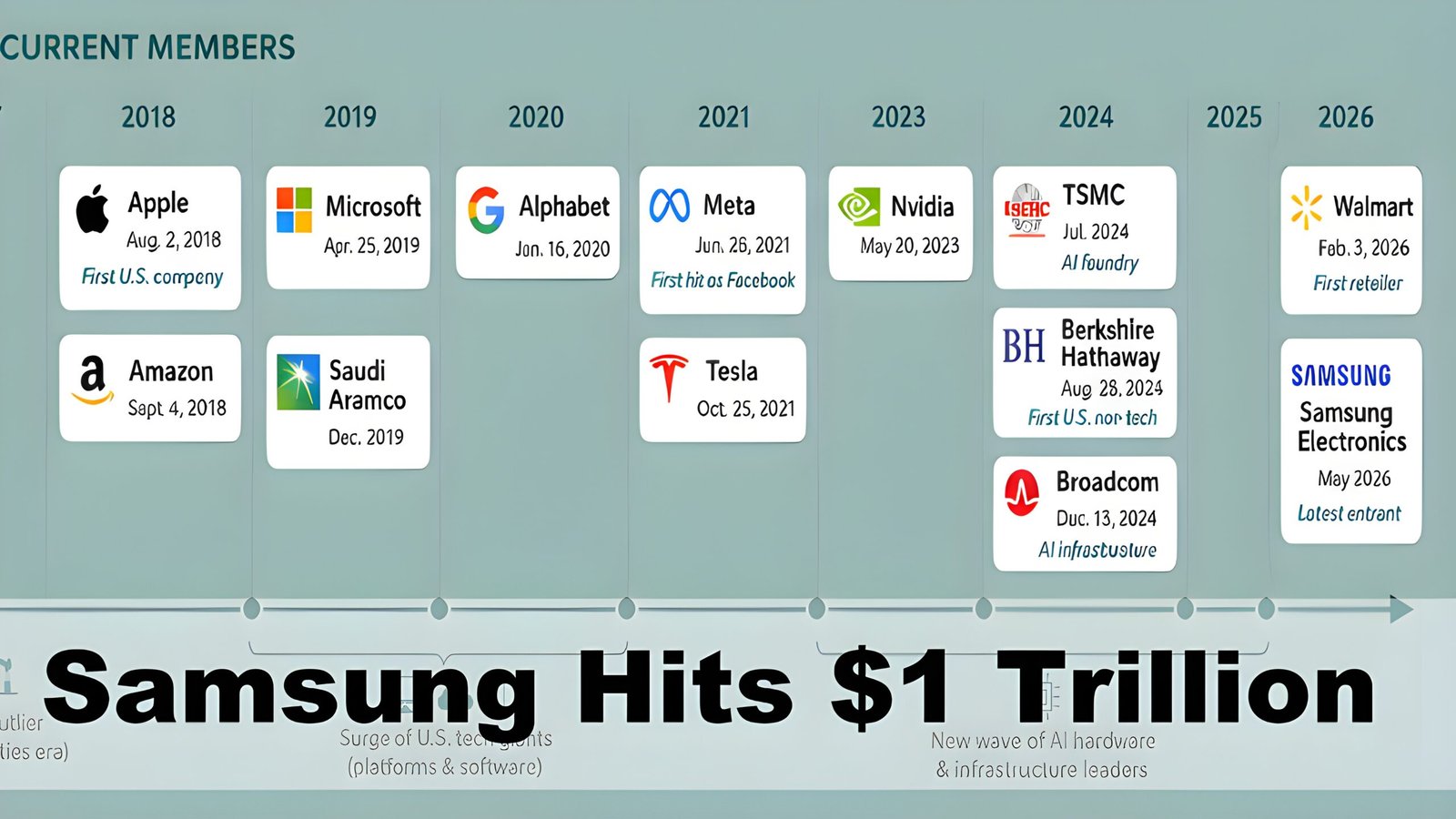
Samsung Electronics has officially muscled its way past the $1 trillion market capitalization mark, joining an exclusive club where the entry fee is apparently “make something AI desperately needs.”
While investors were busy chasing the next shiny software story, Samsung quietly reminded everyone that the AI revolution runs on very real, very physical hardware. The South Korean giant, long a titan in memory chips, has now stepped into the spotlight alongside Nvidia, TSMC, and Broadcom as the latest member of the AI infrastructure royalty.
But here’s where the story gets deliciously ironic. The original $1 trillion club felt like a celebration of our digital lifestyles — smartphones, endless scrolling, cloud storage for cat videos, and online shopping sprees. Apple led the charge in 2018, followed by the usual suspects: Amazon, Microsoft, Alphabet, Meta, and even Tesla riding the electric dream. That era was all about pixels and platforms.
Yet the tension is rising as the game shifts from screens to silicon. The new trillion-dollar wave feels heavier, more tangible. Nvidia blasted through the mark in 2023 when AI compute went supernova. TSMC followed as the world’s indispensable chip foundry, and Broadcom rode custom AI chips and networking demand. Now Samsung brings the memory — specifically high-bandwidth memory that AI systems guzzle like over-caffeinated programmers.
What makes this milestone even funnier is the quiet humility of it all. While flashy consumer apps grabbed headlines, the suppliers of scarce computing parts have been steadily climbing the ladder. AI isn’t just building better chatbots — it’s rewarding the bottlenecks: the chips, the memory, the factories that actually make the magic possible.
Of course, the club isn’t chip-exclusive. Berkshire Hathaway crashed the party as the first major non-tech member, Walmart became the retail kingpin, and the usual suspects from pharma and oil had their moments too. Still, the freshest cluster clearly belongs to AI infrastructure.





Leave a Reply