
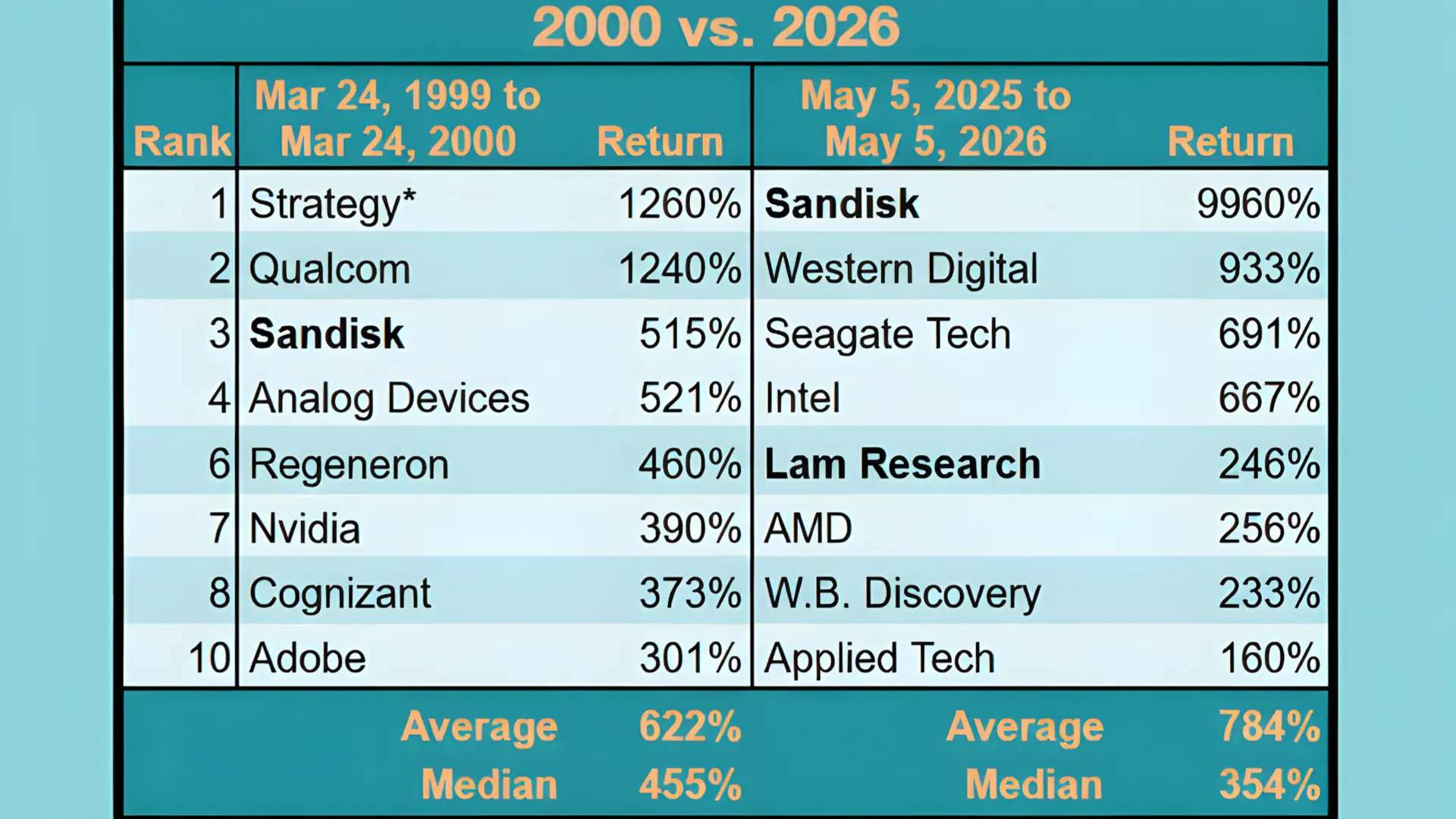
The Nasdaq 100’s top performers have delivered a staggering average gain of 784% over the past year, comfortably beating the 622% average racked up by the biggest winners in the wild year before the 2000 dot-com peak. History isn’t just rhyming — it’s practically karaoke night with the same chip stocks hogging the mic.
The market’s most explosive corner has officially entered full dot-com-scale territory, though today’s party comes with better graphics and slightly fewer sock puppets. Investors chasing the next big thing are once again pouring money into the picks-and-shovels crowd, only this time the shovels dig data centers and the picks are powered by graphics cards that cost more than a house.
Memory makers, storage giants, and semiconductor equipment companies dominate the current leaderboard. Sandisk (now part of Western Digital) and Lam Research appear on both eras’ winner lists, proving some stocks just know how to ride every hype cycle. Western Digital, Seagate, Micron, Intel, AMD, and Applied Materials round out the silicon-heavy roster.
Even MicroStrategy, the 1999 software darling, made the old list. Today it’s back in the conversation largely thanks to its bitcoin hoard — because nothing says “tech innovator” like turning your balance sheet into a volatile cryptocurrency parking lot.
The odd one out? Warner Bros. Discovery, whose surge owes more to Hollywood M&A drama than AI infrastructure. While everyone else builds the AI future, WBD is apparently profiting from the entertainment of watching Netflix and Paramount fight over it.
Today’s boom focuses on AI servers, memory chips, data centers, and the hard limits of electricity and real estate. The old one was all about the internet, networking, and the vague promise that everything would soon live online. Both eras show the same speculative sparkle: investors racing to own the scarce stuff everyone will need.
The numbers carry one sober note. While the average return is higher today, the median sits lower at 354% versus 455% back then — meaning today’s gains are a bit more top-heavy.
Still, for anyone who lived through 2000, watching Sandisk climb the charts again feels suspiciously like déjà vu with better PowerPoint slides. The cast may have updated its wardrobe, but the plot feels eerily familiar.







Leave a Reply