
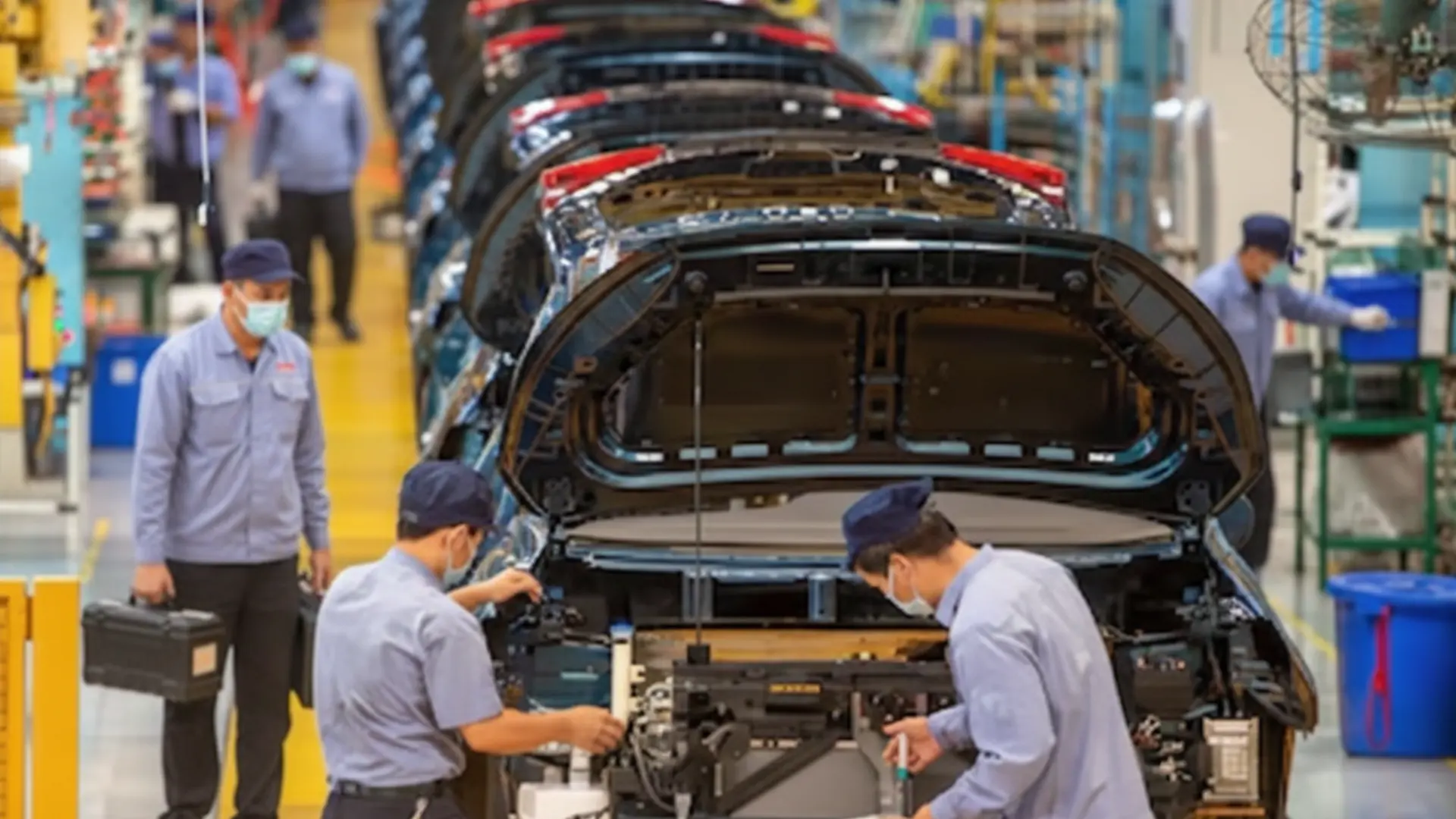
Western automakers are sounding the alarm like a choir of executives who’ve just spotted a very efficient, very subsidized elephant in the showroom: Chinese carmakers are revving up to potentially reshape the global auto landscape, and not in a way that includes free coffee for everyone.
The chorus of concern is loud and remarkably consistent. From Detroit’s Big Three to plucky EV upstarts, leaders warn that without sturdy protections for homegrown production, the U.S. auto industry could face serious jeopardy.
The Alliance for Automotive Innovation, representing heavy hitters including GM, Ford, and others, bluntly declared China a “clear and present threat” to American auto survival ahead of congressional hearings late last year. They pushed hard to keep restrictions on certain Chinese tech and software imports, which currently act as a polite but firm “no entry” sign for many Chinese vehicles.
Rivian CEO RJ Scaringe laid out the math with the calm precision of someone explaining why their grocery bill doubled. Chinese advantages boil down to two refreshingly straightforward factors: capital costs that hover near zero thanks to generous government support—think local officials footing the bill for factories like an overly enthusiastic parent—and labor expenses running a quarter to a fifth of American levels.
Tariffs currently help level the playing field, Scaringe noted, but he left the distinct impression that “for now” carries the weight of a ticking clock.
Ford CEO Jim Farley, never one to mince words on this topic, described the situation as an “existential threat” driven by subsidies, export ambitions, and sheer manufacturing muscle. He pointed out that Chinese brands are already making waves globally.
In Europe, they doubled their market share to around 6% in 2025 despite hefty tariffs on pure EVs, with some countries seeing even sharper climbs—Britain nearing 11%, Norway hitting close to 14% in a mostly electric market. Farley observed that while the U.S. remains mostly off-limits for now, the rest of the world is starting to look like a Chinese showroom on wheels.
GM’s Mary Barra expressed puzzlement mixed with worry over Canada’s recent decision to allow up to 49,000 Chinese-made EVs annually at a reduced tariff—about 6.1% instead of over 100%. She called it a “slippery slope,” a diplomatic way of saying one small door crack could invite a parade of very affordable competitors.
The impact ripples beyond boardrooms. If tariffs erode or barriers fall, American factories and jobs face pressure from rivals who build cars faster and cheaper, subsidized by a system that treats auto exports like a national priority project.
European leaders, including Stellantis and Porsche chiefs, have floated ideas like green incentives skewed toward locally made vehicles to safeguard jobs and meet climate goals without handing the market to outsiders on a silver platter. The fear isn’t just lost sales; it’s the slow erosion of an industry that employs millions and fuels economies.
Yet even amid the warnings, hints of pragmatism emerge. Rumors swirl of Ford exploring partnerships or deals with Chinese players like BYD or Xiaomi—though everyone involved quickly denies anything concrete. It’s the automotive equivalent of eyeing the competition’s playbook while insisting you’re only window-shopping.
The global auto race is accelerating, and Western makers are flooring it to stay ahead—or at least keep the headlights visible in the rearview mirror.





Leave a Reply