
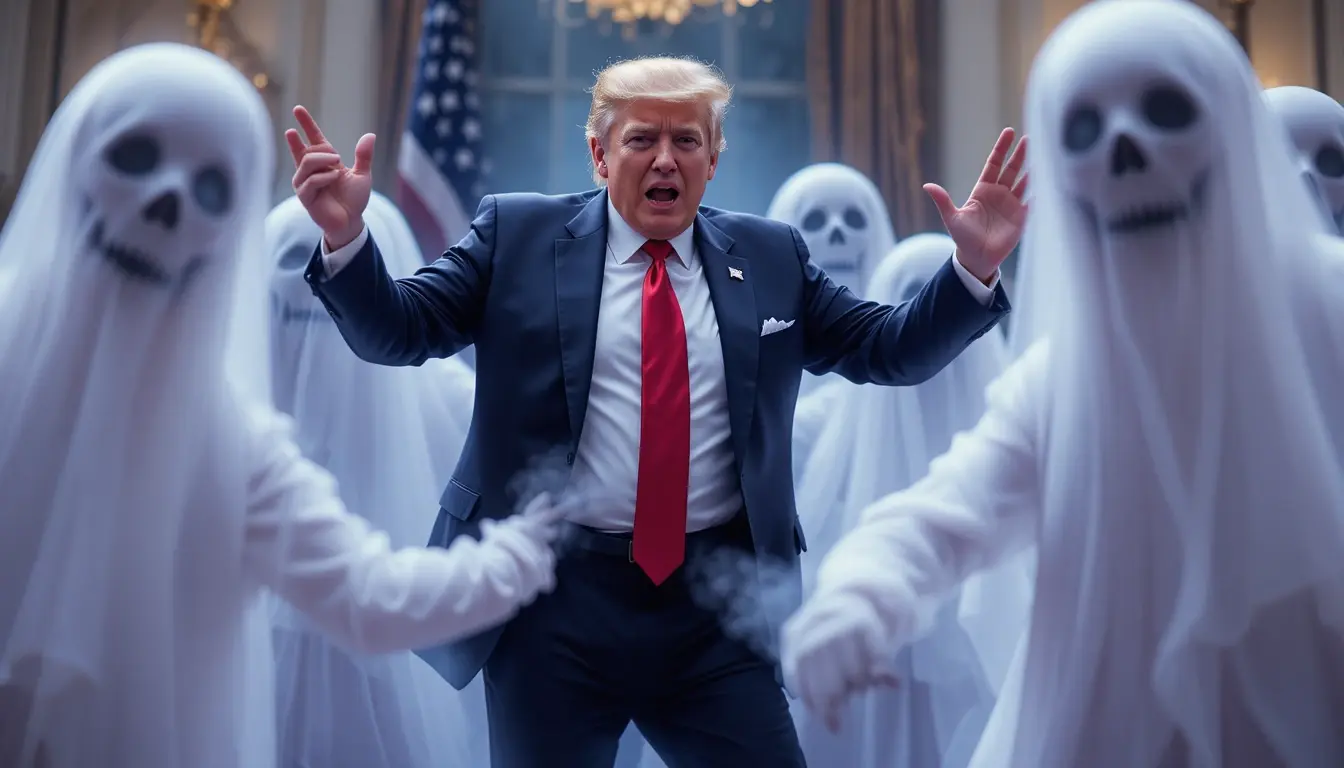
The U.S. government teeters on the edge of another shutdown, but while politicians bicker like kids over the last cookie, the economy is apparently practicing its best impression of a sloth on vacation.
The impending fiscal fiasco, sparked by yet another round of budget brinkmanship, promises the usual parade of closed national parks and delayed IRS refunds. Yet economists assure us this is less “apocalypse now” and more “yawn of the century,” with past shutdowns leaving about as much scar tissue as a paper cut.
History, that cheeky professor, reminds us of the 35-day epic in 2018-2019 – a marathon of misery that somehow didn’t derail the Dow or doom the dollar. Back then, furloughed feds twiddled thumbs, only to get back paychecks fatter than a politician’s expense report. The GDP dipped a smidge, like a balloon losing just enough air to sag but not pop.
This time, though? The vibes are off-key. The 2025 economy, already wobbling like a toddler on roller skates, faces a job market that’s less “booming” and more “bumbling.” Add in the Trump administration’s flair for federal downsizing, and a shutdown isn’t just drama – it’s a potential sequel nobody asked for.
Enter the plot thickener: mass layoffs. Forget temporary time-outs; officials are dangling the guillotine of permanent goodbyes for nonessential workers. It’s like turning a family spat into a full-on eviction notice, complete with moving trucks labeled “You’re Fired.”
David Kelly, chief global strategist at JPMorgan Asset Management, nailed the mood with the understatement of the year: “The timing is bad. It’s a little bit more dangerous this time.” Dangerous? Try “deliciously dicey” – because nothing spices up a recession tease like threatening to pink-slip an army of bureaucrats who probably file more paperwork than a forest of trees can supply.
Economists, those eternal optimists in sensible shoes, usually wave off furloughs as a hiccup healed by hindsight pay. But Stephanie Roth, chief economist at Wolfe Research, sees the layoff threats as classic Trump poker: all bluff, until it’s not. “It seems like posturing,” she said. “I don’t think they will do that. But President Trump has been willing to take big risks.”
Roth’s crystal ball flashes back to those 145% China tariffs – the economic equivalent of spiking the punch with ghost peppers. Nobody saw that coming, except maybe the importers who suddenly needed therapy and a tariff tariff.
Pre-shutdown, the administration was already on a workforce-whittling spree, handing out “redundancy rewards” like unwanted holiday fruitcakes. Roth warns that axing hundreds of thousands mid-meltdown “would be a really big economic problem” – code for “hello, unemployment line from here to the moon.”
Jared Bernstein, Biden-era economic whisperer turned shutdown spectator, didn’t mince words in a CNN chat: “This is just running over innocent bystanders.” It’s unfair, he fumed, piling onto a jobless rate already climbing faster than a politician’s promises. “It’s not their fault you can’t keep the lights on.” Ouch – that’s the sound of empathy echoing in an empty Capitol.
Normally, each shutdown week nicks GDP by a tidy 0.2 points, a dent shallower than a golf divot and reversible faster than a bad tweet. But permanent purges? That’s when the fun turns fiscal horror show, forcing investors to swap spreadsheets for séances.
And oh, the data drought! A shutdown could muzzle the Bureau of Labor Statistics, already battered by budget bites and response rates lower than a limbo contest. Friday’s September jobs report? Poof – delayed, leaving CEOs squinting at tea leaves and Fed chairs consulting their Magic 8-Ball.
Nathan Sheets, Citigroup’s global econ guru, sighed over the phone: “It’s already complicated enough to interpret the labor market data. If we have a period of time where the data isn’t available, those challenges would significantly increase.” Translation: Flying blind in a storm is fun for pilots, not portfolios.
Inflation intel could vanish too, just as tariffs tempt prices to tango upward. Investors, already jumpier than a cat in a room full of rocking chairs, might mistake market jitters for a new dance craze.
If the shutdown stretches past a dozen days, October’s jobs opus gets survey sabotage, turning November’s release into a game of economic telephone. Picture economists piecing together puzzles with half the pieces – or worse, arguing over whose guess is least wildly wrong.
In the end, this shutdown circus might fizzle like a damp firework, economy intact and egos bruised. But if Trump’s layoff lottery hits jackpot, we could all be learning to code… or herding cats in a post-federal world. Either way, pass the popcorn – Washington’s got drama, but the laugh track’s on us.






Leave a Reply