
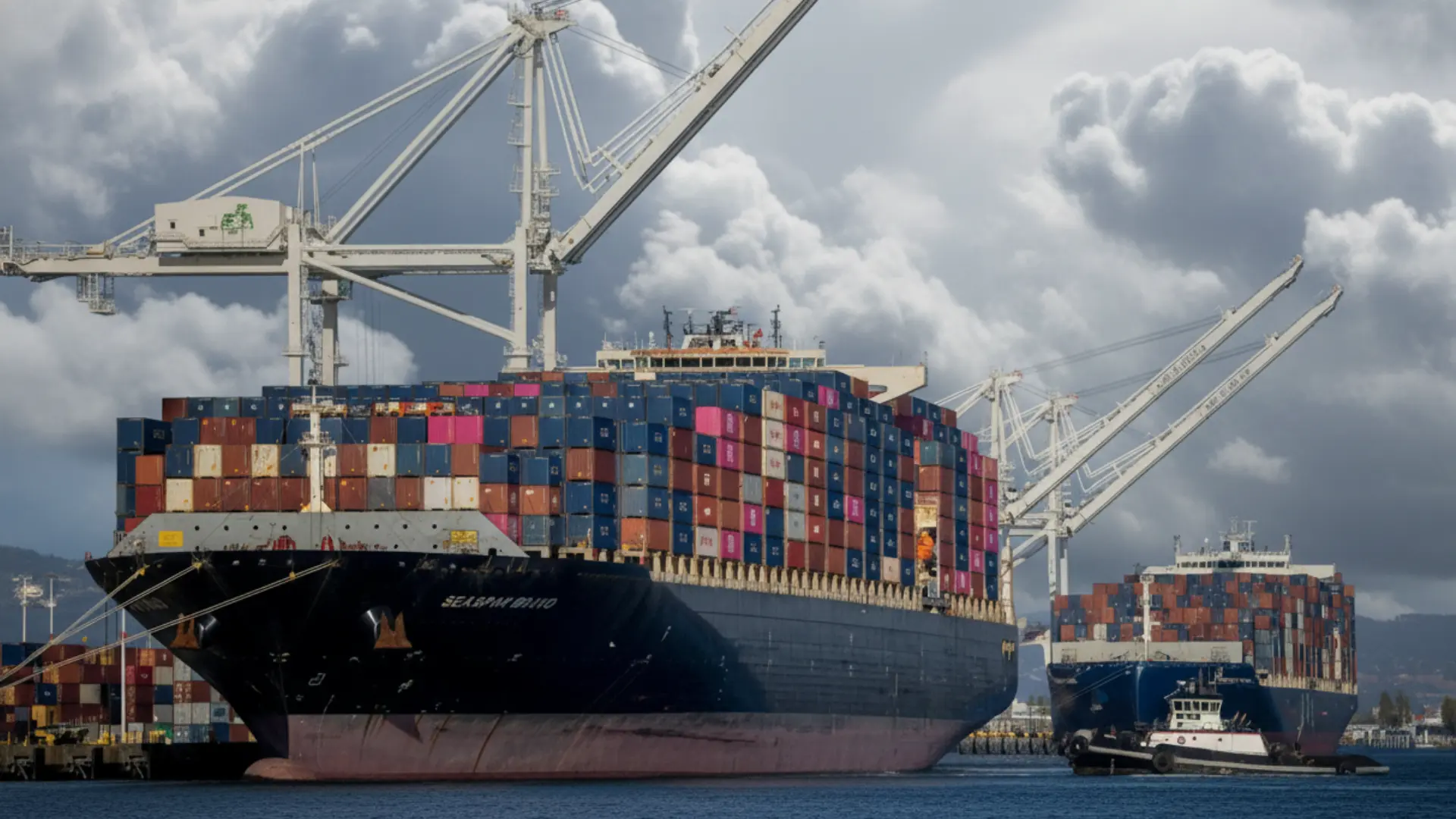
A coalition of feisty labor unions has fired a broadside at the Trump administration, accusing it of handing Chinese ships a golden boarding pass to American ports just when U.S. welders were dreaming of a shipyard renaissance.
The broadside arrived via a pointed letter to U.S. Trade Representative Jamieson Greer, where the United Steelworkers—flanked by the International Association of Machinists, International Brotherhood of Electrical Workers, and International Brotherhood of Boilermakers—voiced “strong disappointment” over the suspension of port fees on Chinese vessels. It’s the kind of letdown that makes a longshoreman long for the good old days of protectionist tariffs.
Picture the scene: Just last week, President Donald Trump emerged from his summit with China’s Xi Jinping beaming like a kid who’d traded Pokémon cards for a lifetime supply of soybeans. He hailed the deal as a masterstroke—more ag exports for farmers, eased rare-earth restrictions to keep U.S. tech humming—assuring the heartland that the dragon had been tamed.
While Midwest granaries cheer, the unions see red flags waving from rusty shipyards. The pause on fees, effective November 10, lets Chinese-built merchant ships and their hefty cranes dock without the sting of penalties from a long-running Section 301 probe. In exchange, China dials back its own retaliatory tariffs, per the White House fact sheet—a quid pro quo that sounds fair on paper but feels like swapping a battleship for a rubber duck in the eyes of dockside workers.
“This suspension introduces uncertainty right when we’re all trying to plot a course for revival,” the unions griped in their Friday missive, submitted just before the Trade Rep’s unusually brisk comment deadline. It’s as if the administration hit the snooze button on China’s “predatory behavior,” leaving U.S. shipbuilders adrift in a sea of imported hulls.
The probe itself? It kicked off under the Biden era at the unions’ behest, targeting China’s grip on maritime logistics like a detective eyeing a smuggling ring. Trump, ever the counterpuncher, has since inked pacts with Japan and South Korea to rustle up alternative suppliers—smart moves that had bipartisan brass in Congress nodding along like sailors spotting a favorable wind.
Yet this truce timeout feels like a squall on the horizon. Bipartisan bills to buoy domestic shipbuilding sailed through a Senate hearing last week, backed by the maritime industry’s salty veterans. Now, with midterms looming in battleground states where hard hats outnumber headlines, the unions’ salvo could ripple like a rogue wave.
One can’t help but chuckle at the optics: Trump, the dealmaker extraordinaire, pausing penalties to foster “confidence and long-term planning”—while unions sketch frantic blueprints for shipyards that might never launch. It’s a high-seas haggle where everyone’s hull gets a little dented.
The Trade Rep’s office, meanwhile, is playing it cool with a comment period shorter than a coffee break. Stakeholders are scrambling to weigh in, but the unions beat them to the buoy, their letter a lighthouse beam on the potential fallout.
As the pause stretches a full year—no tariffs on ship-to-shore cranes or chassis, no fees for Chinese-operated merchants—the question lingers: Will this buy peace with Beijing at the cost of American rivets? For now, steelworkers are left polishing their résumés, wondering if the next big wave will be one they build themselves.
In the grand theater of trade, where handshakes seal fates and soybeans float like lifelines, this chapter reminds us that not every truce ties up loose ends. Some just leave the knots dangling over the drink.




Leave a Reply