
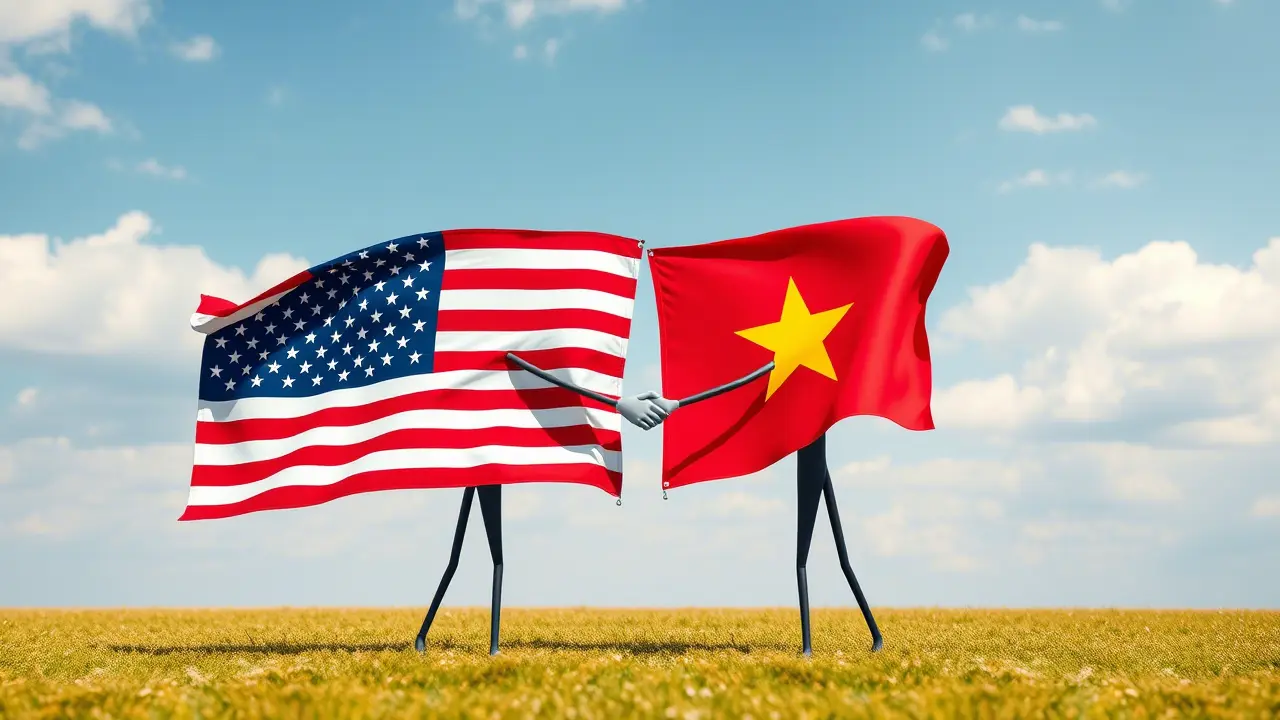
The U.S. and Vietnam have inked a trade deal that’s got the global economy giggling nervously. Announced by President Donald Trump just as his 90-day tariff timeout was about to expire, this agreement is less a handshake and more a playful nudge. The world’s largest economy and Southeast Asia’s manufacturing maverick are swapping duties with the enthusiasm of kids trading lunchbox snacks.
The deal slaps a 20% tariff on Vietnamese goods heading to the U.S., a hefty discount from the 46% sledgehammer Trump initially swung in April. In return, Vietnam rolls out the red carpet for American products, charging zero tariffs. It’s as if Vietnam said, “Come on in, Uncle Sam, the market’s open!”
But here’s the kicker: any goods playing hide-and-seek through Vietnam to dodge other countries’ tariffs—looking at you, China—get a 40% duty smackdown. This transshipping penalty is the trade equivalent of catching someone sneaking extra cookies. Washington’s been grumbling about Chinese goods using Vietnam as a sneaky pitstop to avoid higher U.S. tariffs.
While Vietnam dodged the full tariff tornado, other nations are sweating bullets as the July 9 deadline looms. The U.S. deal with Vietnam is one of the few inked during Trump’s tariff truce, leaving countries like Japan and the EU pacing like nervous contestants on a game show. Who’s next to strike a deal before the tariff hammer drops?
Bank of America’s Sebastian Raedler, chatting on CNBC’s “Europe Early Edition,” wasn’t exactly popping champagne. “This deal screams one thing: tariffs are climbing, not diving,” he said, probably while checking his stock portfolio. The 20% rate is no small potatoes for Vietnam, whose exports to the U.S. are a juicy chunk of its GDP.
Citi’s economists are also raising their eyebrows, warning that this deal could spell trouble for other emerging Asian markets. “If this is the template, Thailand and Malaysia might need to brace for impact,” they noted, sounding like weather forecasters predicting a tariff storm. The 40% transshipping tariff was a curveball nobody expected, potentially rattling supply chains from Seoul to Singapore.
Mark Williams from Capital Economics offered a sliver of optimism, suggesting other countries might snag better deals. “Vietnam’s trade dependency gave it a weak hand,” he told CNBC, implying nations with less U.S. reliance might haggle harder. It’s a bit like bartering at a flea market—know your worth, and don’t settle for a bad trade.
The transshipping rule is the deal’s spicy twist, aimed at stopping countries from using Vietnam as a tariff-dodging layover. Defining “transshipping” is trickier than assembling flat-pack furniture without instructions. Experts warn enforcement could be a logistical nightmare, but it’s clear the U.S. wants to plug this loophole tighter than a pickle jar.
Vietnamese stocks, meanwhile, are doing a happy dance, climbing to a three-year high after the deal was announced. Investors are betting on smoother trade flows, even if the 20% tariff stings. The Vietnamese dong’s depreciation might cushion the blow, acting like a financial shock absorber.
India might be next in line, but don’t hold your breath. Trinh Nguyen from Natixis CIB pointed out that India’s farmers won’t be thrilled about U.S. agricultural imports flooding their markets. It’s like asking a cat to share its favorite sunspot—good luck with that.
The deal’s framework feels more like a rough draft than a polished contract, with details as murky as a foggy morning. Trump’s team seems open to these quick-and-dirty agreements, leaving room for future tweaks. It’s trade diplomacy with a “we’ll figure it out later” vibe.
For Vietnam, this deal is a bittersweet victory. They’ve secured market access but at the cost of higher tariffs and a transshipping crackdown. It’s like winning a pie-eating contest but getting stuck with the cleanup.
Other Asian economies are watching closely, hoping to avoid Vietnam’s tariff pinch. The U.S.’s willingness to negotiate suggests more deals could pop up before the deadline. It’s a high-stakes game of trade poker, and everyone’s bluffing.
Global markets are now on edge, waiting to see who else can charm their way into Trump’s good graces. Thailand and Malaysia are next on the hot seat, with their export-heavy economies vulnerable to similar tariff traps. Korea, too, might feel the heat, as many of its firms have set up shop in Vietnam to tap its trade routes.
Social media chatter on X paints a colorful picture, with some users joking that Trump’s tariff strategy is a global game of whack-a-mole. Others speculate that Vietnam’s deal might inspire a domino effect, with countries racing to secure their own agreements.
For now, Vietnam’s playing the hand it was dealt, balancing tariff pain with market access. The 20% duty is steep, but it’s better than the alternative, and the zero-tariff perk for U.S. goods might boost Vietnam’s import game. Still, the transshipping rule looms large, threatening to complicate supply chains across the region.
As the tariff deadline approaches, the world’s holding its breath, wondering who’s next to dance with the U.S. trade juggernaut. Will India overcome its agricultural hurdles? Can Thailand and Malaysia dodge a similar tariff bullet? One thing’s certain: this trade saga’s got more twists than a soap opera, and the finale’s still unwritten.




Leave a Reply