
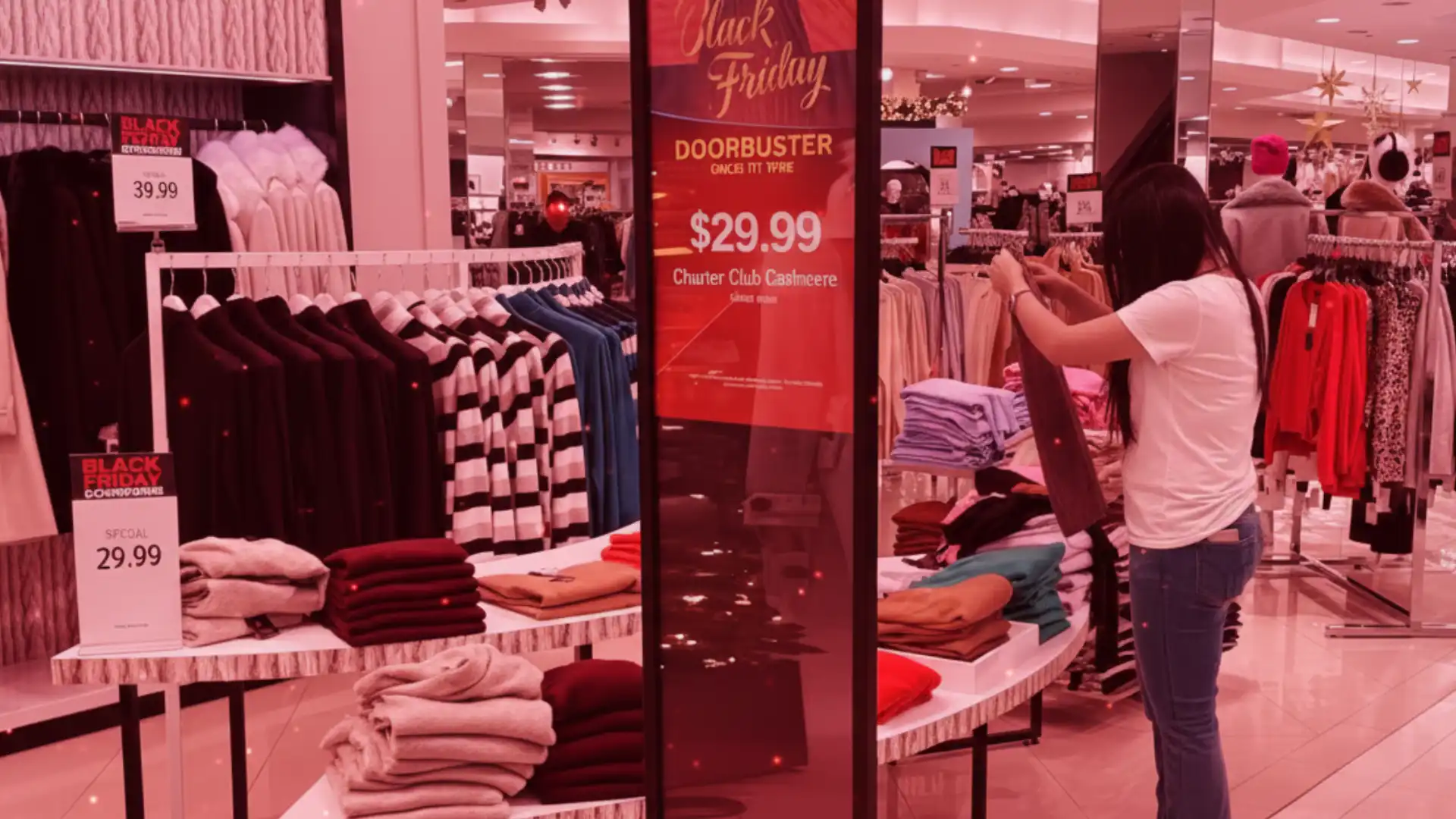
American shoppers spent a record $11.8 billion online this Black Friday while letting artificial intelligence do the heavy lifting—literally bypassing both crowded parking lots and the existential dread of small talk with retail employees.
The nation’s sofas collectively sighed in relief as millions avoided the traditional post-Thanksgiving ritual of being trampled for a discounted toaster. Meanwhile, retail workers reported their lowest Black Friday injury rate since records began, citing “an eerie calm” and the sudden ability to hear their own thoughts over the usual soundtrack of screaming toddlers and collapsing end-cap displays.
Economists noted that the average American saved approximately 47 minutes of life they can never get back, time previously spent circling Best Buy like a very sad vulture. Fitness trackers, however, logged the lowest step counts for November 28 in recorded history, prompting Apple Watch owners to receive concerned “You okay, buddy?” reminders.
Adobe Analytics, which somehow tracks a trillion website visits without creeping anyone out, confirmed the $11.8 billion haul represented a tidy 9.1% jump from last year. The secret weapon? Chatbots that finally answered the age-old question: “Is this slow cooker worth elbowing a grandmother?”
Traffic to retail sites powered by AI tools exploded 805% compared to 2024, back when Walmart’s Sparky and Amazon’s Rufus were still twinkles in some engineer’s prompt. Shoppers apparently decided that debating price-to-performance ratios with a language model beats debating elbow room with a guy in a Steelers jersey.
Mastercard SpendingPulse rubbed salt in the wound of physical stores by revealing e-commerce grew 10.4% while in-store sales limped upward by a pathetic 1.7%. Somewhere, a mall Santa whispered, “I just wanted to be loved.”
Hot items included LEGO sets (because adults still need permission to play with toys), Pokémon cards (proof that nostalgia is stronger than inflation), and every gaming console ever made. One shopper reportedly asked an AI whether the PS5 Pro was worth tariff prices; the bot paused dramatically before replying, “Only if you enjoy happiness.”
Salesforce dropped the global bombshell that AI agents influenced $14.2 billion in sales worldwide, with $3 billion of that coming from Americans who refused to leave their sweatpants. The same report noted U.S. consumers actually bought fewer items per checkout, suggesting the real winner was self-restraint—or maybe just slower Wi-Fi.
Discounts stayed exactly the same depth as last year. With tariffs and inflation tag-teaming every price tag, retailers apparently decided “30% off” now means “30% less soul-crushing than tomorrow’s price.”
Analysts gently pointed out that the bargains didn’t feel quite as bargain-y when everything already costs more than a car payment. One expert summed it up: “Congratulations, you saved $40 on headphones that jumped $80 since January.”
Still, consumers proved remarkably savvy, hunting deals like digital bloodhounds. When one chatbot suggested a KitchenAid mixer at full price, a shopper allegedly responded, “Bold of you to assume I can’t wait until Cyber Monday, Sparky.”
By midnight, the great migration from couch to mailbox was complete. Somewhere in Arkansas, a fulfillment worker looked at the mountain of boxes and muttered, “At least the robots didn’t unionize… yet.”






Leave a Reply