
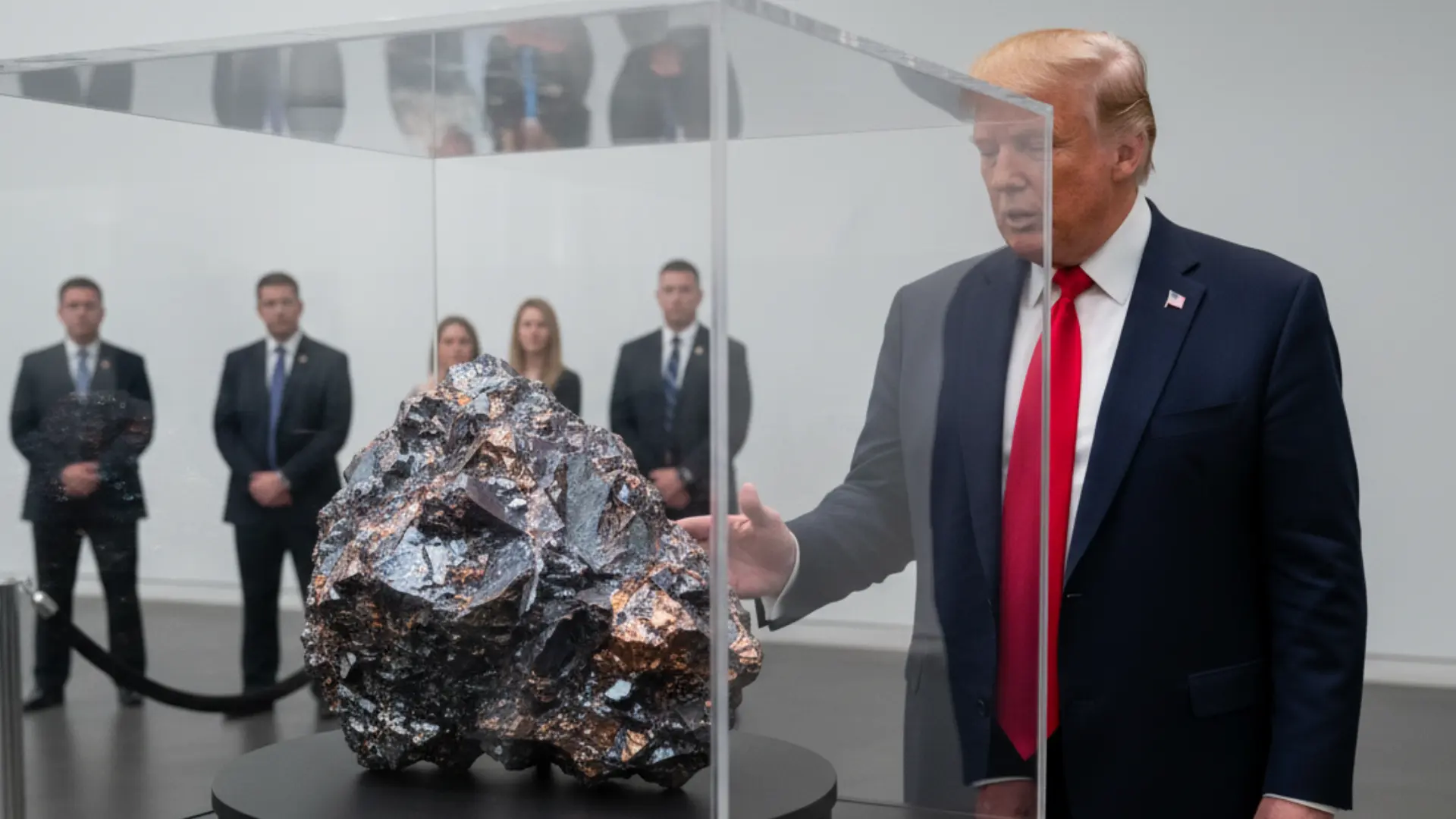
President Donald Trump has slapped a whopping 100% tariff on China’s rare earth empire—those elusive minerals powering everything from iPhones to electric cars—while hinting at unleashing America’s “Monopoly positions” that could turn Beijing’s tech dreams into digital dust. As the two superpowers circle each other like caffeinated squirrels over the last nut, a high-stakes summit with Xi Jinping looms, promising either a handshake or a handshake with hidden barbs.
The Trump administration, ever the poker-faced negotiator, swears it holds the royal flush in this reignited trade tango. China’s export controls on rare earths, which it dominates with a Monopoly-worthy 90% stranglehold on processed supplies and magnets, left experts gasping: could this ban any nation from the modern economy’s VIP lounge? Picture your Tesla sputtering to a halt or your smartphone sulking in grayscale—welcome to the rare earth apocalypse, now with extra irony.
Trump fired back faster than a tweetstorm, announcing tariffs and software shackles that could make Chinese gadgets glitch like a bad rom-com. But in a Truth Social soliloquy that read like a Bond villain’s monologue, he teased darker delights: “The U.S. has Monopoly positions also, much stronger and more far-reaching than China’s.” Ah, yes, because nothing says “economic dominance” like passing Go and collecting $200 from your rival’s wallet.
Wall Street, bless their pinstripe hearts, chuckled this off as classic Trump theater—leverage for the “TACO” trade, whatever acronymic salad that is (Tactically Annoying China Overnight?). Even Trump dialed back the drama, admitting his tariff blitz isn’t a forever feast, more like a spicy appetizer before the main course of talks. Yet, with a Trump-Xi powwow still penciled in for month’s end at a South Korean economic shindig, the air crackles with the scent of reluctant olive branches—or perhaps just overpriced conference sushi.
China’s gambit, it turns out, isn’t the full economic Armageddon some feared; Capital Economics called it narrower than a hipster’s lapel. Beijing’s frustration? Uncle Sam dragging feet on tariff rollbacks, turning the trade table into a toddler’s timeout. “A bit of a gamble,” quipped analysts Julian Evans-Pritchard and Leah Fahy, as if poking a hornet’s nest with a selfie stick—risky, but oh, the likes it might get.
Enter the U.S. counterpunch parade, a laundry list of retaliatory rabbit punches that could leave China punch-drunk. Imagine grounding China’s aviation fleet by choking off key parts or whole planes—suddenly, those Belt and Road jets are grounded dreams, taxiing in circles like lost luggage. Or forcing Microsoft to ghost 90% of China’s Windows-loving laptops and PCs: no updates, just eternal blue screens of vulnerability, turning office drones into accidental hackers.
Domestic knockoffs? Sure, but Huawei’s saga whispers a cautionary tale—swap out the West’s software, and your gadgets go from global glam to quirky garage sale finds. Worse yet, advanced manufacturing software, where Western firms own 70% of China’s chip design market, could glitch into oblivion. It’s like handing your chef a rubber spatula mid-microwave dinner: functional, but fatally flawed.
And don’t get us started on the financial filibuster. Trump could freeze Chinese assets in dollars or SWIFT-kick them from the global payment party, leaving Beijing’s banks bartering with IOUs and good intentions. Allies might pile on too—Mexico’s already floating 50% tariffs on Asian imports like unwanted fruitcake at a diet convention—isolating China further from the tech tango.
Hawkish whispers from Pacific perches urge full decoupling, turning uneasy truces into iron curtains 2.0. At best, we dust off the old no-fight pact; at worst, China stares down a future of Western-free widgets, pondering if self-reliance means building EVs from recycled fortune cookies. As the rare earth rumble rolls on, one thing’s clear: in this trade war, everyone’s bluffing with aces up their sleeve—except the minerals, which are just sitting there, smugly essential.


Leave a Reply