
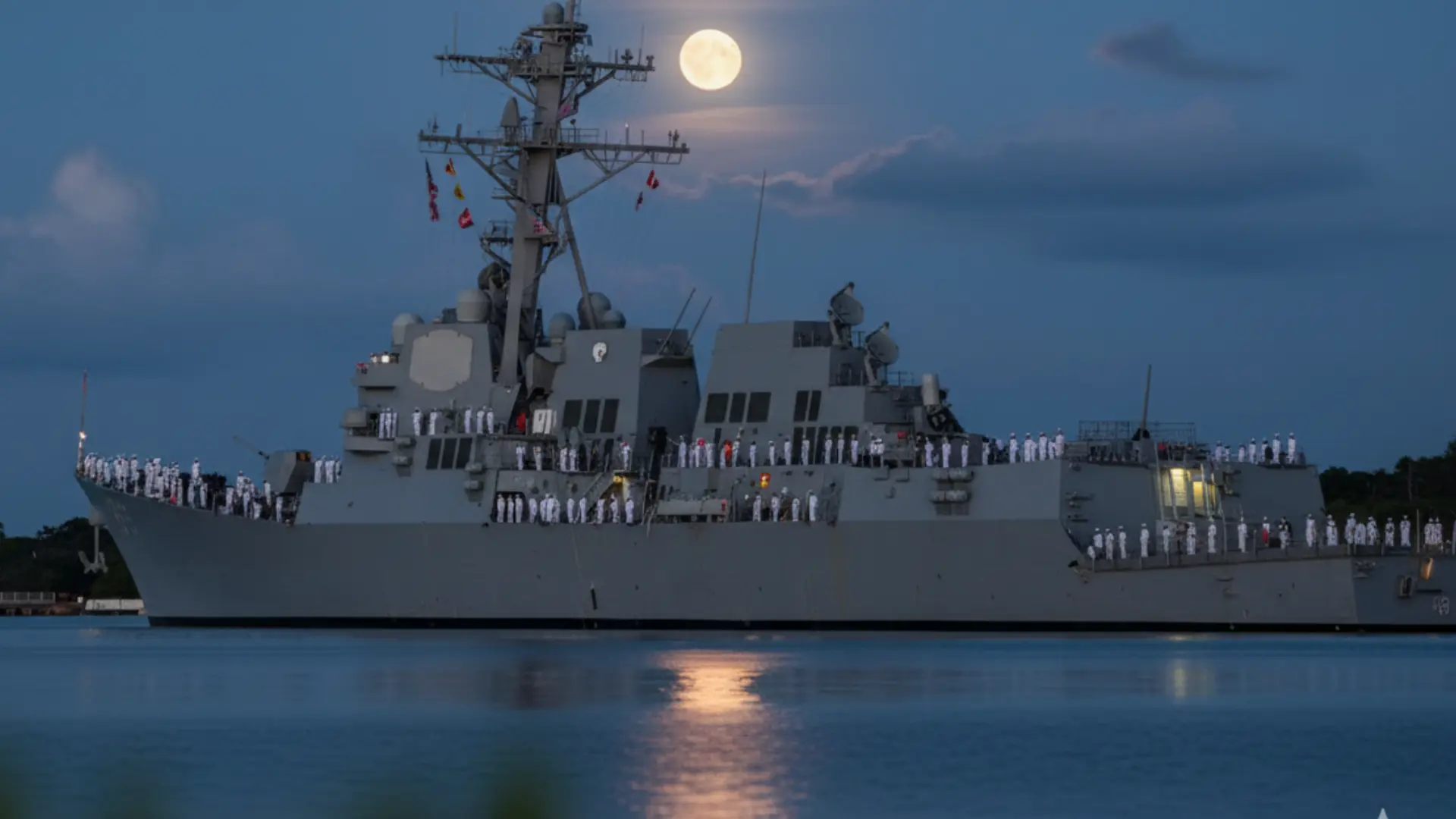
PALM BEACH, Fla. — President Donald Trump revealed plans for a new class of massive Navy warships named after himself, dubbing them part of a “Golden Fleet” initiative to bolster American sea power.
Flanked by dramatic renderings at his Mar-a-Lago resort, Trump described the vessels as the largest and most advanced battleships ever conceived.
The announcement signals a major push to revive U.S. shipbuilding, which currently accounts for a fraction of global output compared to China’s dominance.
Experts note the move channels administration enthusiasm into addressing real Navy needs, though past programs have faced delays and cost overruns.
Navy Secretary John Phelan praised the concept, calling the lead ship, USS Defiant, the “largest, deadliest, and most versatile—and best-looking—warship” on the oceans.
The ships will feature cutting-edge weapons like hypersonic missiles, rail guns, lasers, and nuclear-armed cruise missiles.
Trump emphasized aesthetics in the design process, saying the Navy would collaborate with him directly because he considers himself “a very aesthetic person.”
Renderings showed the sleek USS Defiant firing lasers, with one poster echoing Trump’s famous fist-raised pose. The U.S. hasn’t commissioned a true battleship since World War II, shifting instead to carriers and missile-equipped vessels.
These new warships aim to replace aging destroyers and provide commanding presence in modern fleets. Plans call for starting with two ships, scaling to 20 or 25 over time.
Trump promised quick construction, estimating about two and a half years per vessel. Shipyards will need significant expansion to meet demands, as current capacity lags far behind competitors.
China builds the vast majority of the world’s ships, highlighting the urgency of domestic revival efforts. A new Office of Shipbuilding and tax incentives are already in place to attract industry back home.
Phelan highlighted how the battleships could command groups of manned and unmanned vessels. Analysts see the plan as redirecting presidential energy toward filling fleet gaps in smaller combatants too.
The Golden Fleet also includes a new frigate class based on Coast Guard cutters. Trump dismissed suggestions the buildup targets China specifically, insisting it’s “a counter to everybody.”
He expressed optimism about relations with Beijing while stressing the need for unmatched strength. Past frigate programs in his first term saw ambitions scaled back due to ballooning costs.
This time, officials vow smarter approaches to avoid similar pitfalls. The USS Defiant’s name and imagery nod to resilience, drawing quiet parallels to recent history. Crew sizes will be smaller than historic battleships, relying on advanced automation.
Weapons mix shifts from big guns to missiles, adapting the battleship concept to today’s threats. Ports worldwide may soon host these imposing visitors, inspiring awe—or perhaps a few raised eyebrows.
Domestic jobs across states could benefit from widespread component production. Congress will scrutinize funding, given the scale and history of naval procurement challenges. Trump’s personal branding extends here, joining other named institutions and systems like the F-47 fighter.
The president called the ships “100 times more powerful” than any before, blending hyperbole with ambition. Renderings sailed past the Statue of Liberty in one display, symbolizing renewed American might.
Navy leaders credit Trump’s long-standing interest in battleships for sparking the requirement. As the fleet modernizes, old vessels described as “tired and obsolete” make way for these newcomers. The announcement capped a year of aggressive shipbuilding reforms.
Whether timelines hold remains a watchful question in defense circles. For now, the Golden Fleet gleams on the horizon, promising a splashy chapter in naval history.





Leave a Reply