
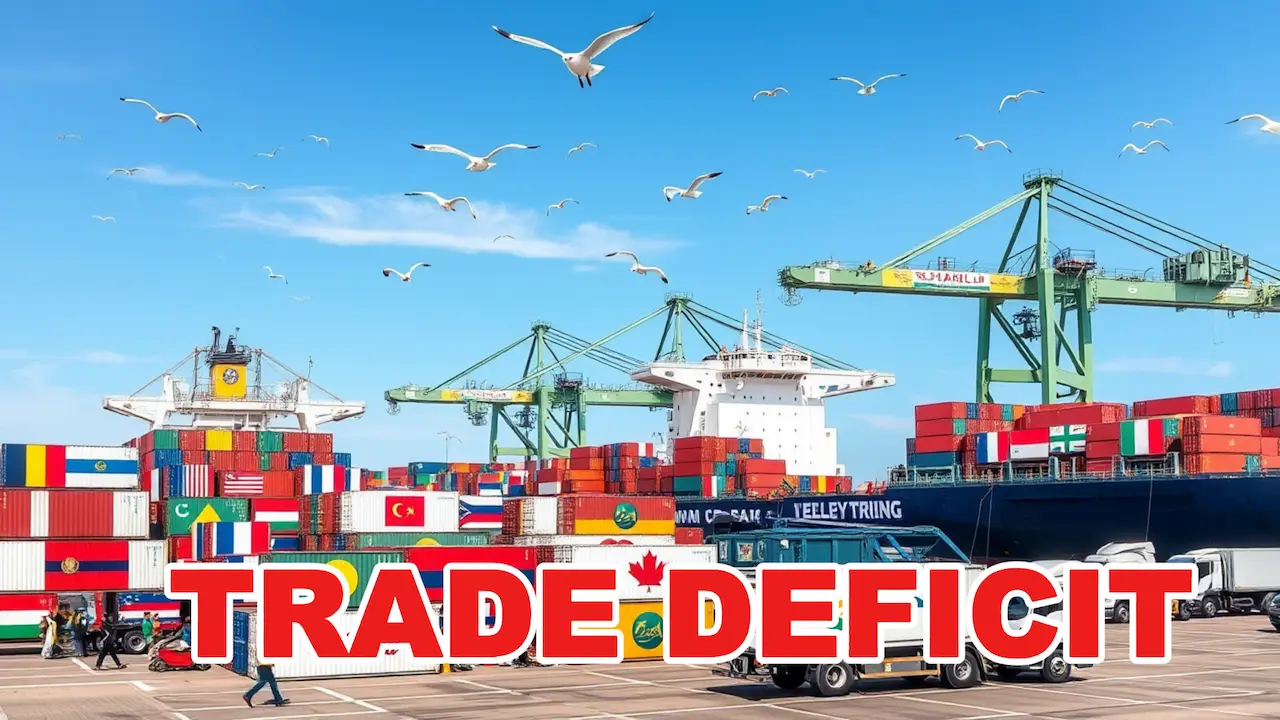
The U.S. trade deficit did a dramatic pirouette in April, shrinking to a svelte $61 billion from a hefty $140 billion in March, according to the U.S. Commerce Department. President Donald Trump’s tariff twirl, which he claims will trim the nation’s trade gap, sent imports tumbling by 16%. Economists, however, are scratching their heads, muttering that the deficit is just the U.S. economy’s way of flexing its consumer muscle.
Trump’s tariff strategy has been a wild dance, with moves that dazzle and confuse. One day he’s slapping levies on imports, the next he’s pausing them, leaving businesses dizzy. The Commerce Department data shows imports took a nosedive as companies braced for higher costs, only to find some tariffs on hold.
April’s trade gap is a far cry from the $131 billion chasm when Trump waltzed into office in January. The drop suggests his tariff tango might be hitting some right notes. Still, economists warn that the deficit reflects Americans’ love for buying stuff, not necessarily a flaw in the system.
The tariff saga took a twist with court rulings last week that tossed Trump’s steepest levies into a legal limbo. Federal appeals judges are now deliberating if these policies can keep up with the beat. Businesses are left tapping their feet, unsure of the next step.
Consumer vibes are also off-key, with the University of Michigan reporting sour attitudes for four straight months. Shoppers, who fuel two-thirds of the economy, might tighten their wallets if import prices spike. Nobody wants to pay extra for their imported coffee or sneakers.
Despite the uncertainty, the economy’s not ready to leave the dance floor. Unemployment is at historic lows, and job growth, while slower, keeps chugging along. Inflation has cooled to its lowest since 2021, giving wallets a breather.
The Organization for Economic Co-operation and Development (OECD) predicts the U.S. economy will keep grooving in 2025 and 2026, just at a slower tempo. Wall Street’s recession fears have faded since Trump dialed back some tariffs. It’s a cautious optimism, but the music’s still playing.
Imports took a hit in April as businesses adjusted to the tariff rhythm. Some firms stockpiled goods in March, expecting a cost crunch that didn’t fully materialize. The Commerce Department noted this rush skewed earlier numbers, making April’s drop look sharper.
Trump’s tariff approach is a bit like a DJ switching tracks mid-song. He insists the levies will boost American manufacturing and shrink the deficit. Critics argue it’s more likely to raise prices and leave consumers grumpy.
The legal wrangling over tariffs adds another layer of chaos. A federal trade court briefly halted Trump’s broad levies, only for an appeals court to hit play again. The final ruling could rewrite the playlist for U.S. trade policy.
Economists are skeptical about Trump’s deficit obsession. They argue trade gaps aren’t inherently bad, just a sign of Americans’ spending sprees. Forcing them down might cramp the economy’s style without fixing the root issues.
Consumer confidence is wobbling, and that’s no small thing. If shoppers start pinching pennies, the economy could stumble. The University of Michigan’s survey shows tariffs are now a bigger worry than inflation for many.
Still, the economy’s got some swagger left. Job markets are tight, and paychecks are still flowing. The OECD’s forecast suggests growth will continue, just without the turbo boost of previous years.
Businesses are stuck in a holding pattern, waiting for clarity on tariffs. Some are rethinking supply chains, while others hoard goods to dodge future levies. It’s a logistical limbo that’s keeping CEOs up at night.
The tariff pause with China, announced via X posts, gave markets a brief cheer. Stocks surged when Trump delayed some levies, except for China’s, which spiked to 125%. It’s a high-stakes game of economic poker.
Wall Street’s betting the economy won’t crash, but it’s watching closely. J.P. Morgan and Goldman Sachs downgraded growth forecasts, citing tariff uncertainty. They predict a bumpy ride but not a total wipeout.
The OECD’s outlook, released Tuesday, sees U.S. growth at 1.6% in 2025 and 1.5% in 2026, down from 2.8% in 2024. It’s not a recession, but it’s not exactly a party either. Tariffs are the wild card keeping everyone guessing.
Trump’s team argues tariffs will bring back manufacturing jobs. Critics counter that higher prices could cancel out any gains. The jury’s still out on whether this dance will end in applause or a faceplant.
For now, the economy’s keeping up with the beat, but the tempo’s slowing. April’s trade deficit drop is a win for Trump’s playbook, but the bigger picture is murky. Businesses, consumers, and judges will decide if this tariff tango has legs.






Leave a Reply