
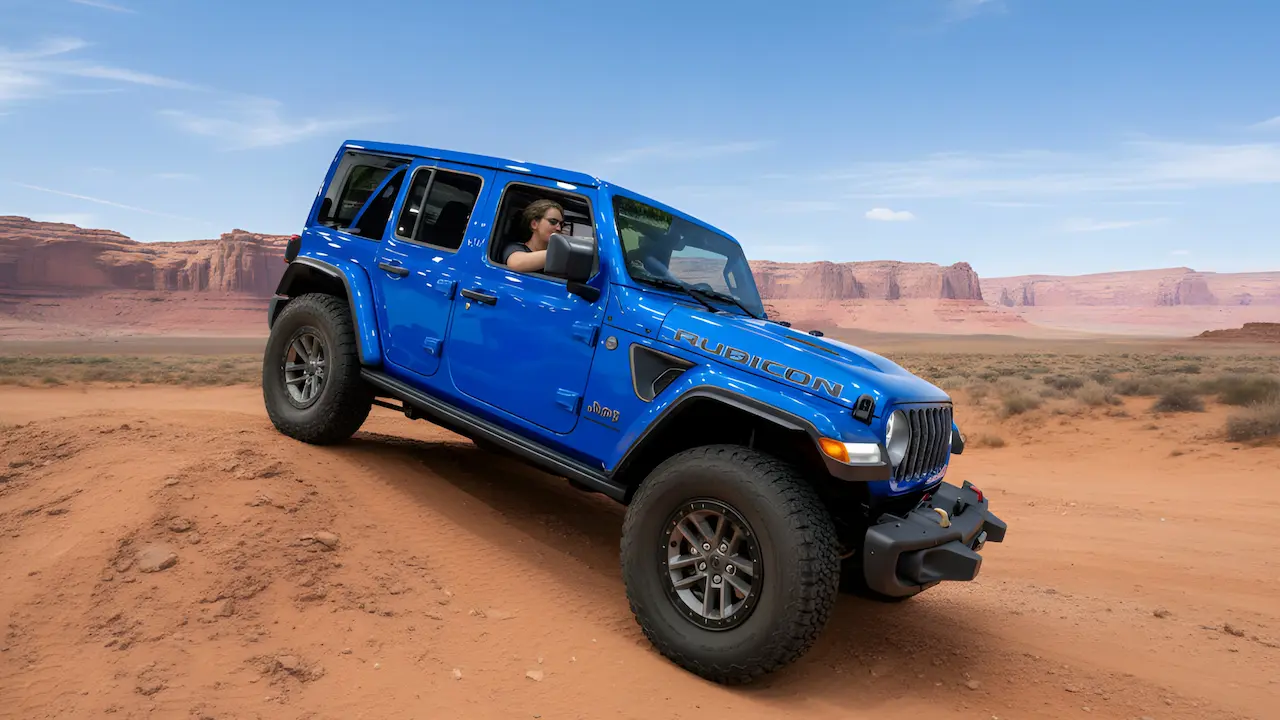
Jeep and Chrysler parent Stellantis announced Friday it’s taking a staggering $26 billion charge to reset its business after betting big on electric vehicles that buyers apparently decided to skip. Shares promptly nosedived more than 28%, proving that in the auto world, sometimes the fastest way to lose value is to chase the future too enthusiastically.
The financial hit sent shockwaves through investor portfolios faster than a V8 Ram can hit 60. This isn’t pocket change—it’s roughly the GDP of a small nation, or enough to buy every unsold EV on the lot and still have money left for complimentary charging stations that nobody uses.
Stellantis now faces a net loss for 2025 and has waved goodbye to its 2026 dividend, leaving shareholders pondering whether their next ride should be a bicycle.
The company, under new CEO Antonio Filosa, admitted it overestimated how quickly the world would ditch gas pedals for plugs. “The charges largely reflect the cost of over-estimating the pace of the energy transition,” Filosa said, in what might be the most polite way to say “we jumped the gun while everyone else was still tying their shoes.”
The bulk of the €22.2 billion ($26.2 billion) tab covers write-offs on canceled EV projects, impairments on platforms, and cash payments to unwind supply-chain commitments that now look about as useful as a snowplow in the Sahara.
Stellantis joins Ford and General Motors in the recent club of automakers paying dearly for similar pivots. Many rushed into EVs expecting strict Biden-era rules and states following California’s lead to ban gas cars soon. Then policy shifted under the Trump administration, emissions targets softened, federal incentives waned, and suddenly the charging infrastructure looked more like a suggestion than a network.
Customer demand, it turns out, refused to follow the script. Europeans, facing spotty chargers and high prices, kept reaching for hybrids and efficient gas engines. In the U.S., buyers still crave the roar and range of traditional powertrains for towing boats or crossing deserts without range anxiety turning into full panic.
Adding a layer of cosmic comedy, studies show EVs are dirtier to build—thanks to those massive, mining-intensive batteries—than gas or hybrid cars. Over a full lifetime, though, they emit far less carbon. So Stellantis is now championing “freedom of choice,” proudly offering hybrids and advanced internal combustion engines alongside EVs. It’s the automotive equivalent of a buffet: take what you want, no judgment.
The reset includes realigning product plans with what people actually buy and new U.S. regulations. Some EV dreams got quietly shelved, suppliers got compensated, and the company vows to focus on profitable growth rather than mandated timelines.
It’s a humbling chapter in the great electrification saga. Carmakers learned that while saving the planet sounds noble, you still need customers willing to pay for it today—not tomorrow.








Leave a Reply