
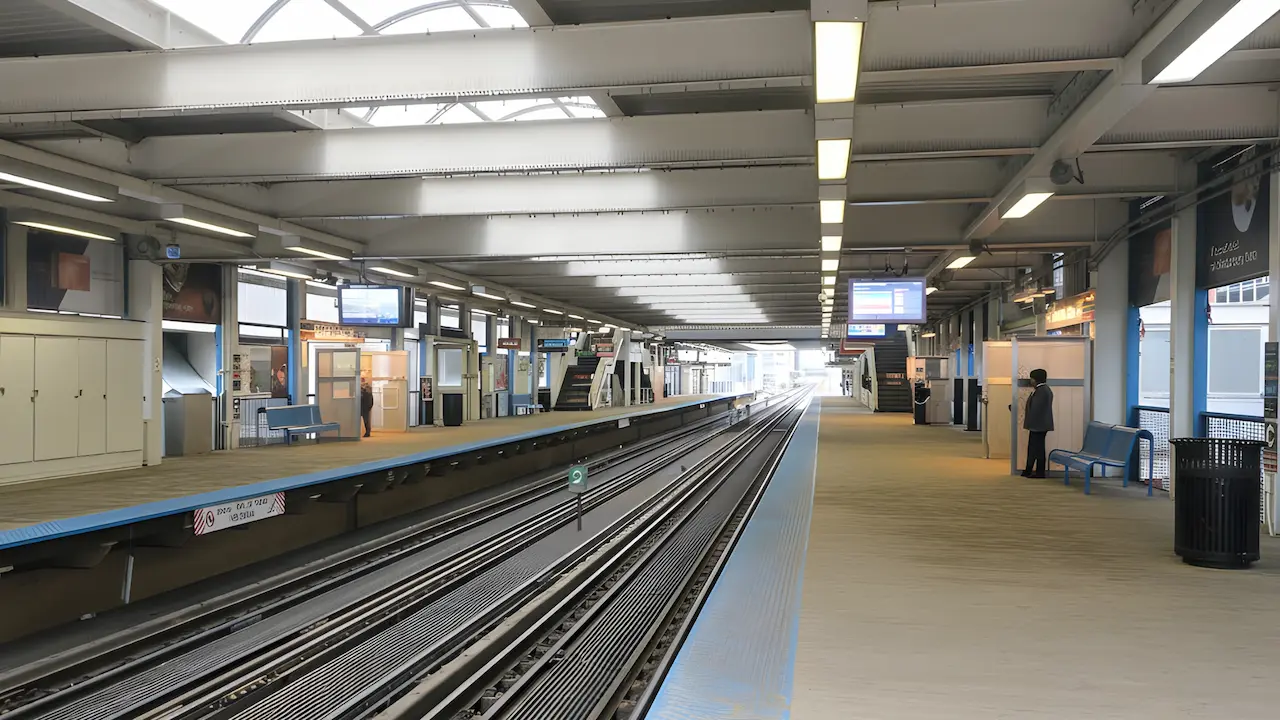
Chicago, IL – Starting Monday, January 5, one of Chicago’s most crowded and creaky elevated train stations will close its doors for what officials promise will be a transformative rebuild. The 130-year-old State/Lake stop in the heart of the Loop, serving five CTA lines, is slated for complete demolition and replacement, with the new version not reopening until 2029.
Commuters relying on this fifth-busiest station—where over 8,400 riders tapped in on an average weekday last fall—will soon find themselves adding a couple of blocks to their daily trek.
Trains on the Brown, Green, Orange, Pink, and Purple lines will simply glide past, leaving passengers to disembark at nearby Clark/Lake or Washington/Wabash, both fully accessible alternatives just two blocks away.
The disruption promises extra steps for thousands, not to mention potential headaches for drivers navigating intermittent street closures around State and Lake. Officials are pleading for patience, noting that crews will work around the clock to minimize the chaos, while pedestrians keep their sidewalks and the underground Lake Red Line stop remains open.
Yet the payoff, they insist, will justify the long wait. The current station’s notoriously narrow platforms—where rush-hour crowds perform an involuntary sardine imitation—will give way to much wider ones under a sweeping glass canopy.
Deputy Commissioner Anne Zhang of the Chicago Department of Transportation highlighted the core issue: accessibility. The old station offers no reliable way for wheelchair users to board, a shortfall that’s persisted far too long in a system aiming for inclusivity.
Safety and maintenance headaches abound as well. Dim lighting, obstructed views, and aging infrastructure have made the stop feel less like a gateway to a world-class city and more like a relic stubbornly clinging to the past.
Enter architects at Skidmore, Owings & Merrill, tasked with crafting a modern hub that nods to Chicago’s architectural giants without copying them. Partner Scott Duncan described the narrow platforms as places where passing fellow riders requires a polite shuffle and a silent prayer.
The new design doubles down on space, adds elevators at every corner, maximizes natural light through extensive glass, and even removes street-level columns for smoother traffic flow below.
Duncan called it “open-heart surgery” on the station, explaining why a quick polish won’t suffice—they’re replacing nearly everything while keeping trains running overhead.
Commuters might grumble at the timeline, especially those who remember when similar projects seemed swifter. But the promise of a brighter, roomier, and truly accessible station could turn today’s inconvenience into tomorrow’s quiet relief.
For now, though, Loop workers and theater-goers alike are stocking up on comfortable shoes. Those extra blocks add up, particularly on windy January mornings when the old canopy’s gaps let the chill sneak in anyway.
The project, pegged at $444 million, underscores Chicago’s commitment to modernizing its aging transit backbone. Riders accustomed to dodging puddles on uncovered platforms may soon enjoy full weather protection, a small luxury that feels downright futuristic.
In the meantime, directional signs are sprouting up to guide the displaced. Transfers between lines will reroute slightly, but the system keeps moving—much like Chicago itself, always under some form of construction.
By 2029, the station should emerge as a sleek complement to the Chicago Theatre marquee and surrounding landmarks. Until then, commuters can practice their patience, a skill every true Chicagoan masters eventually.










Leave a Reply