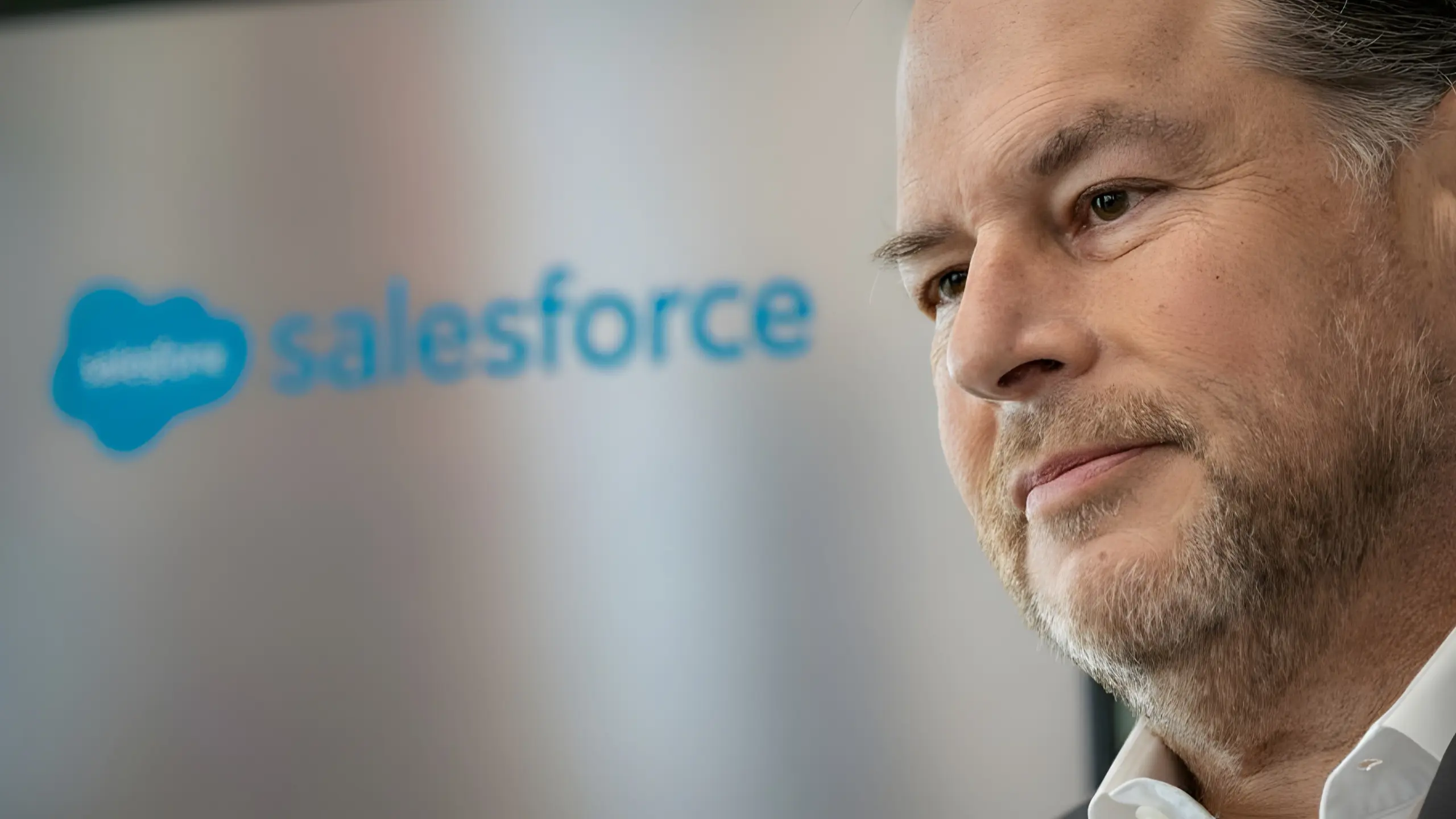
Salesforce reported a blockbuster fourth quarter for fiscal 2026, pulling in $11.2 billion in revenue—up 12% from last year—and beating Wall Street’s guesses. Full-year revenue hit $41.5 billion, up 10%, with a fat $72 billion in remaining performance obligations signaling customers are locked in for more.
Net income climbed, adjusted earnings crushed expectations at $3.81 per share, and the company dangled a shiny new $50 billion share buyback program plus a bumped-up dividend like a carrot on a very expensive stick.
Marc Benioff, who dropped the term “SaaSpocalypse” at least half a dozen times—the investor panic that AI agents will turn traditional SaaS seat licenses into museum relics. Benioff wasn’t sweating.
He quipped that if the apocalypse shows up, “it may be eaten by the SaaSquatch,” because companies are gobbling up SaaS now that it’s supercharged with agents. Forget doom; Salesforce is positioning itself as the operating system for the “agentic enterprise,” where humans and AI bots high-five over completed tasks.
To prove the point, the earnings call ditched the usual spreadsheet snooze-fest. Benioff interviewed CEOs from SharkNinja, Wyndham Hotels, and even SaaStr itself—basically getting three very important people to say, “Yeah, we love these AI agents; they’re doing actual work.”
Salesforce unveiled “Agentic Work Units” (AWUs), a fancy new metric that counts when an AI finishes a real job instead of just spitting out poetry no one asked for. They’ve already delivered 2.4 billion AWUs and processed 19 trillion tokens—numbers so big they sound like they belong in a sci-fi budget.
The Informatica acquisition chipped in nicely, adding hundreds of millions while beefing up data muscle for those hungry agents. Guidance points to continued growth, with Benioff eyeing $63 billion in revenue by FY30. Investors, apparently still digesting the monster metaphor, sent shares sliding anyway—because nothing says “solid quarter” like a little post-earnings grumpiness.








Leave a Reply