
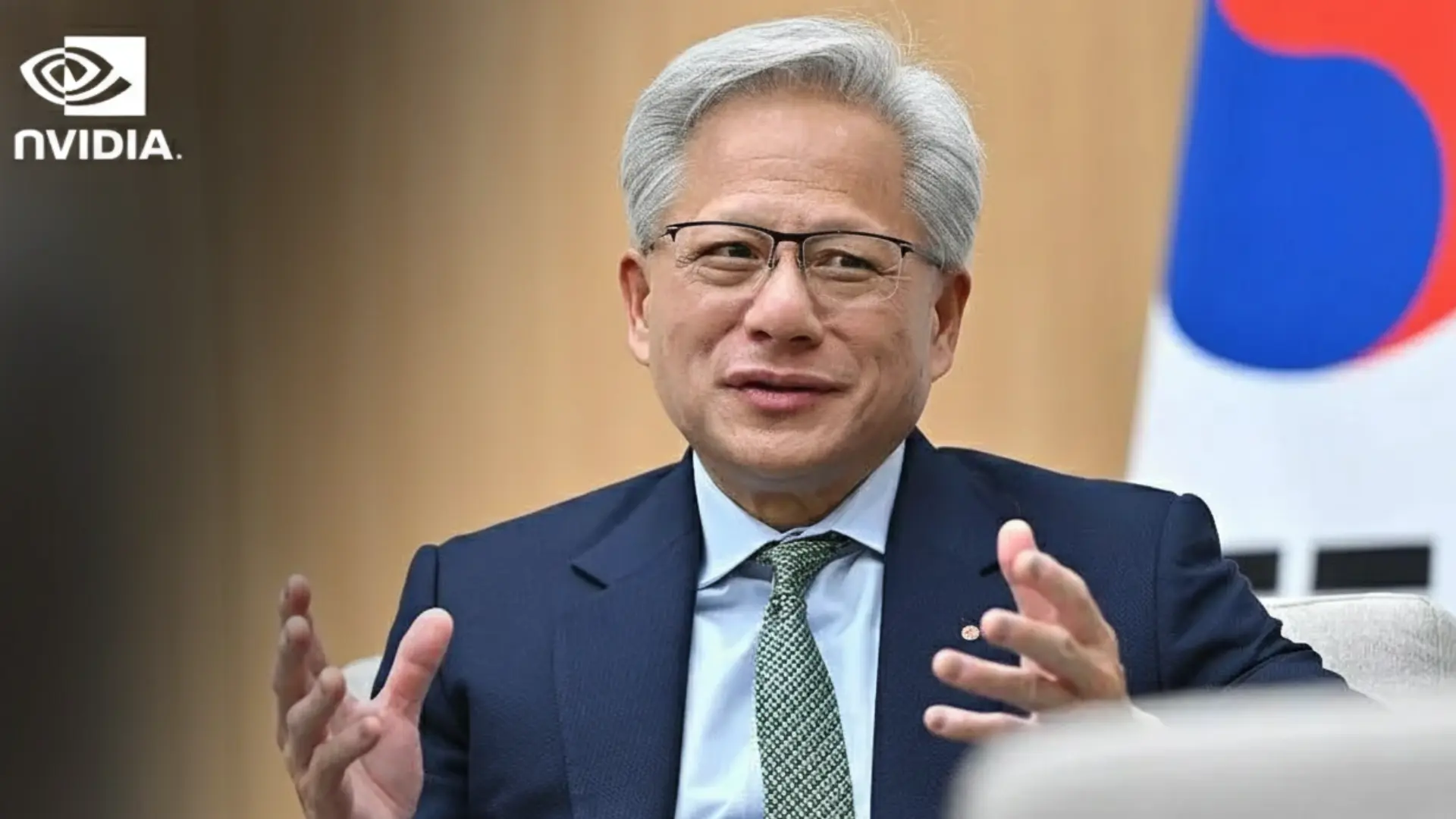
Nvidia is shipping over 260,000 of its brainiest AI chips to South Korea’s government and heavy hitters like Samsung, LG, and Hyundai. It’s as if the Land of the Morning Calm just ordered a warehouse full of IQ boosters for their factories churning out everything from tiny semiconductors to self-driving cars that won’t crash your family reunion.
Jensen Huang, Nvidia’s silver-haired showman of a CEO, couldn’t contain his glee at the Asia Pacific Economic Cooperation summit in Gyeongju. “South Korea can now produce intelligence as a new export,” he quipped, probably while adjusting his signature leather jacket for maximum dramatic flair.
Picture factories humming with these silicon savants, birthing robots that fold laundry without passive-aggressive sighs and autonomous vehicles that parallel park better than your uncle after three beers. But hold onto your kimchi—Huang kept the price tag under wraps, leaving analysts to guess if it’s a steal or a silicon shakedown.
This capstone deal crowns a week where Nvidia rocketed to a $5 trillion valuation on Wednesday, making it richer than a pharaoh’s pyramid scheme. By Thursday, whispers of a US-China trade thaw had investors toasting with virtual champagne, eyeing a potential chip pipeline back to the Middle Kingdom.
Huang confessed Nvidia’s China heartbreak. “We used to own 95% of the AI pie there; now it’s zero, and I’m not thrilled about the crumbs,” he sighed on Friday, his voice a mix of boardroom gravitas and playground pout.
Enter President Trump, fresh from schmoozing Xi, announcing Beijing’s chat with Nvidia like a referee calling a timeout in the great chip cold war. “The US will umpire this one,” Trump declared, as if trade deals were just oversized games of economic Twister.
Huang, eyes twinkling like faulty LEDs, pitched selling Nvidia’s Blackwell beasts to China—pending a presidential nod, of course. Export controls loom like overzealous bouncers at a tech rave, but he pleaded for policies that let American ingenuity globe-trot.
“It’s America’s win to reclaim that market, and China’s coup to snag our tech,” Huang mused, advocating for US standards to rule the AI roost. Who knew microchips could broker world peace, one transistor at a time?
South Korea, already a semiconductor sorcerer with vehicle wizards, is gunning for AI overlord status. President Lee Jae-myung vows to pump cash into this digital dynasty, dodging US tariffs like a K-drama plot twist.
With Nvidia’s bounty, Seoul’s crafting “sovereign AI”—government-gripped computing fortresses powered by 50,000 chips at the National AI Computing Center and spots run by Kakao and Naver. It’s like building a national brain trust that won’t leak secrets to the cloud.
Nvidia leans on Asia’s supply chain sorcery for the grunt work. Samsung crafts bits for the China-compliant H20 chips, while TSMC births the Blackwell flagships—proving even brainiac designers need a village of fabricators.
Yet shadows lurk: security hawks fret over arming China’s AI arsenal, where chips could fuel military might or just really smart surveillance cams. Analysts chuckle that US blockades have supercharged Beijing’s homegrown hustle—Huawei and Alibaba now flaunt chips that nip at Nvidia’s heels, like eager underdogs in a silicon sprint.
China’s even nixing Nvidia buys, nudging firms to back local legends. Huang, gracious as a host at a rival’s wedding, bowed: “We tip our hats to China’s chops.” Respect in rivalry? Now that’s the real export gold.
Nvidia’s stock soared on this symphony of deals, from US Department of Energy pacts to Nokia nods, Uber upgrades, and Stellantis synergies—proof AI’s not just hype, but a return rocket for jittery wallets. And with Trump-Xi chit-chat hinting at China sales revival, shares danced like algorithms at a discotheque.
As factories worldwide spawn “digital twins”—virtual doppelgangers syncing production like mischievous mirror images—the AI arms race accelerates. South Korea’s chip feast? Just the appetizer in Nvidia’s global smorgasbord of smarts.


Leave a Reply