
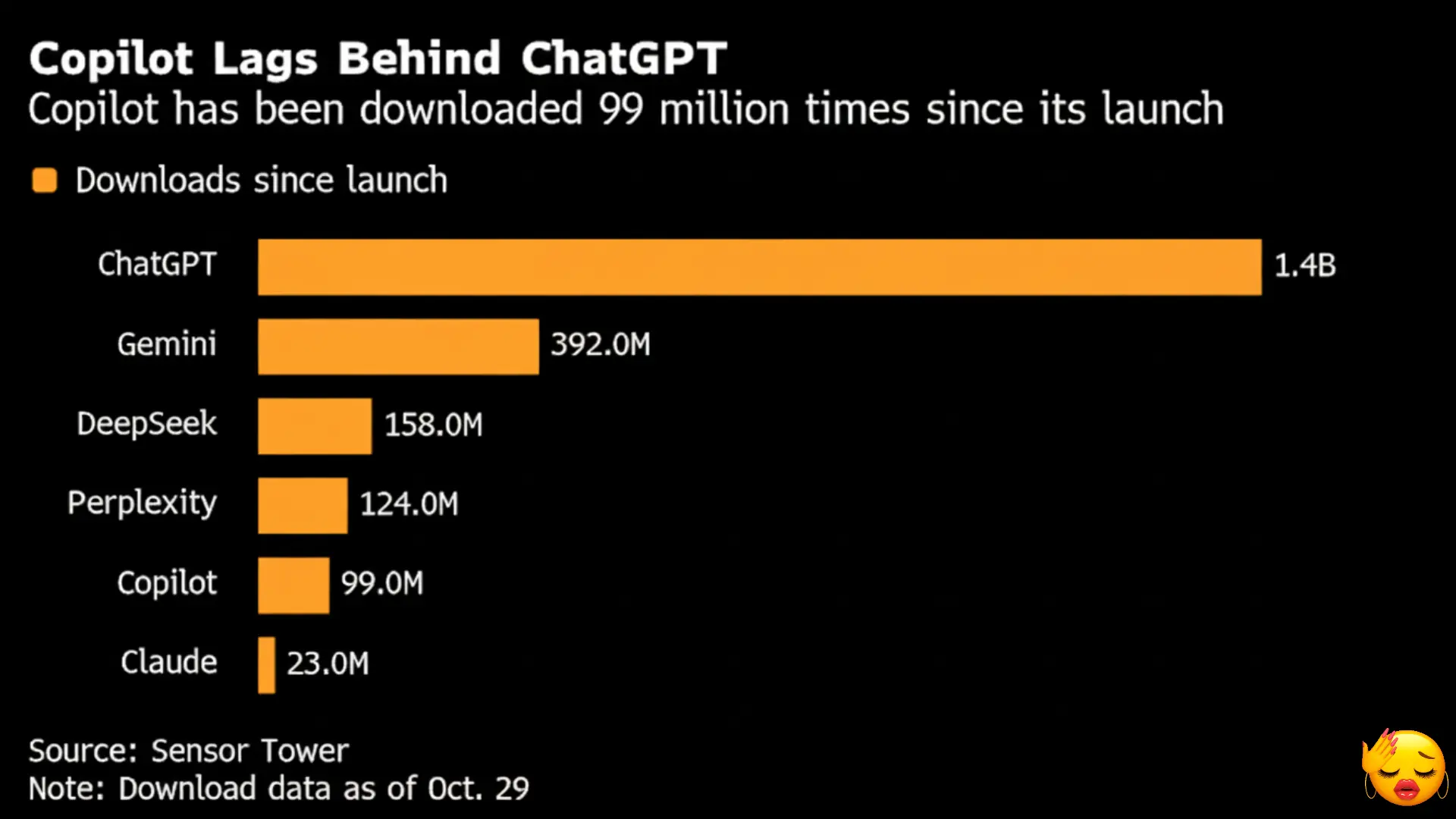
Microsoft has unleashed an army of social media sirens on America’s youth, arming them with Copilot’s charms to dethrone ChatGPT from its perch as the go-to digital whisperer.
The tech titan is now flirting with fame’s fickle frontier. Picture boardrooms swapped for beachside brainstorms—all in the name of snagging those elusive under-30 eyeballs.
Microsoft’s Copilot family draws a respectable 150 million monthly actives, a number that sounds impressive until you stack it against OpenAI’s ChatGPT, which boasts 800 million weekly users flexing their queries like gym bros at peak hour.
Google’s Gemini isn’t slouching either, clocking 650 million a month. It’s like showing up to a AI showdown with a solid participation trophy while the cool kids juggle fire.
Enter Yusuf Mehdi, Microsoft’s Consumer Chief Marketing Officer, who admits with the humility of a startup founder that Copilot is the scrappy challenger in this chatbot coliseum.
“We’re up and coming,” he quips, as if pitching a trendy kombucha brand instead of enterprise-grade smarts. His masterstroke? Recruiting influencers whose follower counts could populate a small nation, tasking them to weave Copilot into their daily dispatches like it’s the next must-have filter.
These digital divas aren’t just name-dropping; they’re co-creating content that blurs the line between promotion and personal pep talk. Take Alix Earle, the 24-year-old New Jersey native whose TikTok and Instagram empire spans 12.6 million devotees—enough to crash a server just by liking a post.
Earle, fresh off a Cannes Lions panel alongside Mehdi where they dissected the art of influence, treats Copilot like a sassy sidekick, not a sterile search engine.
The duo’s collaboration hit peak absurdity en route to a May shoot, when Earle, besieged by cheeky comments about looking “40,” consulted Copilot on eternal youth.
The bot’s deadpan reply? “Focus on a good skincare routine.” What followed was a TikTok triumph: 15.4 million views, nearly double her follower base, proving that even AI can deliver shade with a straight face. It’s the kind of viral velocity that has traditional ad execs clutching their clipboards in quiet envy.
Mehdi beams about the ROI, claiming influencers pack more punch than dusty old media buys, though he’s tighter-lipped than a startup’s burn rate on specifics. Payments? Hush-hush, as if spilling beans would summon the FTC fairy.
This isn’t Microsoft’s first rodeo with borrowed buzz—corporations have been hitching wagons to influencer stars since Dunkin’ crowned Charli D’Amelio’s cold brew in 2020, turning a teen’s thirst into a tidal wave of sales.
Amazon’s playbook is equally corralling creators for everything from warehouse whispers to red-carpet romps at the Council of Fashion Designers awards this month. And let’s not forget Kim Kardashian, who alchemized online oohs into Skims’ empire, proving that if you can sell shapewear via selfie, why not software?
Even academics are arching eyebrows. Anindya Ghose, NYU Stern’s marketing maven, feigns shock at Microsoft moonlighting with lifestyle luminaries for a logic-loving tool.
Yet he concedes the calculus: familiarity trumps credibility when your audience scrolls faster than they think. “Some will bite that apple,” he muses, hinting at a future where AI spokesmodels might elbow out the humans—because nothing says “trust me” like a bot endorsing another bot.
At its core, this influencer infusion underscores Copilot’s rebrand as the everyman’s oracle, not just the office drone. As Mustafa Suleyman, Microsoft’s Consumer AI chief, poetically posits in a recent essay, it’s an AI companion that “helps you think, plan, and dream”—or, in Earle’s case, dodge decade-denial digs with dermatological wit.
Microsoft dominates the corporate colossus arena, thanks to decades of cloud-cuddling and software schmoozing, but cracking the consumer code feels like teaching a spreadsheet to salsa.
Will this star-studded strategy catapult Copilot past its rivals’ rocket-fueled rosters? Early echoes suggest yes, with Ghose wagering it’s already yielding yields worth the wooing.
Yet in the hyper-hyped haze of AI arms races, one can’t help but wonder: if influencers can make underwear ubiquitous, can they convince zoomers that pondering prompts is the new party trick? For now, Microsoft’s betting its bots on beauty—and the views are just beginning to pour in.




Leave a Reply