
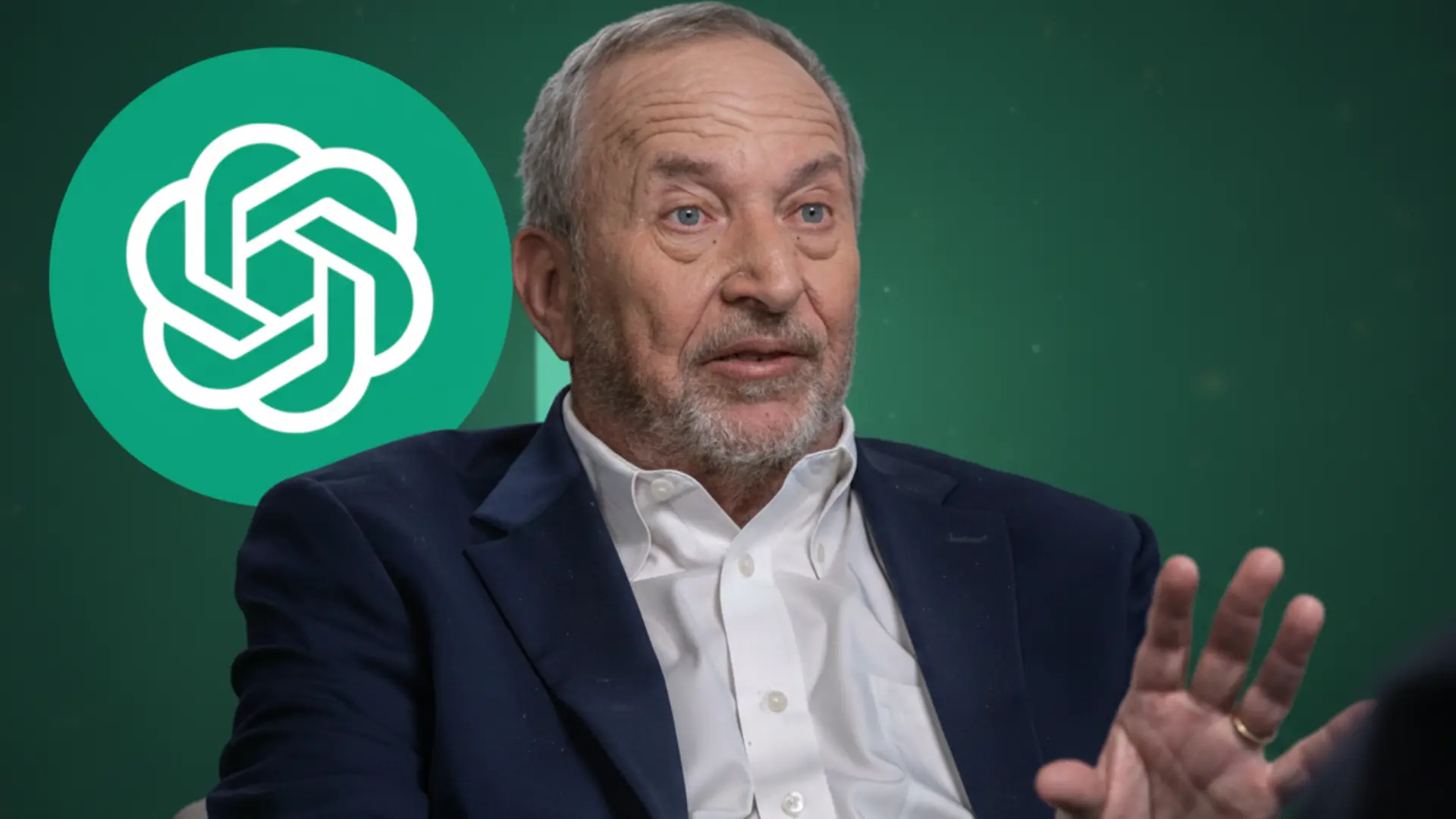
Former Treasury Secretary Larry Summers resigned from OpenAI’s board Wednesday, just days after congressional document fairies unearthed his lengthy chat history with the late Jeffrey Epstein.
The departure caps a whirlwind week of professional musical chairs for the Harvard economist, who apparently decided that guiding the future of artificial intelligence was slightly less pressing than dodging headlines.
OpenAI issued the corporate equivalent of a polite wave goodbye. “Larry has decided to resign, and we respect his decision,” the company stated, adding warm thanks for his “many contributions and the perspective he brought”—a perspective that, in hindsight, came with unexpected baggage.
Summers framed his exit as perfectly aligned with Monday’s vow to retreat from public life. One suspects his calendar has never looked so blissfully empty.
The trigger? A congressional dump of thousands of Epstein-related documents that read like a cautionary tale titled “Why You Should Delete Old Threads.”
Among the gems: friendly exchanges on public attitudes toward harassment allegations, because nothing says “sound economic advice” like consulting a convicted sex offender on social nuance.
Summers joined OpenAI in November 2023 during peak drama, when the company briefly fired then frantically rehired CEO Sam Altman faster than most people reheat leftovers.
His arrival was hailed as a coup—Wall Street gravitas meets Silicon Valley chaos. He even led an internal review of the Altman ouster, proving economists can moonlight as corporate detectives.
The board soon bulked up with heavy hitters like former NSA chief Paul Nakasone and ex-Sony exec Nicole Seligman. One imagines the group chats were already lively.
Yet here we are. Bloomberg confirmed Summers is off their contributor roster. The New York Times declined to renew his opinion gig with the gentle finality of a subscription cancellation.
He’s also stepping down as chair of the Center for Global Development, plus roles at the Center for American Progress and Yale’s Budget Lab. At this rate, his LinkedIn will soon fit on a Post-it note.
Harvard, where Summers once presided before his 2005 remarks on women in science sparked a faculty revolt and his 2006 exit, remains mum on his professorship. Tenured life has its perks.
In his Monday mea culpa, Summers declared himself “deeply ashamed” for keeping the Epstein line open. A sentiment many discovered only after the receipts went public.
Observers note the exquisite timing: an economist renowned for forecasting crises somehow missed the one brewing in his own sent folder.
OpenAI, meanwhile, marches on toward superintelligence, now with one fewer voice warning about regulatory overreach—or underestimating the half-life of bad decisions.
Summers says he’s excited to watch the company’s progress from afar. Preferably very afar.
As Washington and Silicon Valley digest the latest Epstein echo, one lesson emerges clearly: even the smartest algorithms can’t auto-delete the past.





Leave a Reply