
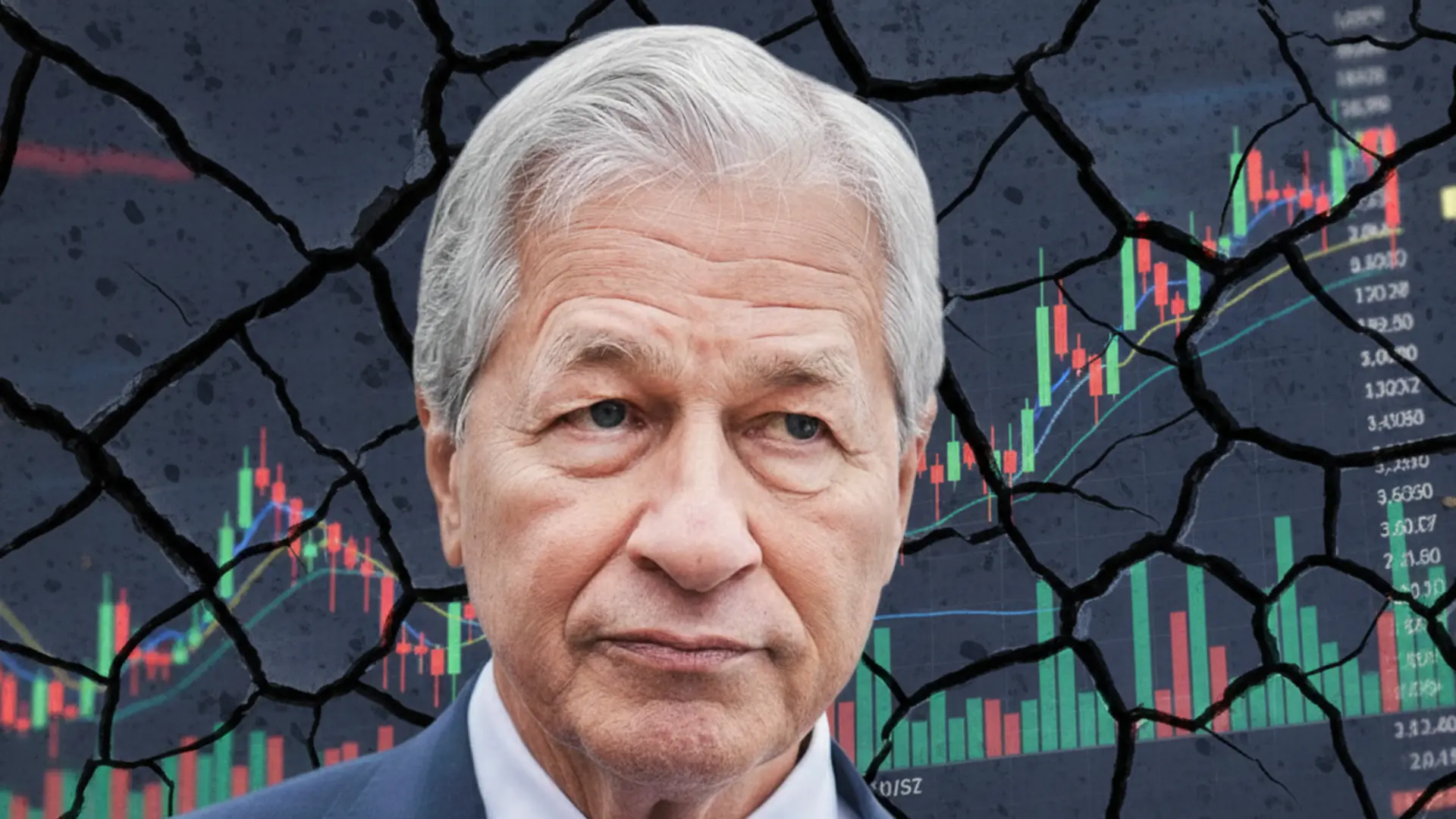
JP Morgan CEO Jamie Dimon has issued a dire dispatch: US stocks are teetering on the edge of a cliffhanger correction, far riskier than the market’s sunny selfies suggest.
Dimon, looking more like a surf-ready mogul than a buttoned-up banker in his open-collar shirt and jeans, dropped this doozy during a BBC interview tied to a whopping £350m campus splash in the UK.
Dimon strides onto a town hall stage to herald investments that could make Dorset’s economy pop like champagne at a victory lap.
But hold the bubbly—Dimon pivoted from UK cheerleading to US gloom, declaring he’s “far more worried than others” about a market tumble that could strike in six months to two years, leaving portfolios looking like deflated whoopee cushions.
He painted a portrait of uncertainty thicker than London fog, blaming a cocktail of geopolitical jitters, fiscal free-spending, and a world remilitarizing faster than a blockbuster franchise sequel.
“All these things cause a lot of issues we don’t know how to answer,” Dimon quipped, as if the global economy were a particularly tricky crossword puzzle with missing clues.
And inflation is still lurking like that one guest who won’t leave the party, though Dimon admitted a sliver of solace: the Federal Reserve should stay independent, dodging Trump-era jabs at Chair Jerome Powell like a nimble dodgeball champ.
On the world stage, Dimon didn’t mince words—the US has morphed into a “less reliable” ally, more flaky date than steadfast partner, leaving international relations feeling like a group chat gone awkwardly silent.
Dimon lavished praise on UK Chancellor Rachel Reeves, calling her efforts to slash red tape and spark innovation “terrific”—as if she’s the economic fairy godmother waving a wand over Whitehall.
Reeves beamed back, dubbing the £350m investment and £3.5m nonprofit boost “fantastic news” for Dorset locals, who might now afford beach huts without selling a kidney.
But back to the big bad wolf at the door: the US stock surge, juiced by AI mania, has Dimon eyeing it like a balloon animal at a kid’s party—impressive, but one poke from bursting spectacularly.
Echoing the Bank of England’s midweek memo likening AI valuations to the dotcom debacle (remember those Y2K parties that ended in busts?), Dimon nodded sagely: AI is “real,” destined to deliver like cars or TVs eventually did, but most players? They’ll flop harder than a fish on dry land.
“Just like cars in total paid off, and TVs in total paid off, but most people involved in them didn’t do well,” he mused, a wry reminder that tech gold rushes often leave more fools than nuggets behind.
He forecasted a chunk of AI cash vanishing into the ether—poof!—like magician’s smoke, underscoring that while the tech’s no illusion, the hype’s got more hot air than a politician’s promise.
Dimon’s Bournemouth jaunt, blending boardroom gravitas with beachy vibes, underscores his knack for blending big-picture dread with down-to-earth delivery, making even apocalyptic alerts feel like cocktail chatter.
As markets digest this Dimon dispatch, one can’t help but wonder: will Wall Street heed the oracle in jeans, or keep dancing on the volcano’s rim until the lava bubbles up?



Leave a Reply