
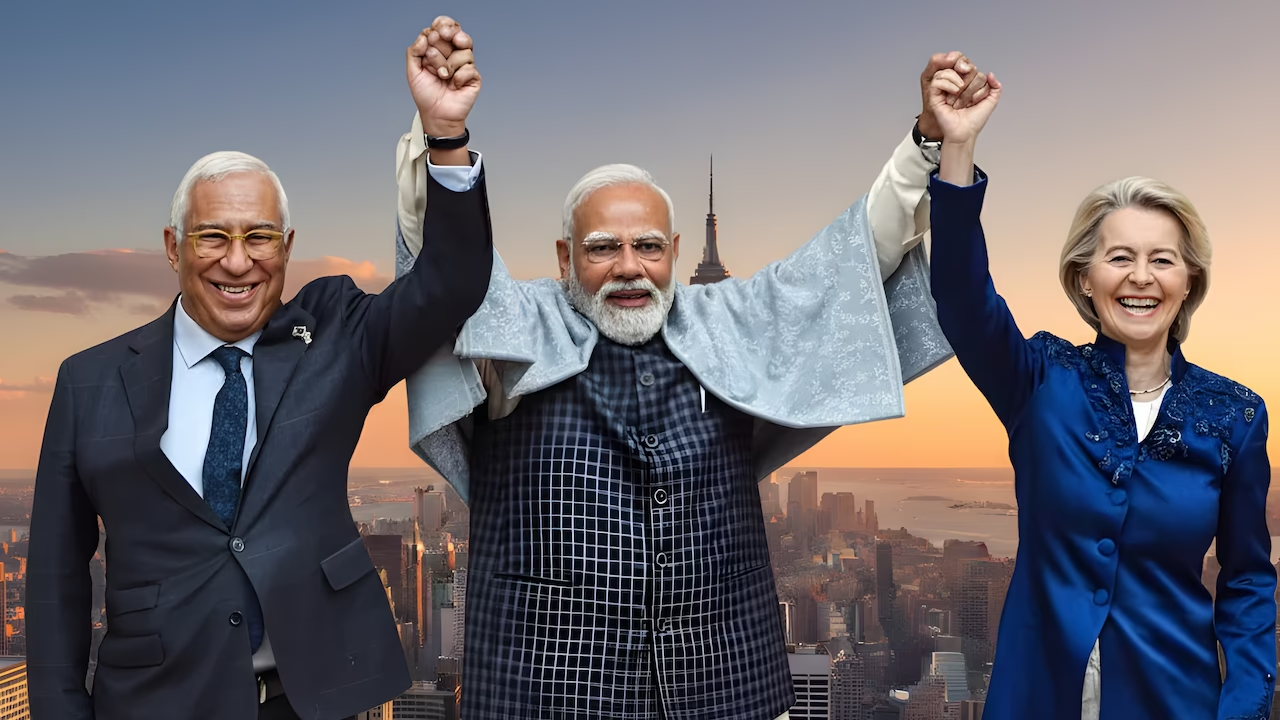
As tariff announcements ricocheted across continents, India and the European Union quietly signed a trade deal that looked less dramatic but far more productive. While headlines shouted about rising duties and diplomatic warnings, New Delhi and Brussels chose paperwork over megaphones.
The agreement signals that when tariffs rise, some countries prefer to raise trade volumes instead. Businesses on both sides now have something rare this week: clarity.
It also nudges global trade in a direction that does not involve social media posts, capital letters, or references to icy islands in the North Atlantic.
India and the EU announced their deal on Tuesday, aimed at strengthening economic ties and softening the ripple effects of new US tariffs. The timing was precise enough to look accidental and accurate enough to look intentional.
This comes as Washington continues efforts to strike its own trade agreement with India. Negotiators there may now find that the table has gained extra chairs.
On Monday, President Trump said he would raise tariffs on South Korean goods from 15% back to 25%. He cited the Korean legislature’s failure to enact what he called a historic trade agreement.
The list included autos, lumber, and pharmaceuticals, which are now adjusting their travel plans. The announcement arrived via Truth Social, where tariffs tend to appear with dramatic entrances.
Days earlier, Trump had threatened 100% tariffs on Canada over its trade arrangement with China. This was notable because he had previously described that same agreement as “a good thing,” proving that trade deals, like weather, can change quickly.
Canada’s deal with China lowers tariffs on Chinese electric vehicles in exchange for reduced taxes on Canadian farm products. Washington argues the agreement may conflict with the United States-Mexico-Canada Agreement, which is up for renegotiation this summer.
Canadian Prime Minister Mark Carney responded by saying the country was “going back to the future,” a phrase that works equally well in trade policy and movie titles. He also reaffirmed Canada’s commitment to the USMCA.
Meanwhile, Europe had its own tariff suspense. Last week, Trump called off planned tariffs on several European nations while citing a “framework of a future deal” related to Greenland, discussed with NATO Secretary General Mark Rutte.
The framework, according to Trump, would give the US “total access” to Greenland. Details remain scarce, though the map remains large.
Only days before that, Trump had said the US would impose 10% tariffs on eight European countries he believed were obstructing a potential US purchase of Greenland. European diplomats briefly checked atlases and then their calendars.
Against this backdrop, India and the EU decided to sign a trade deal that involved fewer geographic surprises. Their agreement focuses on boosting commerce and reducing barriers, a move that looks refreshingly traditional in a week of unconventional trade discussions.
For companies trading between India and Europe, the deal promises smoother exchanges. For everyone else, it provides a reminder that sometimes the quietest announcements carry the most weight.



Leave a Reply