
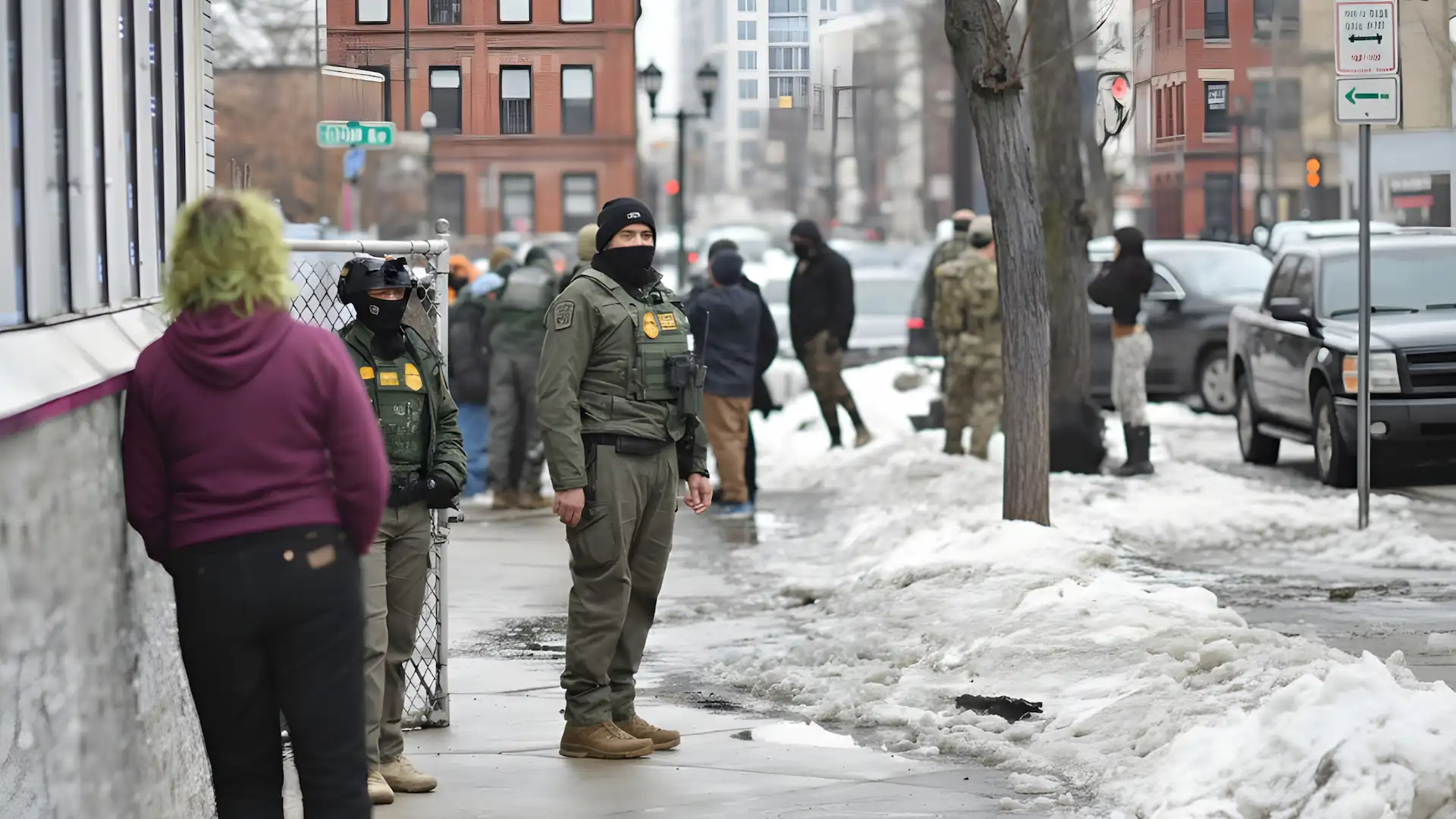
In the frosty streets of St. Paul, Minnesota, where the air smells like fresh tortillas and winter regret, federal immigration agents have turned a beloved Mexican market into something resembling a scene from a low-budget spy thriller.
Unmarked vans circle El Burrito Mercado like patient sharks, their masked occupants apparently auditioning for the role of “mysterious lurkers” in a community that just wants to buy groceries and tacos in peace.
The result? A 47-year-old local gem—once dubbed a “mini-empire” by food critics—is watching customers vanish faster than free chips at happy hour. CEO Milissa Silva-Diaz, who grew up in the business her immigrant parents built from scratch in 1979, summed it up with weary precision: federal agents are treating her store as their personal hunting ground, swirling the block in wait for anyone who dares to shop.
This isn’t just one business feeling the chill. Operation Metro Surge, the Trump administration’s boldest immigration enforcement push yet, has flooded the Twin Cities with thousands of agents since late last year. More than 2,000 arrests later, the area’s economy resembles a ghost town from an old Western—except the tumbleweeds are empty parking lots and closed storefronts.
Legal residents and undocumented folks alike have hunkered down at home, turning vibrant shopping districts into echo chambers. Sales at some spots have plunged 50% to 80%, stores slash hours, and owners compare the chaos to the early pandemic days, minus the sourdough starter fad.
The tension spiked dramatically after Renee Good, a 37-year-old U.S. citizen, was fatally shot by an ICE agent on January 7 during a confrontation in Minneapolis. What began as a routine enforcement scene ended in tragedy, sparking protests, event cancellations—including a John Mulaney comedy run—and a lawsuit from Minnesota and the Twin Cities demanding the operation halt.
Businesses shuttered temporarily in solidarity, and even big-box giants like Target found agents patrolling aisles, leading to arrests that left everyone questioning whether grabbing milk now requires a passport.
At El Burrito Mercado, the family-run spot in the heart of District del Sol has scaled back to skeleton hours. Staff call out, fearful of encounters; loyal customers—many from the area’s 30% Latino population—stay away.
Silva-Diaz now carries her passport everywhere, just in case. The business, which expanded into a food truck, catering, and state fair fame, faces an existential question: how do you survive when fear becomes the main ingredient?
The White House insists these actions remove dangerous individuals, paving the way for safer communities where businesses can thrive long-term. Yet local leaders point out the irony: Minnesota’s economy leans heavily on immigrant labor and entrepreneurship to fill job gaps and drive growth.
Ninety-four percent of the state’s recent population increase came from immigration, and workforce shortages already loom large. Wipe out these contributors, and the math gets uncomfortably simple.
Meanwhile, at places like Homi restaurant nearby, owners switch to pickup-only to shield employees. The broader ripple? Empty streets, postponed festivals, and a community wondering if the pursuit of security has accidentally traded one kind of safety for another.
This country runs on immigrant hustle—businesses like El Burrito Mercado prove it daily. When that engine sputters because of circling vans and uncertainty, everyone feels the slowdown.








Leave a Reply