
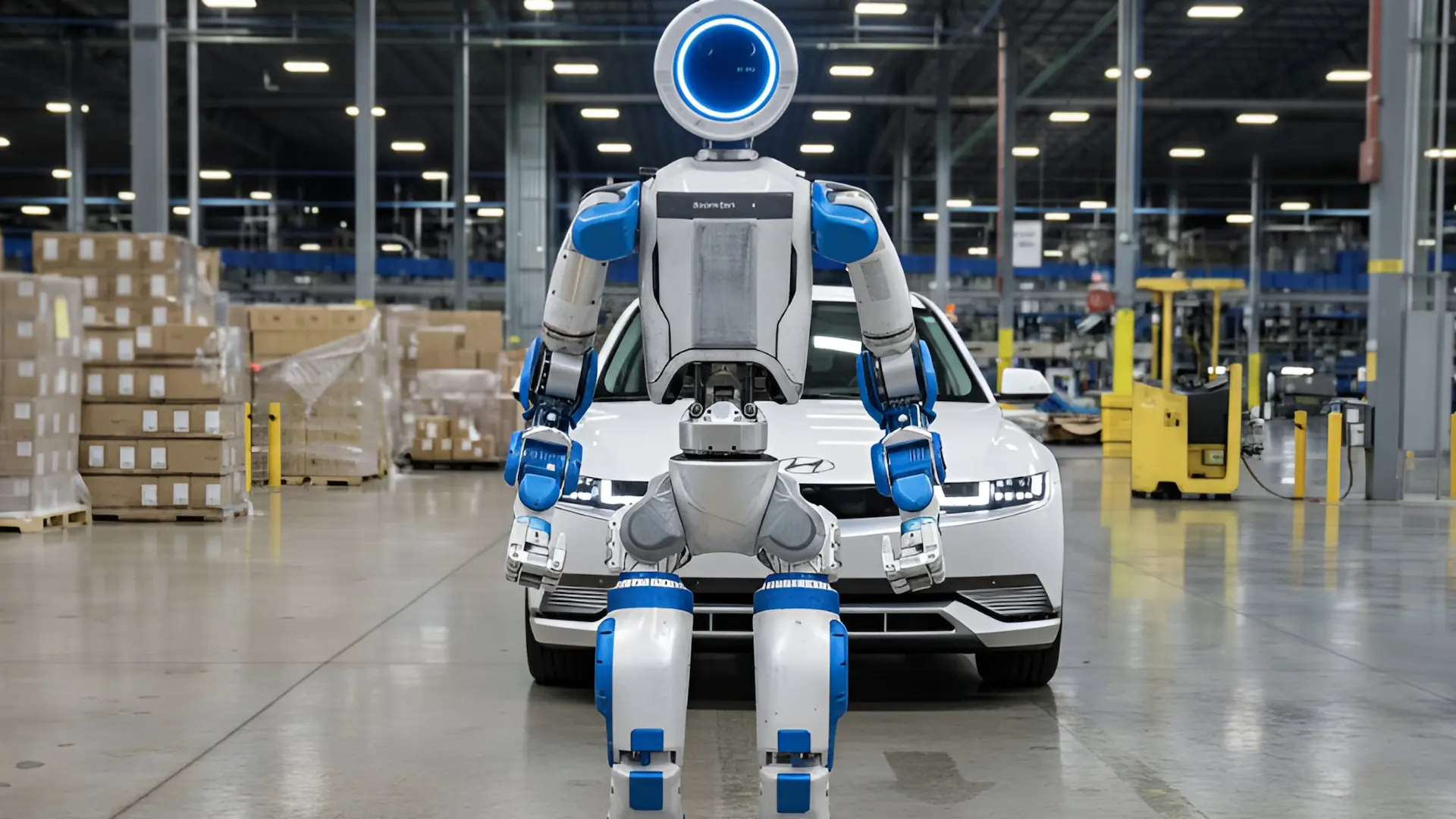
Hyundai Motor Group announced at CES in Las Vegas that it will deploy Boston Dynamics’ humanoid robot Atlas in its factories starting in 2028 — beginning right at its Georgia Metaplant, the very same facility that made global headlines for a rather different kind of workforce disruption back in 2025.
The impact? Hyundai essentially told the world: “We tried the human recruitment method. It came with raids, shackles, diplomatic incidents, and one very awkward White House apology phone call. We’re switching to the model that doesn’t need visas, lunch breaks, or union negotiations.”
Workers will supposedly enjoy reduced physical strain while robots politely handle the heavy lifting, dangerous tasks, and anything requiring the patience of a saint or the spine of a forklift. Human employees, according to the company, will simply transition into the glamorous new career of “robot babysitter, trainer, and occasional therapist.”
Hyundai rolled out the latest Atlas at CES like a proud parent showing off their unusually coordinated teenager. This isn’t the old parkour-showoff Atlas anymore. This is the production-ready version: electric, battery-powered, capable of lifting 50 kg, and featuring hands so sensitive they could probably fold your laundry (though Hyundai hasn’t confirmed that feature yet).
The plan is ambitious and wonderfully specific. Starting 2028, Atlas bots begin with the thrilling job of parts sequencing — basically playing the world’s most expensive game of “put the right bolt in the right box.” By 2030 they graduate to actual component assembly. Hyundai even aims to manufacture up to 30,000 of these humanoids a year. That’s not a small robot army. That’s a robot nation with its own GDP.
Of course the Georgia connection adds a special flavor to the announcement. In September 2025, immigration agents descended on the Hyundai-LG battery plant, arresting 475 workers — including 300 South Korean nationals — in an operation so dramatic that some employees attempted to escape via a nearby sewage pond. Legs were shackled. Outrage ensued in Seoul.
The White House later called the CEO personally to say, in the most polite terms possible, “Sorry about that mess.” The detained workers were eventually released after diplomatic talks.
Now, less than a year later, Hyundai reveals its next workforce strategy: robots that cannot jump into sewage ponds, cannot overstay visas, and most importantly, will never trigger an international incident just by showing up for the morning shift.
Vice Chair Jaehoon Chang addressed the elephant (or rather, the humanoid) in the room during the CES presentation. Yes, there are concerns about job losses. But fear not — humans will still be needed! Someone has to teach these metal fellows how to not drop a door panel on their own foot, after all. It’s the most reassuring jobs-of-the-future speech since “learn to code” in 2016.
Meanwhile, the competition watches nervously. Tesla has its Optimus project. Amazon dreams of robot warehouses. BYD is in the race too. But only Hyundai managed to turn a previous labor controversy into the perfect origin story for its robot rollout. Public relations jujitsu at its finest.
The future of car manufacturing, it seems, will feature humans and humanoids working side by side. One side will sweat, complain about the coffee, and occasionally call in sick. The other side will work 24/7 without ever asking for overtime. The smart money is on the side that doesn’t need bathroom breaks.
Welcome to the new assembly line. Please keep your hands and feet inside the vehicle at all times — unless you’re a robot, in which case carry on.





Leave a Reply