
Wall Street has issued its latest prophecy: the stock market will soar to 7,500 by December 2026, powered almost entirely by corporations engaged in what can only be described as the most expensive group project in human history—teaching computers to outsmart us.
The forecast from HSBC arrives with the calm confidence of someone who has already checked the basement for bubbles and found only champagne.
Investors who spent 2025 nervously refreshing bubble-watch blogs can finally exhale; the AI rally, it seems, has been granted another year of diplomatic immunity from gravity.
Meanwhile, the American consumer is quietly splitting into two species: one that books Delta’s premium economy seats with the casual flair of buying gum, and another that treats a $5 rotisserie chicken from Walmart like the culinary event of the month.
HSBC analysts, clearly enjoying the best Wi-Fi in the building, declared that “AI capex spend should continue to dominate in 2026 as the AI arms race intensifies.” Translation: the same companies that convinced us we needed eight streaming services now insist the future requires several trillion dollars in new data centers.
The bank’s 7,500 target implies another leisurely 12% stroll upward, roughly the same pace your uncle claims he maintained during the dot-com era before he discovered margin calls.
Colleagues at HSBC have already ruled out an AI bubble with the serene certainty of a parent insisting the family Labrador is “just big-boned.”
Instead, they recommend “a broadening of the AI trade.” In plain English: the Magnificent Seven stocks have had their turn hogging the gains; kindly step aside so the second-string enablers can also buy yachts.
Deutsche Bank, never one to be out-bullied, promptly countered with an 8,000 target, proving once again that on Wall Street, optimism is a competitive sport.
Down on the ground, the economy is doing its best impression of a luxury cruise ship where half the passengers are sipping Dom Pérignon on the lido deck while the other half are bailing water with souvenir cups.
Delta Air Lines proudly announced it is focusing on premium offerings, which is corporate speak for “please stop asking for legroom in coach; the people in pajamas up front paid for the plane.”
Retail executives, meanwhile, confirmed that lower-income shoppers are engaged in a nationwide talent competition titled “How Creative Can You Get With Ground Turkey?”
Walmart and the TJX empire—spiritual homes of the $9.99 sweater—are thriving, because nothing says economic confidence like discovering a branded candle that smells vaguely like ambition.
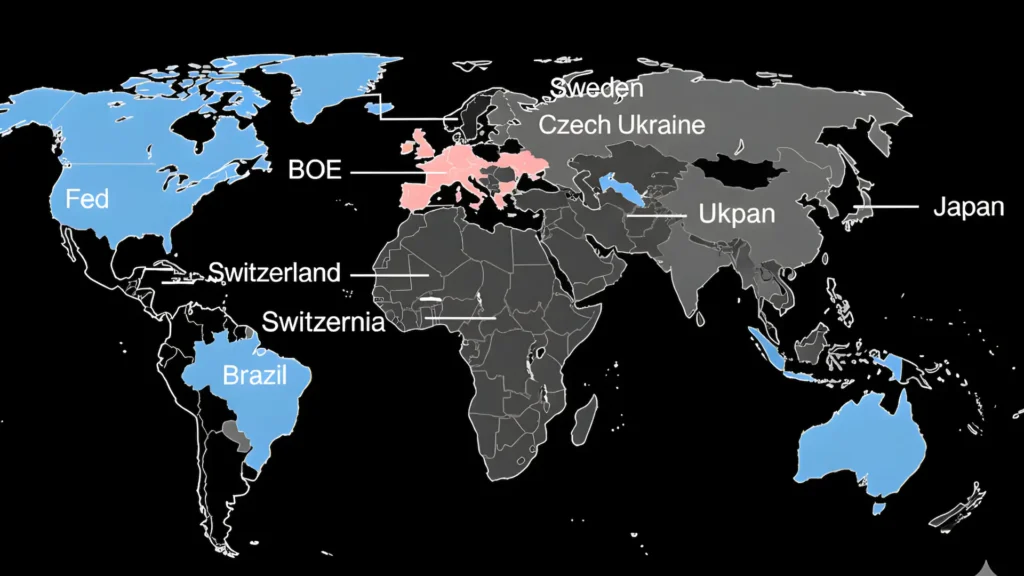
HSBC warns the Fed will stay on hold longer than a relative who won’t take the hint that dinner is over, keeping mortgage rates high enough to make starter homes feel like non-fungible tokens.
High earners, blessed with excellent credit scores and apparently unbreakable optimism, continue spending as if recession is just a TikTok rumor.
Their lower-earning counterparts have adopted a more philosophical outlook, summarized as “If the algorithm wants my data, it can have it in exchange for two-day shipping.”
The analysts predict this “two-speed economy” will widen in 2026 as policy tilts toward people who already own noise-canceling helmets for helicopter commutes.
Yet the market, drunk on GPUs and hopium, barely notices the splitting seam in the passenger cabin. After all, the Wi-Fi still works upstairs.


Leave a Reply