
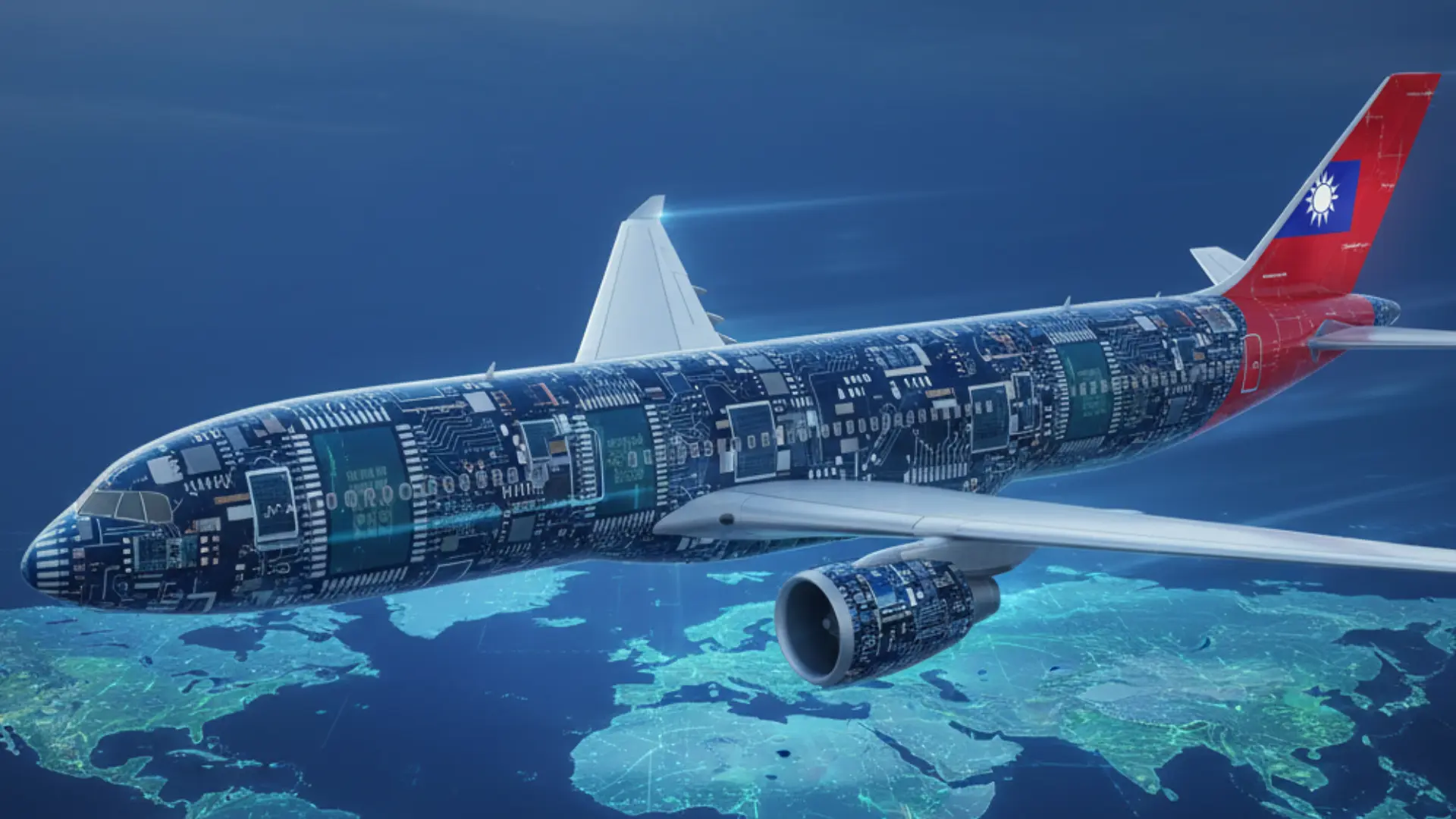
Taiwan has become the world’s unofficial chip overlord, holding the global tech economy hostage with its wafer-thin wafers of wonder.
One company, TSMC, commands a staggering 70% of the planet’s chip market, skyrocketing to 90% for the bleeding-edge brainiacs powering everything from your grandma’s AI knitting app to self-driving cars that still can’t parallel park.
Deep inside Taiwan’s Hsinchu Science Park, where futuristic fabs resemble Bond-villain lairs minus the sharks, robotic overlords etch silicon with the precision of a surgeon on espresso. Dust? Forbidden. Visitors? Vetted like potential spies at a state dinner. It’s the cleanest place on Earth, unless you count your browser’s incognito mode.
This silicon sorcery isn’t just tech wizardry; it’s geopolitical judo. For decades, Taiwan played the “silent nation” card, lurking in the shadows of China’s bluster like that quiet kid who aces every test without bragging. Now? Everyone’s scrambling for an invite to the chip party.
A 21-year-old Taipei shopper named Amy Lin, dodging gadget hawkers in the neon jungle of Guanghua Digital Plaza, shrugs off diplomatic snubs with the nonchalance of someone who’s just won the lottery. “We have wafers,” she quips, “so we’ve got bargaining chips—literally.” Confidence boost? More like a full-body glow-up for an entire island.
Analysts are nodding along like bobbleheads at a tech conference. Jeremy Chang, CEO of the snappily named DSET think-tank, declares Taiwan’s era of invisibility officially glitched. “We’re on page one of the AI apocalypse,” he says, “and without our chips, it’s just a book of blank pages and existential dread.” Who knew ignoring a country could backfire so spectacularly?
Enter Taiwan’s Vice President Hsiao Bi-khim, who delivers the mic-drop with the poise of a diplomat who’s seen it all—except maybe a world without her nation’s semiconductors.
“Decades of hardship,” she recounts, “strategic bets bigger than a Vegas all-nighter, and poof: We’ve built an ecosystem so slick, even our rivals tip their hats.” Unfair treatment? Sure. But hey, who’s laughing now—Taiwan, with a straight face and a fab full of futures.
Flash back to the ’80s, when tech trailblazer Miin Wu swapped Silicon Valley sun for Hsinchu humidity, armed with a Stanford degree and dreams of computerized utopia.
Skeptics scoffed: “Chips in Taiwan? That’s like brewing craft beer in the desert.” Wu’s Macronix crew flipped the script, cranking out flash memory so superior it powers your Nintendo Switch marathons and keeps Teslas from turning into expensive paperweights.
Fast-forward to today, and Taiwan’s pondering its poker hand. In a cheeky September spat with South Africa, officials floated a “chip embargo” like a kid threatening to hide the TV remote.
Blink, and it was back to tea-time talks—because, plot twist, Taiwan fabs for everyone else, not its own grudge matches. No export Armageddon here; just polite reminders that without those nano-nuggets, your iPhone’s doom-scrolling days are numbered.
China’s rare-earth flexes and U.S. sales bans? Cute parlor tricks compared to Taiwan’s quiet coup. As Wu muses, “Nobody believed in this park—until our quality left Japan in the dust.”
Ironic, isn’t it? The nation that doesn’t “exist” on most maps is etching its legacy into every gadget you own. Global powers, take note: Underestimate at your peril, or risk a world running on potato-powered processors.



Leave a Reply