
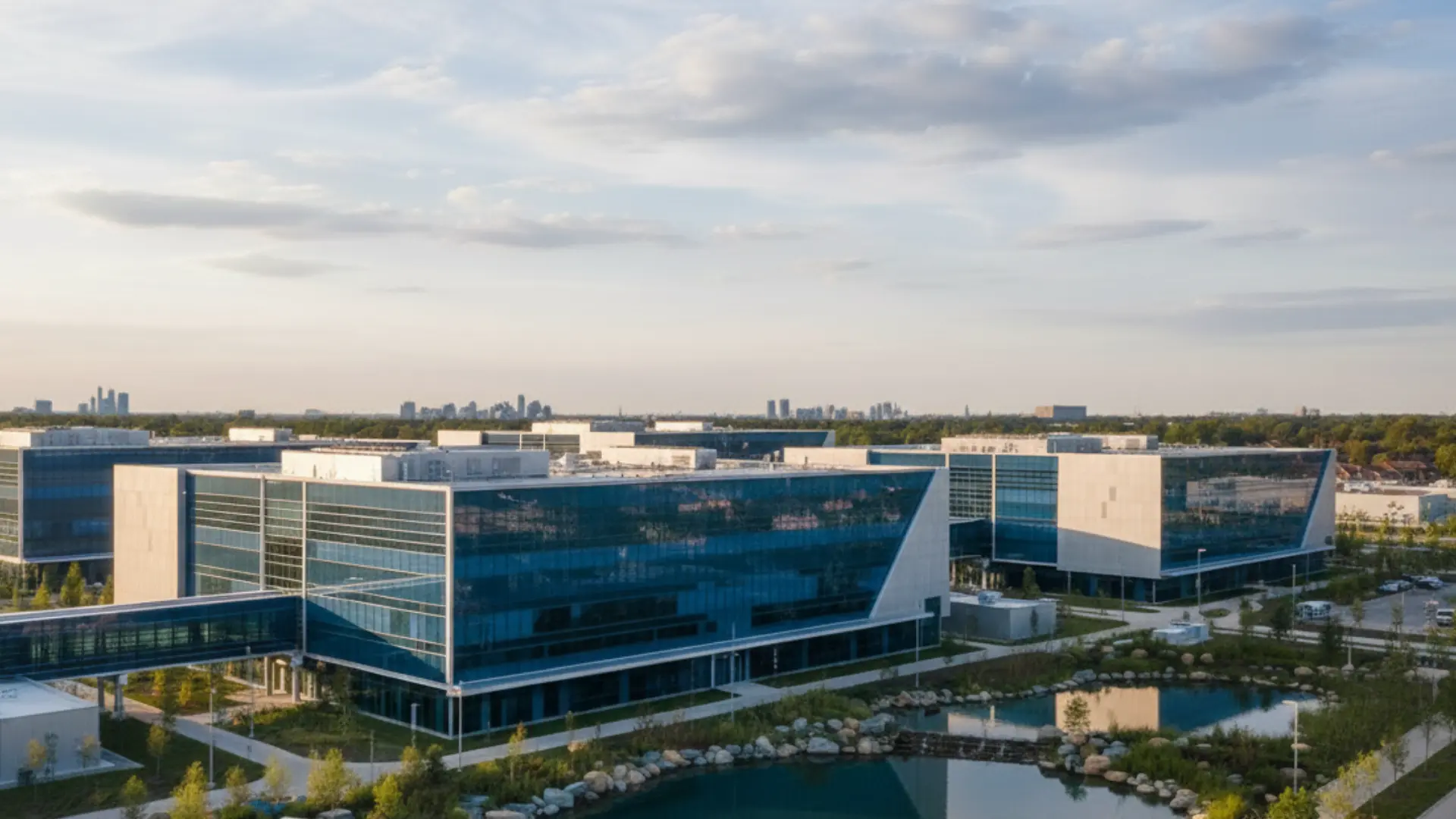
Retired English professor Kathryn Barnwell didn’t just voice her concerns—she marched straight up to Mayor Leonard Krog like a Shakespearean heroine storming the stage, enjoining him to rethink a data center that could slurp more water than a camel at an open bar.
Barnwell, armed with facts sharper than a quill pen, cornered her longtime pal at the edge of a parched wooded lot, the very spot eyed for this 200,000-square-foot tech behemoth. “I really, really enjoin you to think about what this could mean for your political career,” she quipped, eyes fixed on the horizon as if spotting iambic pentameter in the dust clouds.
Krog, mayor since 2018 and ever the optimist, envisions the project as Nanaimo’s ticket to futuristic glory. “The jobs attracted here are the jobs of the future,” he declared, probably picturing coders in lab coats high-fiving over holographic coffee breaks—never mind the evaporative cooling system that could guzzle 70,000 litres of precious municipal water daily.
Three years back, Barnwell was blissfully data-center ignorant, content with grading essays on metaphors. Then rezoning hit her backyard like an unsolicited plot twist, sparking a research binge that turned her into Nanaimo’s unofficial hydration hero.
Now, she’s leading the chorus of locals chanting, “Water first, Wi-Fi later!” In a drought-plagued corner of B.C., where taps run drier than a bad pun, her rallying cry rings truer than ever: “Life on this planet is sustained by water. It is not sustained by data.”
While we’re all doom-scrolling cat videos, those servers powering our digital addictions are sweating bullets—and cooling off with our drinking supply. Barnwell’s not alone; she’s tapped into a global giggle-fest of resistance against Big Tech’s aquatic appetites, as hyperscale facilities sprout like thirsty weeds worldwide.
Canada, bless its hydro-powered heart, is rolling out the red carpet for these digital dinosaurs. With cheap electricity and a climate cooler than a polar bear’s fridge, at least eight mega-projects are bubbling up, courtesy of federal cheerleaders and provincial pimps.
As AI turbocharges the boom—think ChatGPT churning responses faster than a barista on espresso—water woes are the uninvited guest at the party. A 2023 study slyly revealed that crafting just 10 to 50 medium ChatGPT replies slurps about 500 millilitres of H2O, split between powering the beast (435 ml) and chilling its feverish chips (65 ml).
That’s right—your witty banter with a bot is basically buying it a tiny cocktail. Scale that up, and global data centers chugged 140 billion litres for cooling alone in 2023, per the International Energy Agency, much of it straight from the tap to avoid corroding those delicate circuits with anything less than pristine purity.
Geoff White, executive director of Ottawa’s Public Interest Advocacy Centre, drops the mic: “There’s barely any regulation in place.” It’s like inviting a houseguest who raids your fridge, then builds a moat around it—Canada’s leaping into the AI arms race with safeguards flimsier than wet tissue paper.
Barnwell’s showdown? Pure theater. Krog, backing modernization like a dad defending his questionable grill skills, faces a friend who’s traded tweed jackets for protest placards. Opponents whisper of career tsunamis if the mayor ignores the flow, but he counters with visions of economic waterfalls cascading jobs into the city.
These “boring” IT bunkers, once tucked away like shy librarians, now demand megawatts and millions of litres annually, their evaporative systems exhaling steam clouds worthy of a villain’s lair. Cloud computing puffed them up in the 2000s; AI’s just the steroids.
As tech titans race to outbuild each other—pouring dizzying dollars into AI infrastructure—Barnwell’s plea echoes like a haiku in a hurricane: Prioritize the puddle over the pixel. In Nanaimo, where summer scorches lawns to straw, her march reminds us that while data streams endlessly, water… well, it trickles.




Leave a Reply