
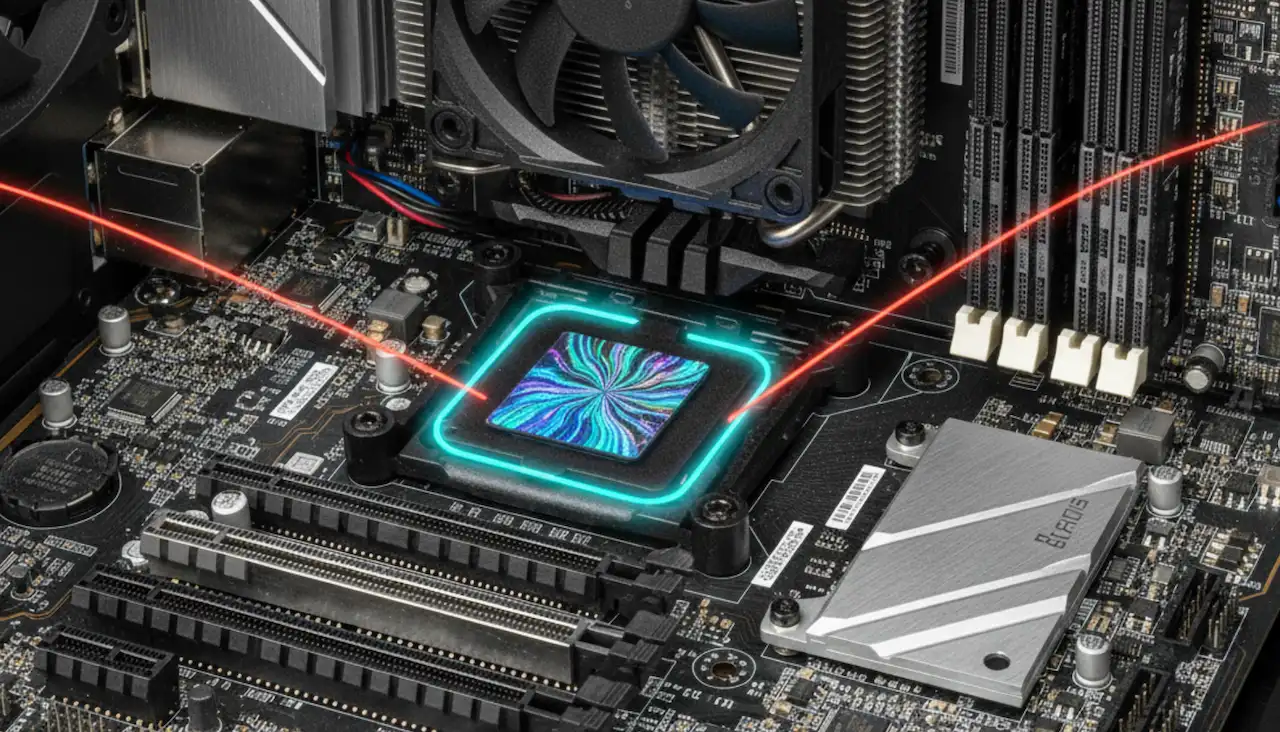
Google has unveiled a quantum algorithm that zips through molecule structure calculations 13,000 times faster than the beefiest supercomputers, leaving classical tech in the dust like a dial-up modem at a fiber-optic party.
This breakthrough, detailed in a peer-reviewed Nature paper, isn’t just egghead bragging—it’s the first verifiable quantum feat that no regular computer can touch, potentially unlocking doors to blockbuster drugs and wonder materials.
Experts are buzzing, but with a side of eye-rolls. Michel Devoret, Google’s quantum AI chief and fresh-off-the-press Nobel physics laureate, hailed it as a “milestone” toward full-scale quantum wizardry.
Picture this: A quantum computer, armed with this new algorithm, peers into molecular secrets that even MRI-inspired NMR tech couldn’t spill. It’s like giving Sherlock Holmes a microscope made of Schrödinger’s cat—equal parts genius and existential dread.
Yet, in the fine print, Google admits the party’s not starting anytime soon. Real-world quantum gadgets? Still years out, thanks to qubits—these finicky quantum bits that juggle 0s and 1s in superposition like a circus performer on a unicycle over a volcano.
Winfried Hensinger, quantum prof at the University of Sussex, calls it “quantum advantage”—fancy talk for “we did something impossible, but only for this one parlor trick.” Impressive? Sure. World-altering tomorrow? Hold your horses; we’re talking narrow science puzzles here, not cracking the code to eternal youth.
The algorithm, dubbed “quantum echoes” by Google VP Hartmut Neven, echoes optimism louder than a quantum hall of mirrors. Neven bets real apps—like feeding AI models exotic data snacks—could hit in five years, turning today’s hype into tomorrow’s headline.
But qubits aren’t the sturdy workhorses of classical bits, those reliable 0-1 soldiers marching in your smartphone’s Netflix queue. No, qubits are diva particles—electrons or photons moonlighting in multiple states at once, demanding cryogenic spas free of electromagnetic paparazzi to avoid a total meltdown.
Cross-check the results on those two test molecules, and you’ll find revelations NMR usually keeps under wraps. It’s as if the quantum rig whispered, “I see dead electrons,” revealing atomic dances no classical cruncher could choreograph.
Hensinger tempers the thrill: This isn’t the qubit bonanza for millions-strong armies needed to tackle the big leagues. Current hardware chills to near-absolute zero, but scaling to fault-tolerant fortresses? That’s like upgrading from a tricycle to a spaceship—adorable effort, interstellar dreams.
Google’s quantum push isn’t solo; it’s fueling AI’s next feast with data no classical chef could cook. Imagine algorithms birthing insights that make ChatGPT look like a toddler’s scribbles—poetic, but precarious if qubits throw a tantrum.
Cybersecurity sleuths are already sweating bullets. This qubit sorcery could one day shatter encryption like a quantum piñata, spilling secrets far juicier than molecular blueprints. Cue the scramble for “quantum-proof” locks—because nothing says “future” like prepping for a digital doomsday.
Devoret’s Nobel glow adds gravitas, but even he knows we’re inching, not sprinting, toward quantum utopia. It’s progress wrapped in caution tape: Faster than supercomputers? Check. Practical for your grandma’s pill cabinet? Not this decade, sport.
Neven’s five-year horizon feels like quantum time travel—optimistic, yet as tangible as spotting a unicorn in traffic. Still, in a world where bits built empires, qubits might just rewrite the rules, one fragile superposition at a time.






Leave a Reply