
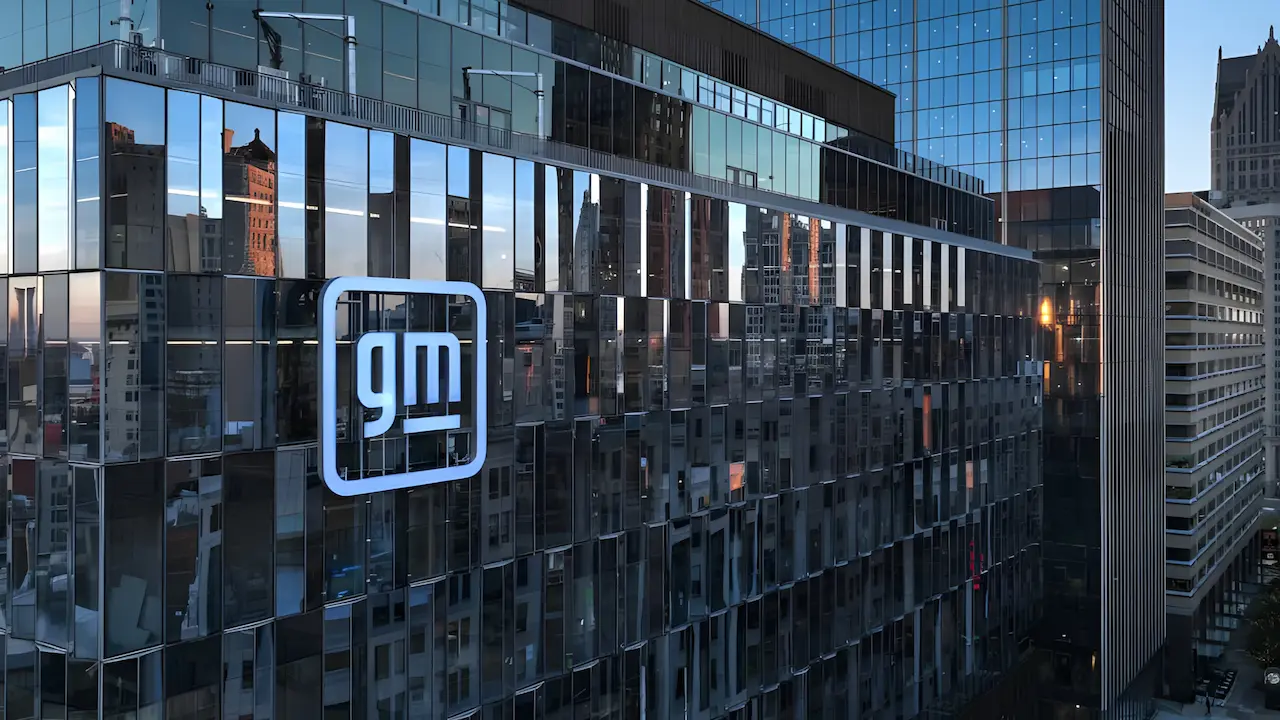
General Motors has officially traded its fortress-like Renaissance Center for a sleek, history-infused new headquarters in downtown Detroit’s Hudson’s building — and yes, the move comes complete with a pickleball court, because nothing says “corporate innovation” like smashing a tiny ball around before finalizing the quarterly report.
This week, as employees begin settling into four floors of the modern 12-story structure (starting around January 12, 2026), GM is waving goodbye to the massive RenCen complex it has called home since 1996.
Outside the new digs sit a vintage 1963 Chevrolet K20 pickup and a shiny new Silverado EV, parked like old and new friends catching up over holiday lights — a not-so-subtle reminder that GM refuses to let go of its past even while embracing the electric future.
The impact? For a company long criticized for its siloed ways, this downsizing from a sprawling 5.6-million-square-foot behemoth to a nimble 200,000 square feet feels like trading a labyrinthine castle for a stylish loft. The old RenCen, with its confusing layout and concrete barriers (once described as a fortress), perfectly mirrored the pre-pandemic era of five-day desk commutes.
Now, in a hybrid world where employees have options, GM hopes the new space will lure people in rather than trap them. Collaboration gets a boost, remote flexibility remains, and executives get mostly open offices — except for the top brass like CEO Mary Barra and President Mark Reuss, who apparently still rate permanent nameplates.
The RenCen, meanwhile, faces partial demolition and redevelopment, potentially opening up riverfront views that have been blocked for decades. Detroit gains a more walkable downtown, while GM gets bragging rights for not fleeing the city limits.
Inside the new headquarters, the design team went full nostalgia mode. Artifacts and “Easter eggs” abound: blueprints of the iconic design dome, maps of the proving grounds, wallpaper patterned with 300 patented technologies.
A centerpiece wind-tunnel model from the Warren Technical Center sits proudly, while a wall of cassette tapes cheekily features song titles referencing GM brands — plus custom ones nodding to executives. (One can only imagine the playlist: “Barra in the USA” or “Reuss It Up.”) References to Detroit streets and the famed design campus add layers of local pride, turning office space into a living museum of automotive history.
The shift reflects post-pandemic reality. As one executive put it, a headquarters should be a beacon for company culture — something people actually want to visit.
With amenities like social lounges, food services, a semi-public showroom for vehicles, and that inevitable pickleball court (because every modern office needs a way to settle disputes over font choices), the space aims to feel less like a corporate obligation and more like a destination. It’s a far cry from the RenCen’s infamous navigation challenges, where getting lost was practically a team-building exercise.
GM’s move — its fourth headquarters in Detroit since 1911 — underscores a quiet confidence. Staying rooted in the Motor City while downsizing and modernizing sends a message: the company is evolving without erasing its roots. In a city that has risen and fallen alongside the auto industry, this relocation feels like both a fresh start and a loving nod to heritage.
And if the pickleball court gets too competitive? At least the losers can console themselves by admiring a vintage truck — or charging up the EV version — right outside the door.










Leave a Reply