
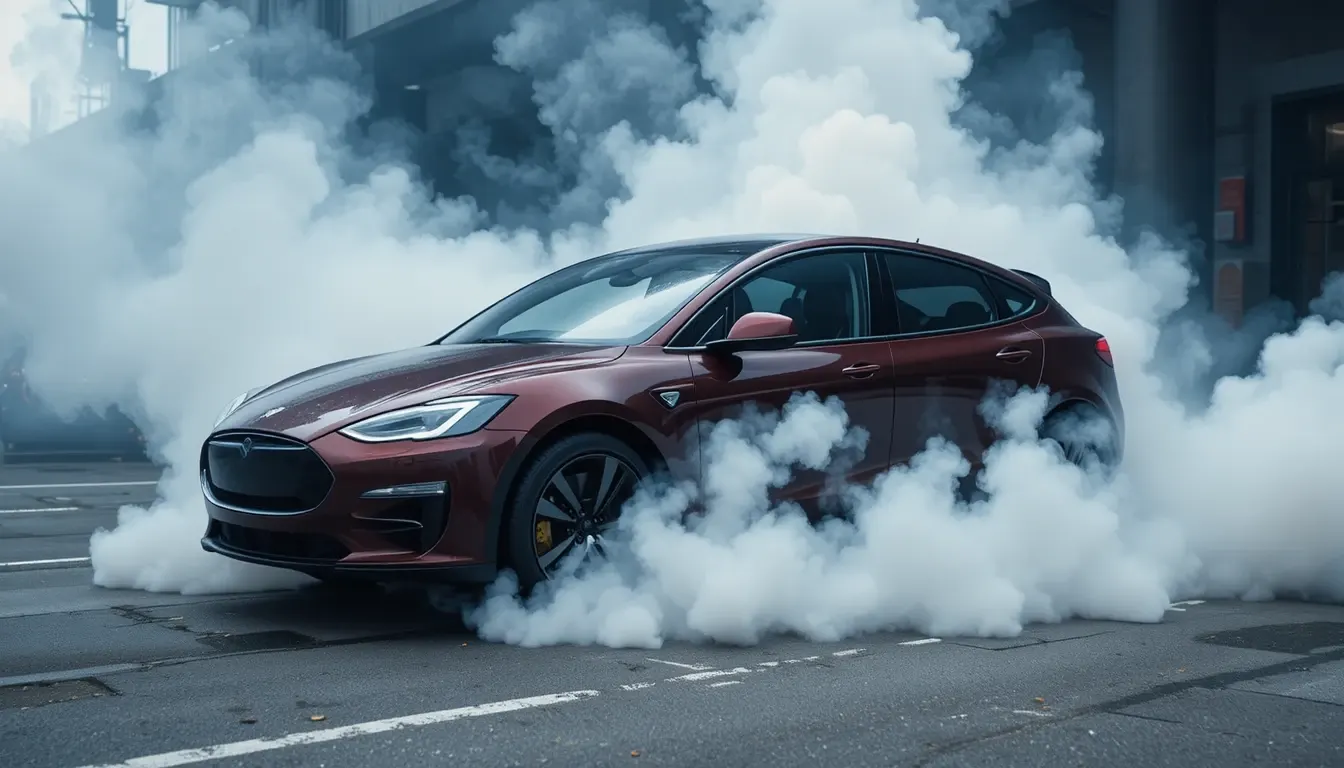
America’s electric vehicle market is slamming on the brakes just as it hits warp speed—thanks to the sunset of up to $7,500 federal tax credits after Tuesday. Automakers, who’ve poured billions into battery-powered dreams, now hold their collective breath to discover if “natural demand” means a gentle cruise or a cliff-dive into the bargain bin.
The third quarter wrapped up like a fireworks finale, with Cox Automotive projecting a jaw-dropping 410,000 EVs sold—a 21% leap from last year and a 10% slice of the total auto pie. That’s the fattest quarterly haul ever, fueled by shoppers sprinting to beat the rebate buzzer, much like Black Friday crowds but with fewer elbow jabs and more extension cords.
Picture this: Tesla’s website ticking down like a doomsday clock, whispering sweet nothings about “limited-time savings” to lure in the eco-conscious. General Motors CFO Paul Jacobson, ever the straight shooter, likened the coming months to a stormy sea—expect “some noise in October and November” before the waters calm and reveal true buyer appetite. It’s as if EVs have been on a sugar rush from Uncle Sam’s candy jar, and now it’s time for the inevitable crash-landing on the couch.
Hyundai’s CEO José Muñoz chimed in with optimistic hedging, predicting a short-term dip in battery mix growth—like a diet starting Monday after a weekend binge—but vowing mid- to long-term expansion. Meanwhile, Elon Musk, Tesla’s meme-lord maestro, shrugged off the hiccup in July, forecasting “a few rough quarters” amid his robotaxi reveries. Rough quarters? More like the automotive equivalent of realizing your fantasy football team peaked in Week 3.
The incentives, a bipartisan brainchild since George W. Bush’s era and bulked up under Barack Obama, are bowing out via the Trump administration’s “One Big Beautiful Bill Act.” This legislative behemoth yanks the EV carrot but dangles a new one for U.S.-assembled rides, electric or otherwise—because nothing says “America First” like a tax break for that gas-guzzling pickup made in Detroit.
Harvard’s Elaine Buckberg, ex-GM economist, nailed it at Detroit’s Move America conference: Policy is the puppet master, and without those strings, EV growth might shuffle like a tipsy waltz instead of a victory lap.
New Jersey’s Paarth Sharma, who leased a Kia Niro EV after eyeing the market for a mere two-to-six weeks, credit the deadline for turbocharging their decision. “It just accelerated,” Sharma told CNBC, echoing the irony of hastening an electric purchase to dodge the end of acceleration aids. Automakers piled on with incentives averaging over $9,000 per EV—double the industry norm—turning showrooms into discount depots faster than you can say “supply chain snag.”
Analysts at Cox Automotive, led by insights director Stephanie Valdez Streaty, call this the ultimate maturity test: Can EVs stand on their own four (silent) wheels, or do they still need training wheels from Washington? It’s a rollercoaster ride that’s crested the hill—record sales and shares in Q3, but Q4 promises a stomach-churning slowdown as the Inflation Reduction Act’s glow fades. Industry execs nod knowingly: Boom today, bust tomorrow, then a “new normal” that might just involve more coffee-fueled brainstorming sessions.
While some herald the shift as freeing EVs from government crutches, others whisper of a temporary talent show where gas guzzlers steal the spotlight. Ironic, isn’t it? The vehicles designed to zap emissions are now zapped by policy, leaving automakers to woo consumers with charm alone—no more federal fairy dust required.
As October dawns, one thing’s clear: If natural demand proves as fickle as a smartphone battery on 1% power, automakers might dust off their old ad jingles for hybrids or—gasp—plug-in apologies. But hey, in the grand auto circus, at least the clowns in charge promise a comeback bigger than a Cybertruck recall; after all, nothing shocks the system like a good plot twist with a full charge ahead.




Leave a Reply