
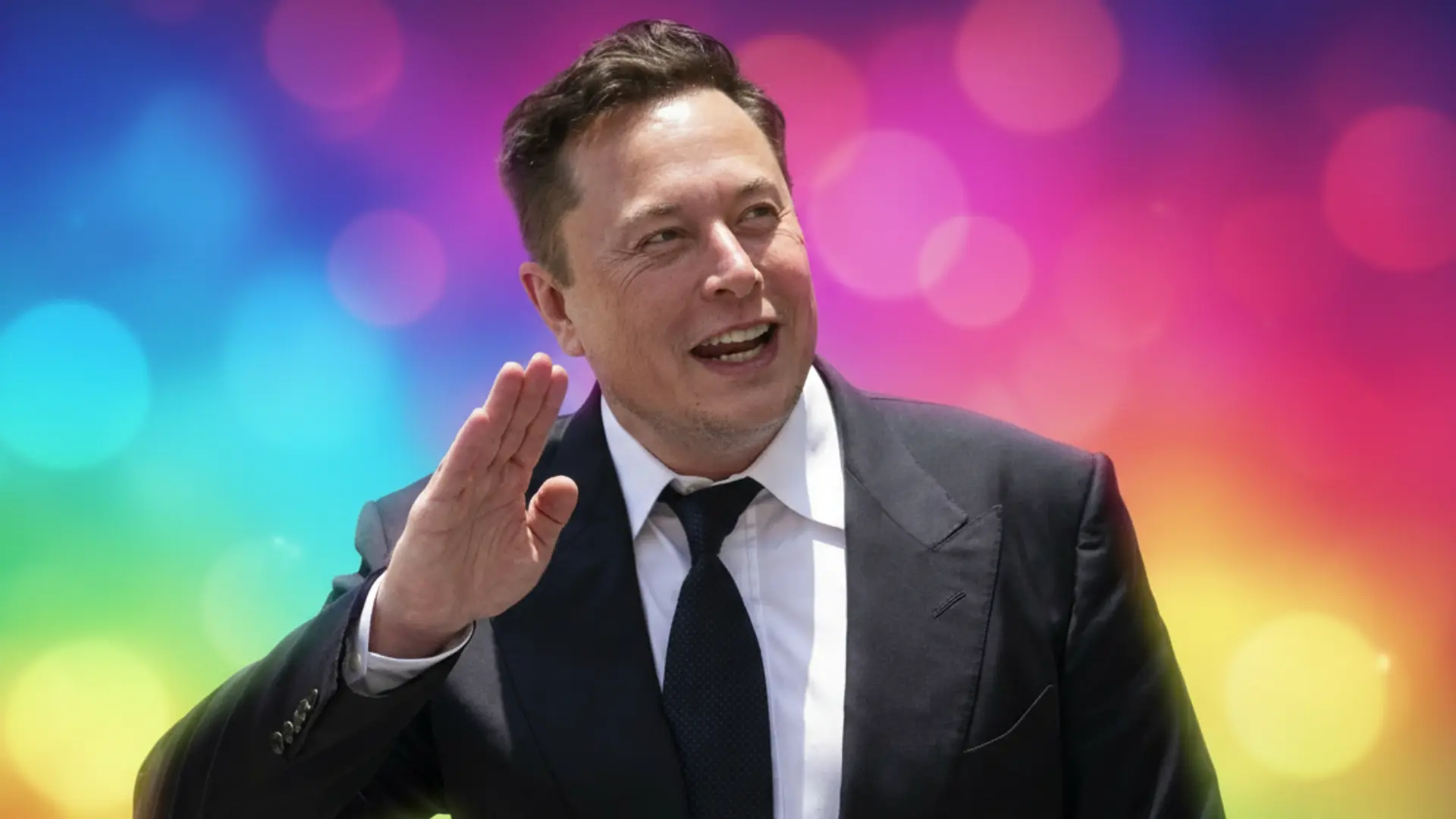
Elon Musk has shattered yet another wealth barrier, becoming the first human ever to amass a net worth exceeding $600 billion. A fresh tender offer from his rocket company SpaceX, valuing it at a staggering $800 billion, added $168 billion to his fortune virtually overnight, pushing his total to an estimated $677 billion.
While most of us celebrate small windfalls like a tax refund, Musk’s latest gain could theoretically fund entire space programs—or buy every professional sports team on Earth several times over.
This surge not only cements his unassailable lead over the world’s second-richest person, Larry Page, by a comfy $425 billion, but it also highlights how one company’s rocket rides can eclipse the economies of mid-sized nations.
The ripple effects extend beyond balance sheets. With Musk now eyeing a potential $1.5 trillion SpaceX IPO in 2026, investors are buzzing, employees are cashing in shares with gleeful abandon, and the rest of the billionaire pack is left wondering if they’ll ever catch up—or at least afford the same launch pad.
SpaceX’s tender offer earlier this month doubled its valuation from $400 billion in August to $800 billion.
Investors close to the company confirmed the details to Forbes, noting the rapid climb fueled by relentless launches and Starlink’s expanding orbit.
Musk, holding an estimated 42% stake, saw his SpaceX holdings alone balloon to $336 billion. That figure now outshines his Tesla assets, a quiet shift where rockets have quietly overtaken electric cars as his golden goose.
His 12% Tesla stake stands at $197 billion. Add in discounted options from the voided 2018 package—valued cautiously at $69 billion pending appeal—and Tesla remains a heavyweight contender.
Yet even if the courts side against him, Tesla shareholders recently greenlit a new pay package potentially worth up to $1 trillion over the next decade.
Those “Mars shot” goals, like octupling the market cap, sound ambitious, but given recent trajectories, betting against them feels like wagering on gravity failing.
Then there’s xAI Holdings, reportedly negotiating funding at a $230 billion valuation. More than double its prior mark after merging xAI with X, Musk’s 53% slice adds another $60 billion to the tally.
Observers note the AI venture’s swift ascent, proving that blending social media with artificial intelligence can yield valuations faster than a Falcon 9 ascent.
Musk’s wealth journey over the past five years reads like a series of escalating records.
From $24.6 billion in March 2020 to $100 billion by August that year, courtesy of Tesla’s surge.
He claimed the richest title in January 2021 at nearly $190 billion.
By September 2021, $200 billion joined the resume, followed by $300 billion in November and $400 billion in December 2024.
The $500 billion mark arrived in October, with Larry Ellison as the only other to graze $300 and $400 billion territory.
Now, at $677 billion and just $23 billion shy of $700 billion, the next milestone looms closer than any rival’s chance of overtaking him.
His $425 billion cushion over Page underscores a gap wider than most countries’ GDPs.
SpaceX eyes that 2026 IPO at possibly $1.5 trillion, a figure that could mint the world’s first trillionaire without much fanfare.
Representatives for Musk and SpaceX declined comment, perhaps too busy calculating orbital mechanics—or the next zero to add.



Leave a Reply