
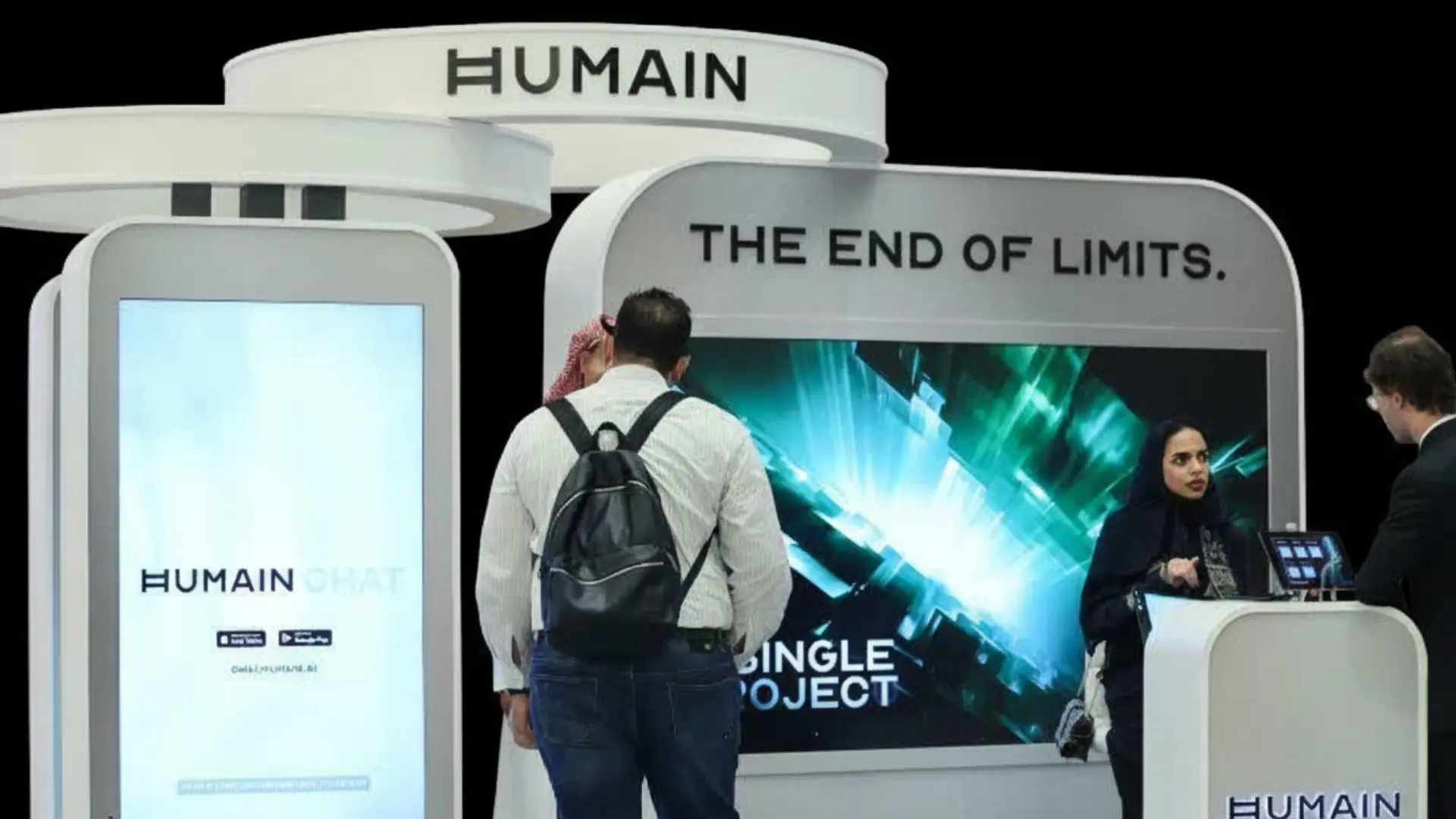
Saudi Arabia is swapping its oil pumps for AI servers faster than a camel spots an oasis. Crown Prince Mohammed bin Salman’s latest brainchild, Humain, just flexed its digital muscles at Riyadh’s Future Investment Initiative, promising to catapult the Kingdom into the world’s third-biggest AI playground, right behind the US and China.
Humain, the pampered offspring of the Kingdom’s nearly $1 trillion sovereign wealth fund, isn’t messing around. Unveiled in May just in time for President Donald Trump’s Riyadh red-carpet roll, it’s now strutting with a full arsenal: data centers, cloud wizardry, homebrewed large language models, and apps that could make Siri jealous.
CEO Tareq Amin, with the swagger of a man who’s never paid a utility bill in his life, touts Saudi’s secret sauce: energy so cheap and plentiful it’s like Mother Nature’s all-you-can-eat buffet for ravenous computers. “Our grid is a dream date—no substations needed, saving us 18 months of bureaucratic foreplay,” Amin quipped to CNN’s Becky Anderson, as if building AI empires were as simple as ordering extra hummus.
While Silicon Valley sweats over solar subsidies and windmill woes, Saudi’s got gigawatts gushing like geysers. By 2034, Humain aims to crank out six of them in data centers scattered like pearls across the dunes, courtesy of A-list pals Nvidia, AMD, Amazon Web Services, Qualcomm, and Cisco.
The plot thickens with a $3 billion handshake from private equity titan Blackstone—because nothing says “future-proof” like Wall Street wiring cash into desert cooling fans. These behemoths will hum 24/7, churning through AI tasks that would make a human intern weep into their energy drink.
But wait, there’s more whimsy: Enter Humain One, the AI operating system that laughs in the face of your finicky mouse. Speak or type your whims—“Fetch my files, flirt with the firewall, or fire that underperforming algorithm”—and poof, it’s done, no icon-hunting required. It’s Windows meets whisper network, minus the blue screen of death.
Internally, Humain’s already living the dream—or nightmare, depending on your job security. HR, finance, legal, ops, IT: All run by AI agents, leaving just one lone payroll warrior to guard the kingdom’s paychecks. “Efficiency at its finest,” Amin beams, as if outsourcing your entire staff to software isn’t the ultimate water-cooler ghost story.
This AI blitz isn’t born in a vacuum, though. Vision 2030, Saudi’s grand economic makeover, is hitting speed bumps: Oil prices dipping like a bad stock tip, Neom’s mega-city mirage still sketching blueprints. Enter AI as the economic espresso shot, propping up the Arab world’s fattest wallet amid global green guilt.
Neighboring UAE, with its flashy G42 squad, just inked a $500 billion “Stargate UAE” pact—OpenAI, Oracle, Nvidia, Cisco aboard—to erect the planet’s biggest data cathedral outside Uncle Sam’s borders. It’s like two oil heirs arm-wrestling over who gets the bigger yacht, but with more qubits than bling.
Amin plays diplomat with a wink: “AI shouldn’t be a monopoly party—UAE’s rocking it, we’re remixing it.” Humain’s no lazy holding pen, he insists; it’s an operating dynamo, grinding gears while others just write checks. Democratizing smarts? Sure, as long as Riyadh’s version comes with a side of sovereign swagger.
A nation famed for fossil fuels now force-feeding fiber optics to the future. Yet with partners queuing like supplicants at a souk and ambitions ballooned to gigawatt glory, Saudi’s betting its black gold nest egg on binary brilliance.
Will it compute to glory, or crash like an overclocked CPU? Riyadh’s roulette wheel spins on—and the world’s watching, popcorn in hand.

Leave a Reply