
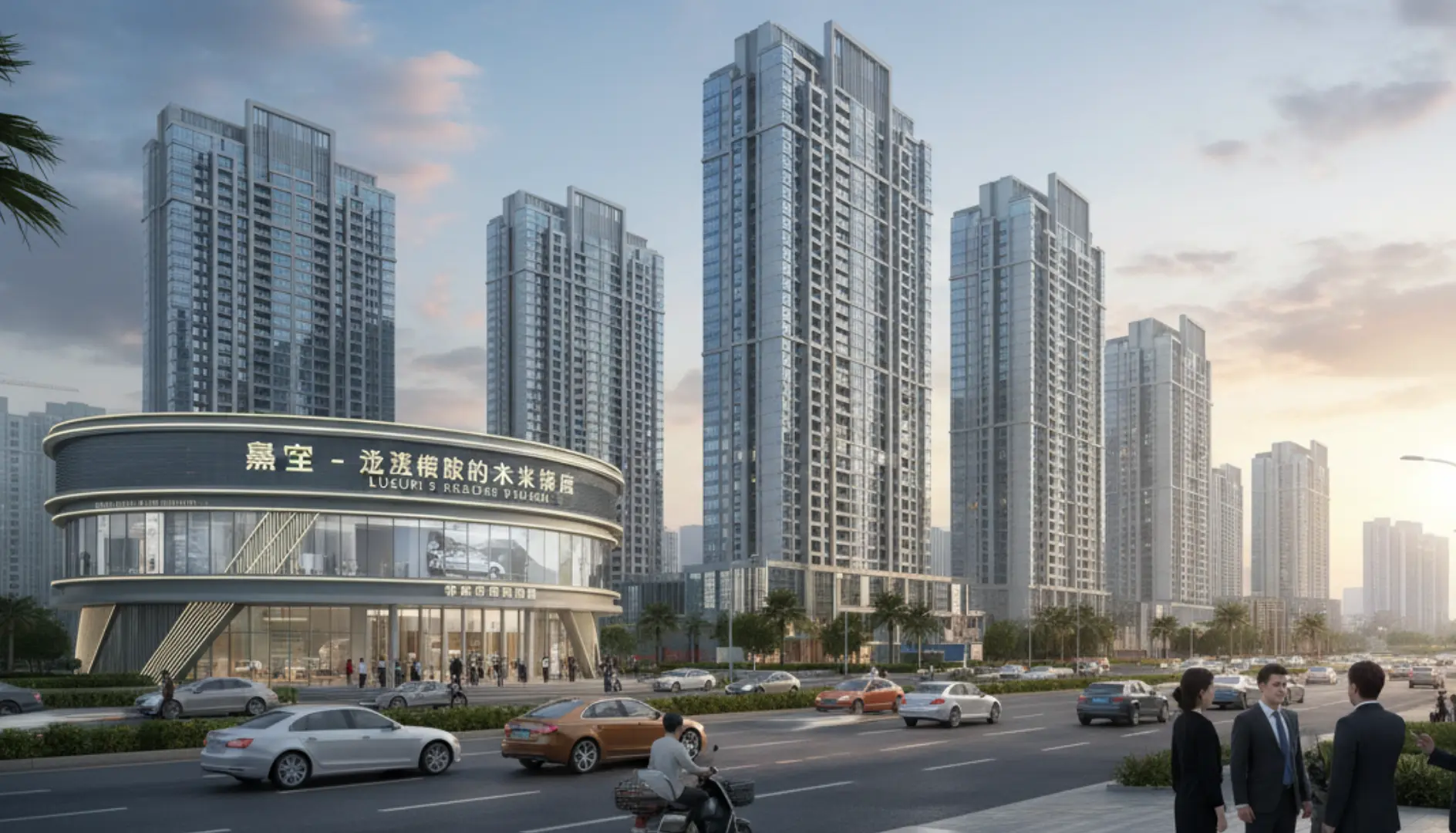
China’s economy chugged along at a 4.8% growth rate in the third quarter, the slowest sprint in a year but right on the money for what analysts predicted. Yet, lurking in the shadows like an uninvited guest at a feast, the real estate sector decided to crash the party by dragging fixed-asset investment into negative territory for the first time since the 2020 pandemic blues.
Fixed-asset investment unexpectedly shrank by 0.5% over the first nine months. Analysts, those crystal-ball gazers from Reuters polls, had optimistically penciled in a whisper-thin 0.1% gain—like betting on a tortoise in a hare race.
Property investment, ever the drama queen, deepened its sulk with a 13.9% plunge through September, outdoing its own misery from the prior 12.9% drop. Zhiwei Zhang, the sharp-eyed chief economist at Pinpoint Asset Management, called it “rare and alarming” in his note, warning that Q4 GDP might face more downward tugs than a yo-yo on a sugar rush.
It’s the first contraction since 2020’s great lockdown lullaby, per Wind Information’s historical data stretching back to 1992. As if echoing a bad sequel, Bruce Pang from CUHK Business School mused in Chinese (helpfully translated by CNBC) that real estate’s weakness “may persist longer than a forgotten Netflix queue,” hinting at a structural shake-up where investments might never boomerang back to glory.
China’s policymakers, ever the jugglers, are now eyeing other sectors to plug the gap—like swapping a leaky bucket for a sieve made of hopes and tech dreams. “We need to leverage investments elsewhere,” Pang added, sounding like a coach rallying a team down by three goals in overtime.
On a brighter note, industrial production perked up like a caffeinated squirrel, climbing 6.5% in September—beating the 5% forecast and edging past August’s 5.2%. Excluding the property pity parade, fixed-asset investment still managed a 3% rise for the quarter, though that’s a slowdown from 4.2% in August, as if the economy whispered, “I’m trying, but these weights are heavy.”
Private sector investment outside real estate? It inched up 2.1% through September, cooling from August’s 3%—a pace so tepid it could chill a hot cup of tea. Eswar Prasad, Cornell’s economics sage, emailed that this limp reflects “a lack of confidence in growth prospects and policies,” like a room full of investors playing hot potato with optimism.
Consumer spending joined the modest mambo, with retail sales ticking up 3% in September, spot-on with forecasts. But the consumer goods subsidy program’s glow is fading faster than a firefly at dawn: home appliance sales rose a yawn-inducing 3.3% last month, after a blockbuster 25.3% for the year so far.
Dan Wang from Eurasia Group, chatting on CNBC’s “Squawk Box Asia,” nailed it: “You can’t rev up domestic demand without first tap-dancing on the housing market’s grave.” Disposable incomes offered a silver lining—urban folks up 4.5%, rural residents a peppier 6% after inflation tweaks—while urban unemployment dipped to 5.2% from 5.3%, like a minor plot twist in a thriller.
Yet, retail slowed from August’s 3.4%, and Q3 GDP cooled from Q2’s 5.2%, proving even economies can’t escape the sequel slump. Exports, bless their resilient hearts, held firm amid U.S. tensions, while core CPI perked to its fastest since February 2024—but headline inflation dipped -0.3%, as deflation played coy like a cat with a laser pointer.
The People’s Bank of China, unflappable as ever, held benchmark lending rates steady for the sixth month running: 3% for one-year LPR, 3.5% for five-year. Meanwhile, top leaders huddle in Beijing through Thursday, plotting five-year goals like master chess players eyeing a board tilted by real estate rubble.
Beijing’s grand pivot? Ditch export dependency for domestic dazzle and homegrown tech wizardry, dodging U.S. restriction roadblocks. Nomura’s Ting Lu quipped in a note that “the old economy’s still the spine—straighten it before the chiropractor bill skyrockets,” noting real estate’s GDP clout second only to exports, its hold on half of household wealth, and 18% of local gov revenue.
Overzealous bets on EVs and kin? Lu calls them “counterproductive,” like baking too many cookies and ending up with a sticky floor. As China mulls a 2026-30 property purge, one can’t help but chuckle: in the economy game, sometimes the biggest growth is learning to laugh at the lumps.






Leave a Reply