
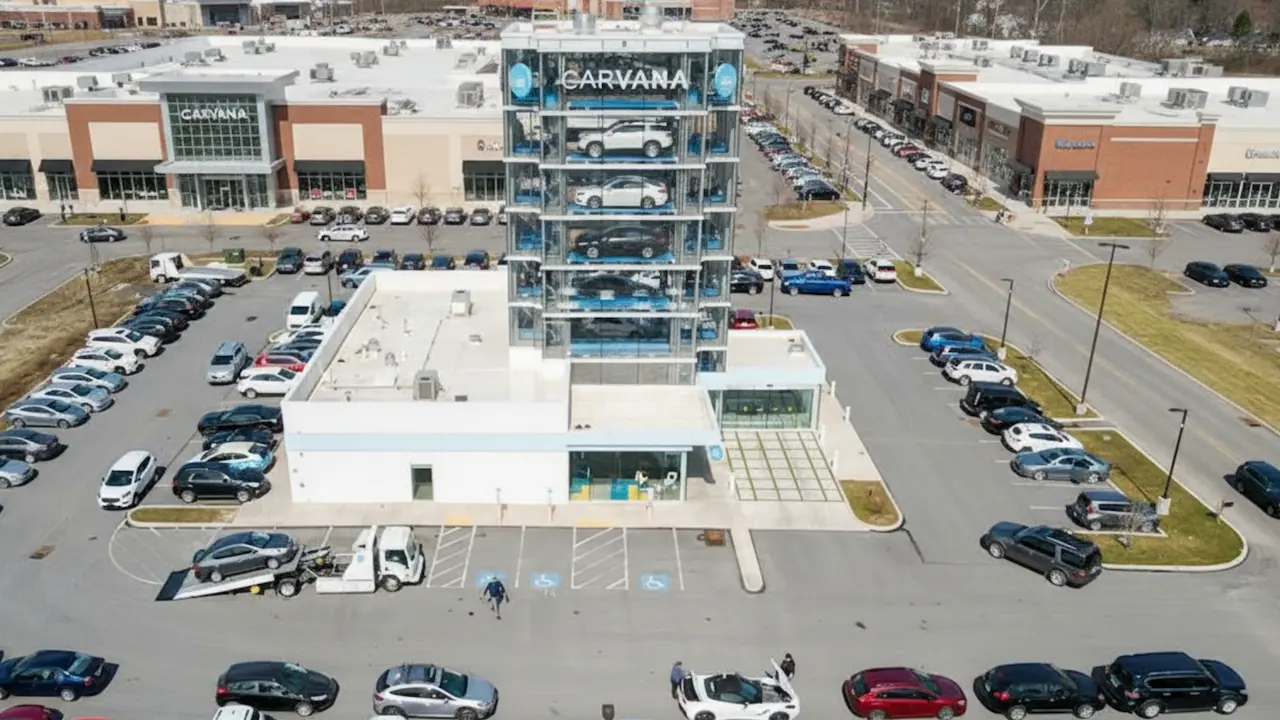
Online auto retailer Carvana is set to join the prestigious S&P 500 index on December 22, 2025, just weeks after shares soared past levels that once seemed unimaginable.
The company’s market value has ballooned to nearly $97 billion, eclipsing traditional giants like Ford and General Motors—a feat achieved through ruthless cost-cutting and a rebound in used-car demand that caught everyone off guard.
Short sellers, who piled on during the dark days of 2022, have now absorbed billions in losses, proving once again that betting against a company with giant car vending machines can lead to an unexpectedly bumpy ride.
The pain for bears has been particularly acute, with mark-to-market losses topping $8 billion since the stock’s nadir.
Meanwhile, index funds preparing for the addition are gearing up to buy millions of shares, likely giving the stock one final festive boost before the holidays.
Carvana’s journey began with explosive growth during the pandemic, only to slam into reverse in 2022 amid rising interest rates and inflation.
The company sold over twice as many vehicles that year compared to 2019, yet losses swelled to $2.9 billion as margins evaporated.
Shares cratered 98%, dipping below $4 at one point.
Analysts whispered about bankruptcy, and one prominent voice even suggested the stock might fetch as little as ten cents.
Fast forward to today, and Carvana has posted record revenue and gross profit per unit.
CEO Ernie Garcia proudly noted the team’s resilience, saying the group held together under immense pressure without falling apart.
Even the analyst who once forecasted doom has flipped to bullish, dubbing Carvana a potential “Amazon of auto retail” with ambitions for 12% of the used-car market by 2040.
The company now boasts profitability over recent quarters and a market cap exceeding $22.7 billion, ticking all the boxes for S&P inclusion.
Cost controls have been key, turning red ink into black.
Debt restructuring helped stabilize the balance sheet.
Demand for used vehicles surged as higher rates priced many buyers out of new cars.
Carvana’s fully online model gained traction, with over 30% of transactions now completed digitally from start to finish.
Those iconic vending machines, once a quirky gimmick, became symbols of efficiency.
Short sellers found themselves squeezed as the stock climbed relentlessly.
One expert likened their experience to a wild roller coaster, minus the fun cotton candy at the end.
Carvana will join the index alongside peers like Robinhood and Coinbase, fellow survivors of the 2022 bear market who staged their own impressive rebounds.
Robinhood, the meme-stock darling, already entered earlier this year after aggressive layoffs and expense cuts that even saw founders skip massive bonuses.
Coinbase navigated crypto winters to secure its spot.
All three highlight how quickly fortunes can shift in volatile sectors.
For Carvana, the S&P nod validates years of painful restructuring.
Yet the road ahead remains winding, with competition fierce and economic winds unpredictable.
Still, for a company that stared into the abyss and blinked first, this milestone feels like arriving at the dealership with keys in hand.




Leave a Reply