
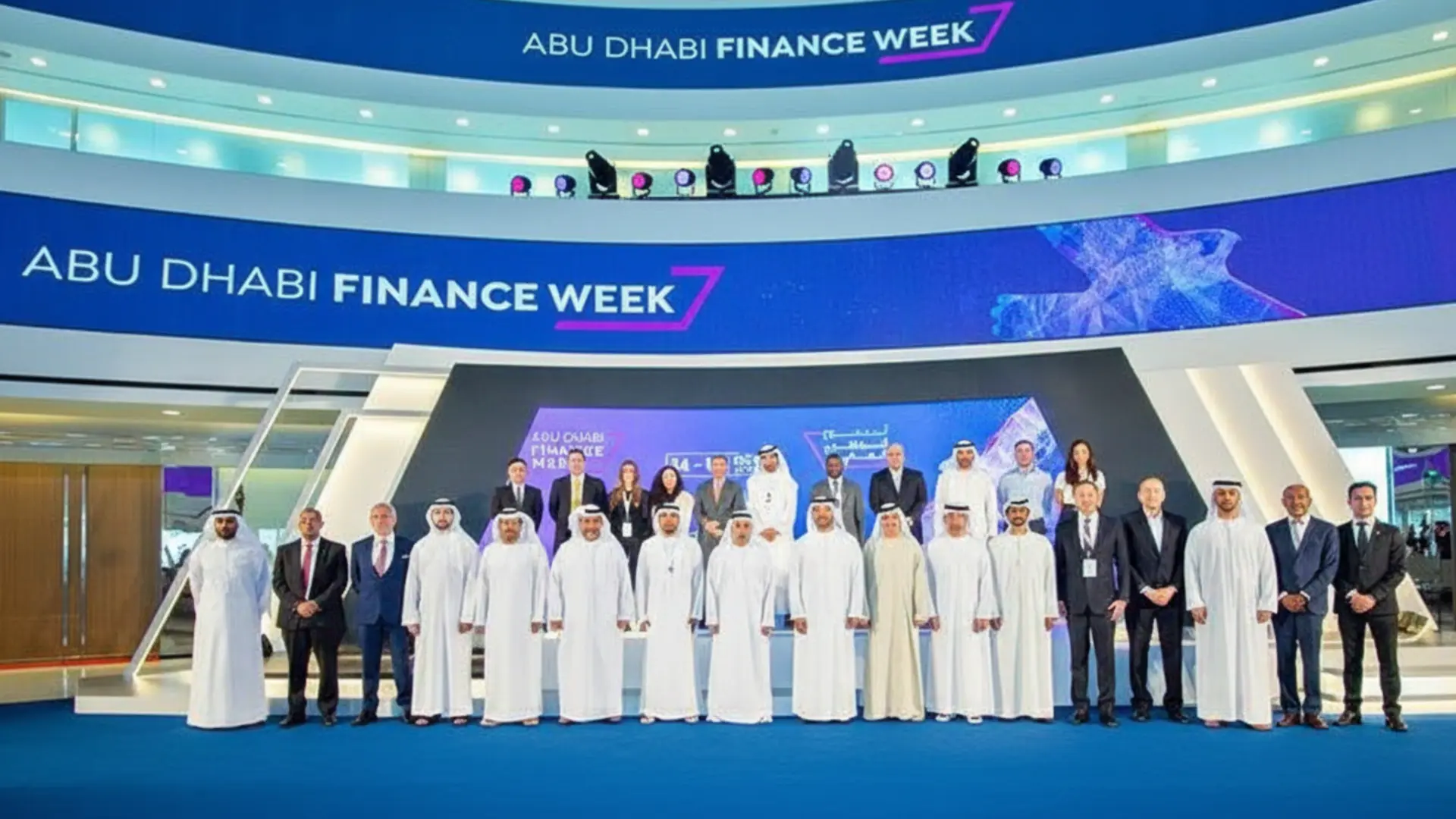
ABU DHABI — While the rest of the world argues whether artificial intelligence is the next internet or the next dot-com bust, the planet’s deepest pockets gathered in Abu Dhabi this week and delivered a delightfully contradictory verdict: yes, valuations are ridiculous, and no, we’re not getting off the ride.
In a spectacle that felt half financial summit and half group therapy for billionaires, some of the biggest names in money management admitted the AI party looks dangerously tipsy—yet promptly ordered another round of infrastructure investments.
Markets barely flinched, because apparently nothing says “bubble” like watching trillion-dollar managers shrug and say “pass the shovels.” Energy stocks quietly perked up at the prospect of selling twice as much electricity to the same planet that still can’t agree on light-bulb standards.
Meanwhile, anyone hoping for a sane pullback in AI stock prices left the conference feeling like the only sober guest who arrived at the open bar at 2 a.m.—technically correct, but deeply irrelevant.
Jenny Johnson, who oversees $1.7 trillion at Franklin Templeton, took the stage and basically told the room to calm down about seven overpriced stocks.
“It’s the gold rush,” she said with the serene confidence of someone whose own pick-and-shovel emporium is doing just fine, thank you.
Translation: sure, the prospectors are paying $10,000 for a hammer, but someone still has to build the mines.
Blackstone’s Stephen Schwarzman, a man whose net worth could probably power a small AI data center on its own, painted a slightly more apocalyptic picture.
He pointed out that training tomorrow’s all-knowing algorithms will require roughly doubling the entire planet’s electricity grid.
Somewhere, a coal plant in West Virginia just heard wedding bells.
Tech giants have responded the only way they know how: by sprinting to the bond market faster than a startup founder chasing seed funding.
Alphabet, Meta, and Oracle have been issuing debt like college freshmen discovering credit cards—except the minimum monthly payment could light Las Vegas for a year.
Over at the Abu Dhabi Investment Council, Shiv Srinivasan surveyed the same frothy valuations and reacted the way one reacts to a dessert menu after a seven-course meal.
Still ordered the chocolate cake.
“I like AI and biotech,” he announced, as if personal preference is now an investment thesis for a sovereign wealth fund.
He added that the industry is only halfway through its journey, which is finance-speak for “please keep the music playing a little longer.”
Conference attendees nodded along solemnly, occasionally glancing at their phones to see if Nvidia had split again while they were listening to metaphors about shovels and electricity.
One panel moderator bravely asked whether we might be in a bubble.
The room treated the question the way one treats a toddler asking if Santa is real—polite smiles, quick subject change.
By the time the coffee breaks ended, the consensus seemed clear: if this is a bubble, it’s the most expensively constructed, best-air-conditioned bubble in human history.
And nobody in the room appeared ready to be the first to stop blowing.

Leave a Reply