
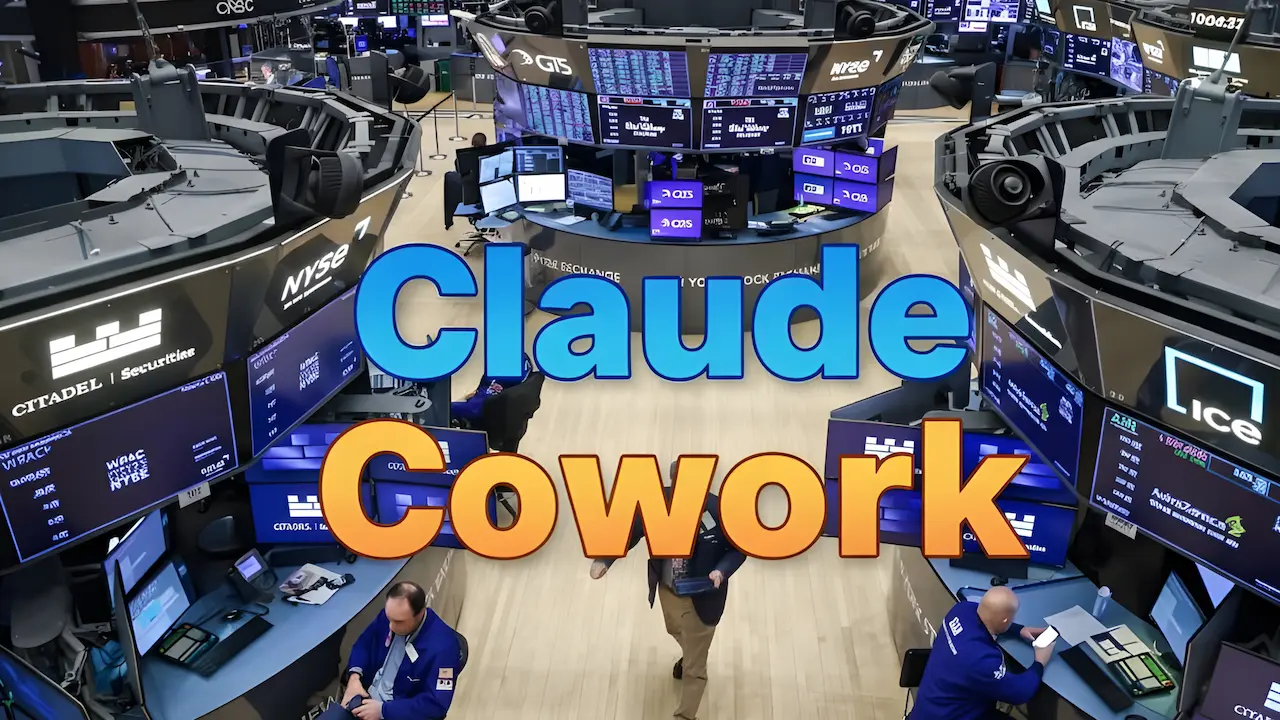
Anthropic’s Claude Cowork just strolled into the office like the new intern who immediately starts doing everyone else’s job—and Wall Street collectively spilled its coffee in terror.
Investors watched in horror as software stocks took a nosedive Tuesday, with some companies shedding double-digit percentages faster than you can say “billable hours obsolete.” The culprit? Anthropic’s fresh plugins for Claude Cowork, turning the AI into a suspiciously competent virtual colleague that reads files, organizes folders, drafts documents, and now specializes in sales, finance, marketing data, and—gulp—legal work.
The impact hit like a poorly timed layoff email. A software industry ETF cratered 5.69% on Tuesday—its worst day since April—while Thomson Reuters plunged a record-shattering 15.83%, LegalZoom tanked nearly 20%, and RELX dropped 14%.
Even FactSet and Blue Owl felt the sting. By Wednesday, a few bargain hunters showed up to buy the dip, nudging some shares up a modest 1% or so, but the damage was done: billions wiped out in a blink because someone gave an AI read-write access to your hard drive.
Claude Cowork, rolled out in research preview earlier this year and supercharged with these industry plugins on Friday, acts like that coworker who never sleeps, never complains, and somehow always knows where the quarterly report is buried.
It handles multi-step tasks autonomously, from generating financial models to reviewing contracts or prepping sales calls. Suddenly, the old SaaS subscription model—pay monthly for tools that do one thing reasonably well—looks about as modern as a fax machine in a TikTok video.
Why the panic? Simple math with a side of existential dread. If developers (and now non-technical folks) can cobble together custom workflows in minutes using AI, why shell out for specialized software subscriptions?
As one analyst dryly observed, fewer technical users are now empowered to replace existing workflows. Translation: your expensive legal research database might soon be competing with an AI that works for free after the initial setup—and probably drafts better memos while it’s at it.
The sell-off spread like office gossip. Legal and financial data providers felt the sharpest pain, because nothing says “disruption” like an AI that can sort nondisclosure agreements without charging by the hour. Yet skeptics point out this isn’t the first AI scare.
Remember when a cheap Chinese model briefly shaved $600 billion off Nvidia’s value last year? Nvidia recovered, hit $5 trillion, and kept trucking. History suggests today’s freakout could be tomorrow’s overreaction.
Anthropic CEO Dario Amodei has warned AI might displace half of entry-level white-collar jobs in the next one to five years—unusually painful disruption, he called it. Salesforce’s Marc Benioff already declared his company won’t hire more engineers, customer service reps, or lawyers thanks to AI tools.
Meanwhile, other voices insist general models won’t replace deep industry expertise anytime soon. The sell-off, some analysts say, is pure sentiment—AI uncertainty in action—likely to normalize once measurable returns appear.
For now, though, the market is treating Claude Cowork like the office newcomer who brings homemade cookies and then reorganizes the entire filing system on day one. Everyone smiles politely while quietly updating their résumés.









Leave a Reply