
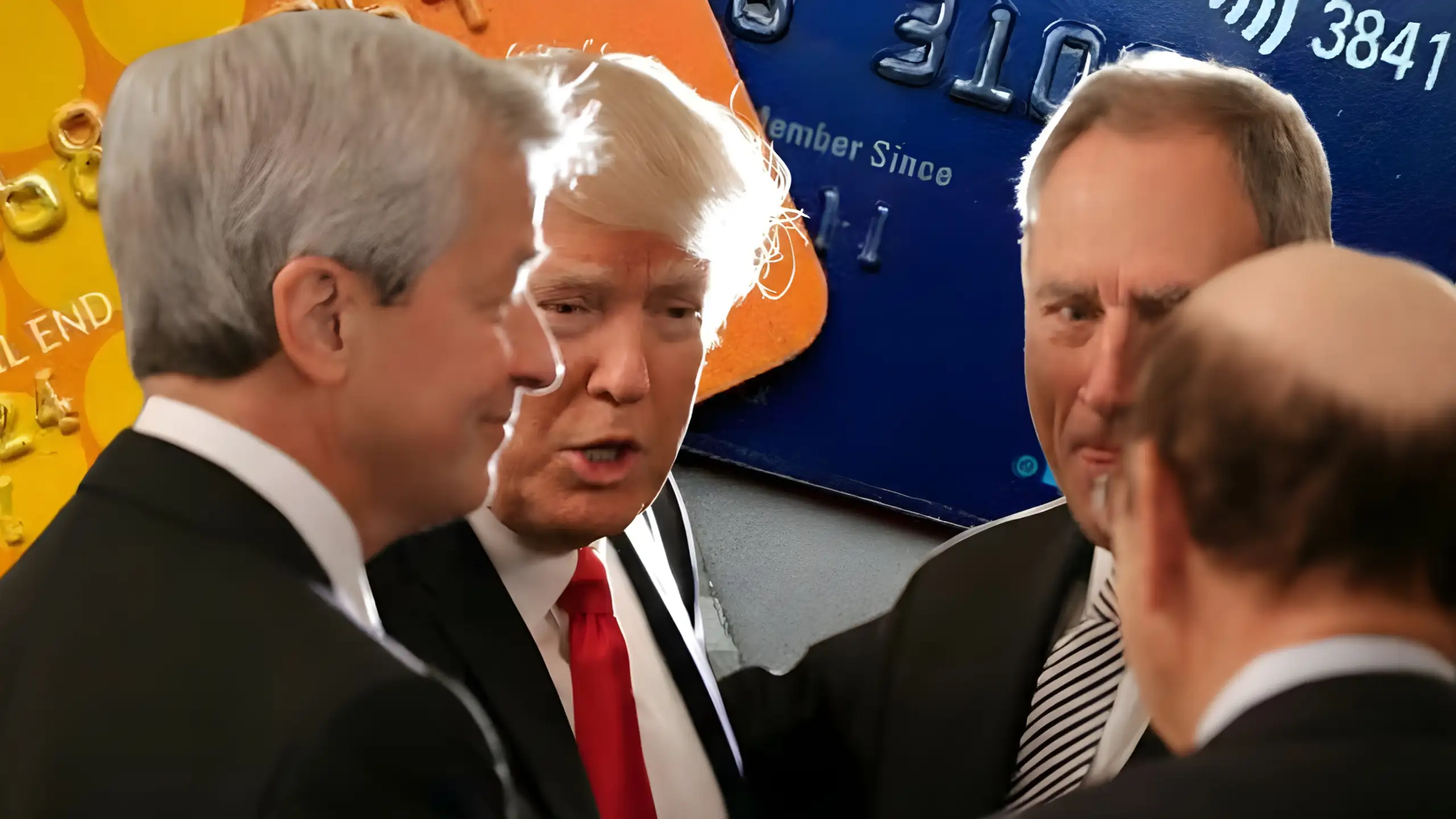
JPMorgan Chase CEO Jamie Dimon has declared President Donald Trump’s proposed 10% cap on credit card interest rates an impending “economic disaster”—while calmly assuring everyone that his bank would somehow muddle through the apocalypse.
The warning came straight from the snowy peaks of Davos, where the world’s financial elite gather annually to discuss global issues over overpriced hot chocolate. Dimon, speaking at the World Economic Forum, painted a vivid picture of chaos: such a cap would yank credit away from roughly 80% of Americans who treat their cards as emergency lifelines rather than shopping sprees.
Forget luxury purchases; we’re talking missed utility bills, skipped rent, and perhaps a nationwide surge in awkward family conversations about borrowing five bucks for groceries.
The fallout, according to Dimon, wouldn’t land hardest on the big banks. Oh no. Those poor souls would merely tighten belts, trim rewards programs, and maybe sell fewer private jets. The real victims?
Restaurants watching tables empty because diners can’t float the bill, retailers staring at barren aisles, travel companies wondering why vacations suddenly became a myth, schools scrambling for supplies, and municipalities left wondering how to pay for snow plows when the plastic lifeline snaps. It’s the classic case of shooting the messenger and then wondering why the mail stops arriving.
Trump floated the one-year cap idea earlier this month on his Truth Social platform, aiming to shield voters from the sting of near-record rates—averaging around 20% or higher—right before congressional elections heat up.
The announcement caught Wall Street off guard, sending bank stocks into a brief but dramatic nosedive. Implementation remains a mystery: no clear legislation, no executive magic wand, just a bold proclamation and a deadline that came and went with rates stubbornly unchanged.
Dimon suggested a modest experiment—why not test the cap first in Vermont and Massachusetts? Those states, home to vocal cap supporters in the Senate, could serve as perfect petri dishes for the policy. If it works, great; if not, well, at least the rest of the country avoids the experiment.
Other banking heavyweights echo the tune. Citigroup’s Jane Fraser, chatting with CNBC from the same Swiss mountaintop, nodded along: sure, affordability matters, but slapping a hard cap would do more harm than good to the economy. Congress, she predicted, isn’t likely to play ball anyway.
Credit cards thrive on high rates precisely because they’re unsecured—no collateral beyond your promise to pay someday. Lenders price in the risk of defaults, especially from those living paycheck to paycheck. Slash that pricing power, and many issuers might simply shrink credit lines, ditch marginal customers, or pivot to safer bets.
The irony? Those most in need of flexible credit could end up with none, turning to pricier alternatives like payday loans or “buy now, pay later” schemes that sometimes feel like financial Russian roulette.







Leave a Reply