
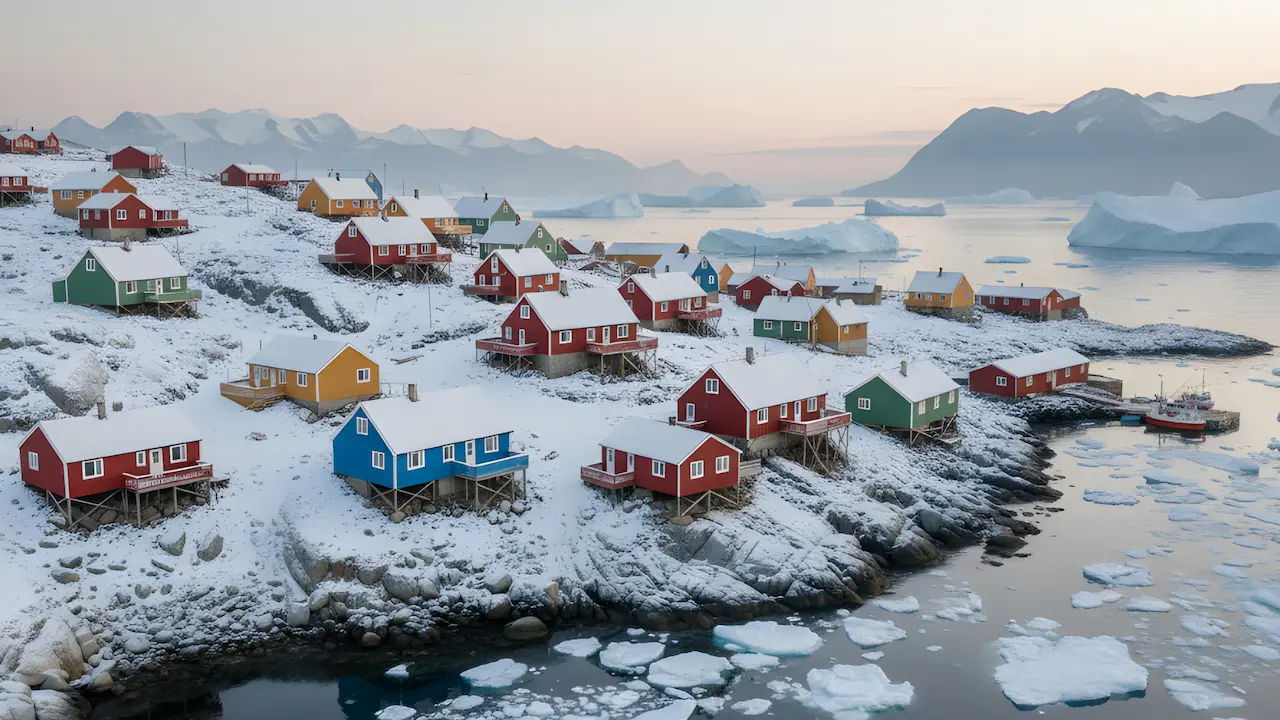
President Donald Trump has slapped a tariff threat on eight NATO allies because they dared to send a handful of troops to Greenland for what everyone else calls “routine Arctic exercises.”
The president declared a 10% tariff on goods from Denmark, Norway, Sweden, France, Germany, the UK, the Netherlands, and Finland starting February 1, escalating to 25% in June—unless Denmark agrees to sell the massive, icy island outright to the United States. It’s the diplomatic equivalent of holding your friends’ cheeseburgers hostage until they hand over their backyard igloo.
The impact could be chilly for transatlantic relations and even chillier for consumers on both sides of the Atlantic. These tariffs threaten to unravel a fragile US-EU trade truce hammered out just months ago at Trump’s Turnberry resort, where leaders presumably thought they’d sealed a deal over golf and handshakes.
Now Europe faces higher costs on everything from German cars to Swedish meatballs, while American businesses reliant on those imports might find their profit margins melting faster than Greenland’s glaciers. Analysts warn this could spark a retaliatory spiral, with the EU eyeing its anti-coercion tools—because nothing says “strong alliance” like tariff ping-pong among best friends.
The saga reignited when Trump posted on Truth Social that these nations had “journeyed to Greenland, for purposes unknown,” apparently viewing a few dozen troops in joint drills as some shadowy plot rather than standard NATO Arctic preparedness.
Denmark, which governs the autonomous territory, has insisted Greenland isn’t on the market—ever. Protests erupted across Denmark and in Nuuk, with locals waving flags and chanting against any US takeover, proving that even in sub-zero temperatures, sovereignty gets people marching.
European leaders fired back with unusual unity. UK Prime Minister Keir Starmer called the threat “completely wrong.” France’s Emmanuel Macron labeled it “unacceptable.” Sweden’s Ulf Kristersson declared his country wouldn’t be “blackmailed.”
A joint statement from the eight nations warned of a “dangerous downward spiral,” while EU officials signaled emergency meetings and potential countermeasures. Even some US voices pushed back: bipartisan senators urged diplomacy over threats, and a retiring Republican congressman suggested invading Greenland would end Trump’s presidency faster than a polar vortex.
Trump’s team has framed the push as pure national security—Greenland’s strategic spot and resources make it vital against rivals like China and Russia. One official argued Denmark lacks the muscle to defend or develop it properly.
Yet critics note the US already has basing rights there under old agreements, and NATO’s Article 5 covers attacks on Denmark’s territory anyway. The tariff play appears to be the latest transactional tactic in a second term where leverage seems to trump longstanding pacts.
As the EU ambassadors huddled Sunday and leaders scrambled for phone lines, the world watched an alliance test its limits over the world’s largest island—which, funnily enough, remains mostly ice and stubborn independence.
Whether the tariffs actually bite or serve as bargaining chips remains unclear, especially with Supreme Court cases looming over such executive powers. For now, the Arctic has never felt so heated.






Leave a Reply