
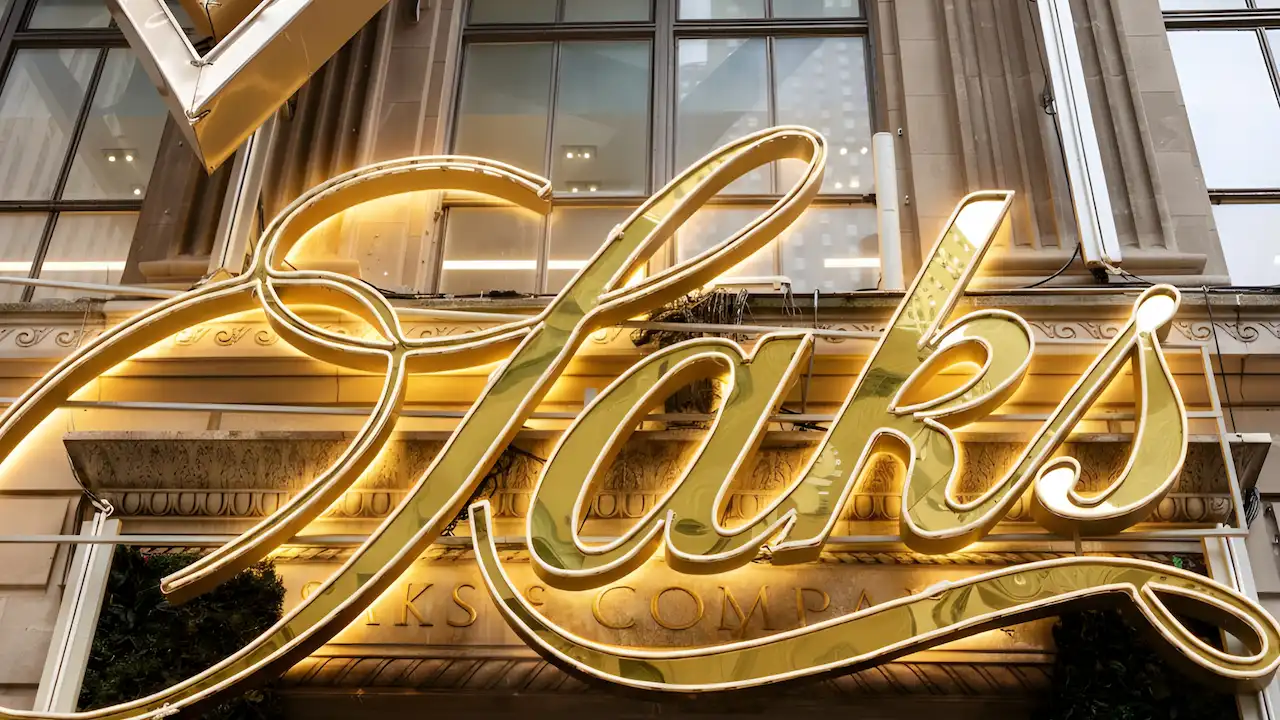
Saks Global, the luxury retail empire uniting Saks Fifth Avenue, Neiman Marcus, and Bergdorf Goodman, filed for Chapter 11 bankruptcy protection on January 14, 2026, in Houston’s federal court—barely over a year after its ambitious $2.7 billion acquisition of Neiman Marcus turned what was meant to be a powerhouse into a cash-strapped cautionary tale.
The merger, dreamed up for more than a decade by former executive chairman Richard Baker, promised to defy the retail industry’s headwinds with massive synergies and a dominant luxury presence. Instead, it loaded the combined company with crushing debt—$2.2 billion in high-interest junk bonds—and triggered an immediate liquidity crunch that left vendors unpaid and shelves embarrassingly bare.
The fallout unfolded like a slow-motion luxury disaster. Right after closing the deal in late 2024, the company burned through cash settling merger-related obligations, leaving scant funds for everyday bills. Vendors, understandably miffed at late payments, started holding back shipments. Inventory gaps widened, customers found empty racks instead of must-have items, sales tanked, and cash flow spiraled downward in the classic retail vicious cycle.
Adding insult to injury, integration glitches hit just before the 2025 holiday season—one of retail’s make-or-break periods—disrupting flows at Neiman Marcus and Bergdorf Goodman when they could least afford it. Saks’s asset-based borrowing meant less inventory translated to less credit available, creating a perfect storm of constraints. By August 2025, inventory sat 9% below the prior year, with over $550 million less in receipts than planned.
Analysts had warned it was a recipe for disaster: two struggling companies stapled together with unsustainable debt, banking heavily on promised $600 million in long-term synergies that proved harder and costlier to realize than anticipated. Moody’s called it unsustainable from day one. When the company missed a key interest payment to bondholders in late December 2025, the end was near.
Yet executives insist this isn’t a story of fading demand for luxury goods or a dying brick-and-mortar model. Chief restructuring officer Mark Weinsten declared in court filings that Saks isn’t a declining business—top customers keep spending robustly when products are actually in stock. The real culprit: inventory shortages and shaken vendor confidence, not shoppers abandoning high-end fashion.
The company now has $1.75 billion in new financing to keep operations humming during restructuring, including $500 million available post-emergence later this year. It pledges to honor customer programs, pay vendors going forward, and maintain payroll. Former Neiman Marcus CEO Geoffroy van Raemdonck steps in as the new leader, tasked with rebuilding trust and replenishing shelves.
Still, the broader challenge looms large. Luxury brands increasingly sell direct through their own sites and stores, reducing reliance on department stores. Turning this around will demand more than fresh cash—it requires operational overhaul in a tough environment where even the wealthy are choosier.







Leave a Reply