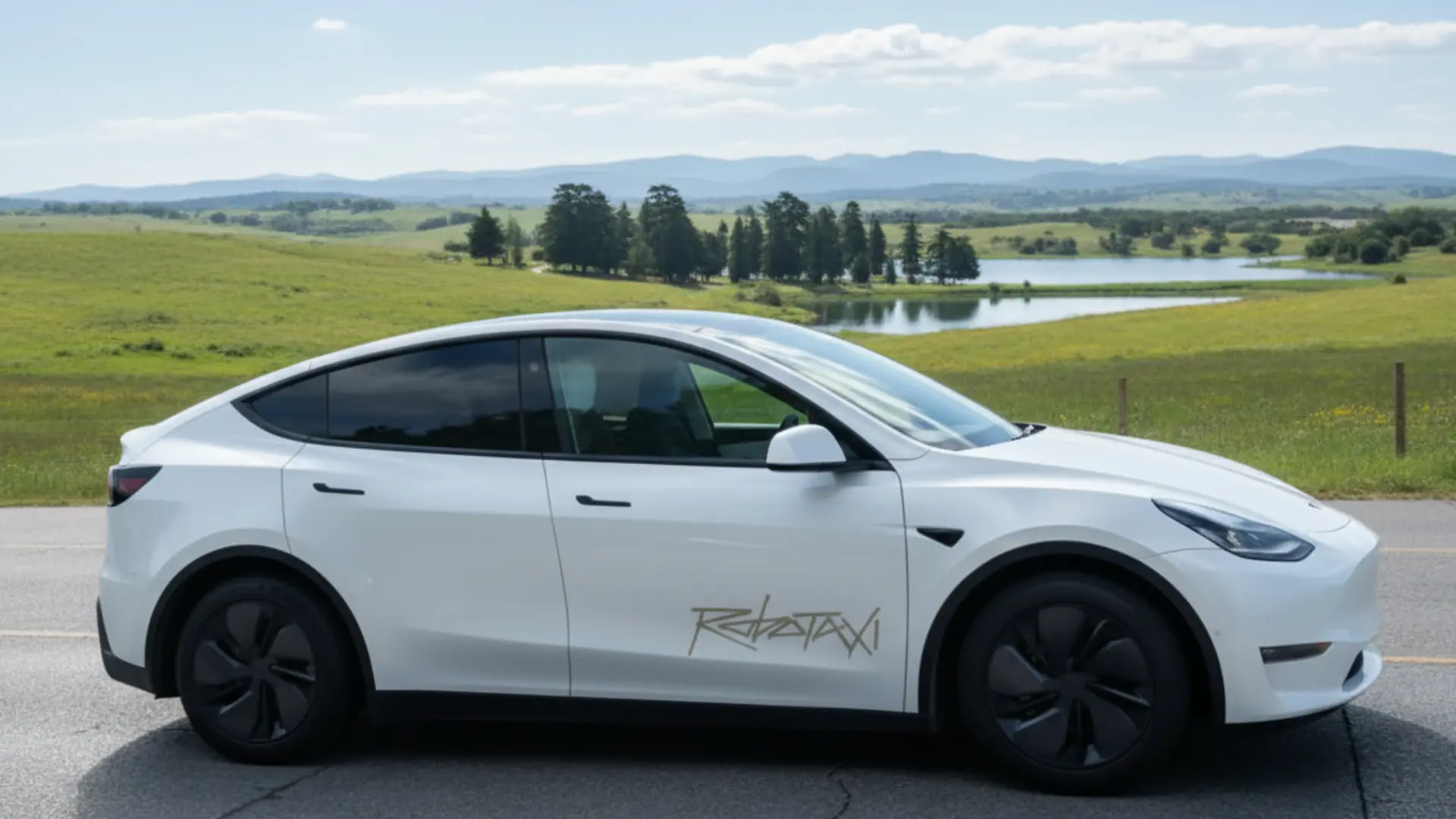
Tesla investors woke up to a delightful surprise this week when CEO Elon Musk casually announced that the company’s robotaxis are now cruising Austin streets completely empty—no driver, no passenger, no one to blame if it parallel parks itself into a cactus.
Shares promptly zoomed to their highest level of 2025, proving once again that nothing excites Wall Street quite like the promise of cars that drive better than most humans after a double espresso.
The news sent Tesla’s stock soaring around 4% in a single session, pushing it past levels not seen since last December’s post-election euphoria. Investors, apparently tired of waiting for actual robot butlers, decided this glimpse of unsupervised autonomy was worth betting the farm on.
While traditional car sales remain the bulk of revenue—and face some headwinds—the market clearly prefers valuing Tesla as an AI juggernaut capable of turning every garage into a passive income stream. One prominent analyst even peged the autonomous opportunity at a cool trillion dollars, suggesting the real impact might be on shareholders’ blood pressure as valuations stretch further into the stratosphere.
The breakthrough came over the weekend when videos surfaced of Tesla Model Ys gliding through Austin with utterly vacant interiors.
Musk confirmed the sightings on social media, stating testing is underway with no occupants in the car.
This marks a significant step from the supervised rides launched in June, where a human safety monitor rode shotgun—presumably to prevent the vehicle from developing road rage.
The fleet in Austin remains modest, hovering around 30 to 60 vehicles.
Yet bulls argue scale is Tesla’s secret weapon, with vast data from millions of miles driven by owners giving it an edge.
Wedbush’s Dan Ives forecasts Tesla capturing 70% of the global autonomous market over the next decade. He credits unmatched scale and an expanding AI footprint for this dominance.
Competitors like Waymo already operate thousands of commercial robotaxis, delivering hundreds of thousands of paid rides weekly. Waymo’s fleet provides a reminder that being first doesn’t always mean being biggest.
Investors seem unfazed, focusing instead on potential regulatory relief that could accelerate deployments. Ives predicts federal hurdles easing in the coming months, untangling what he calls a longstanding spiderweb.
Plans include doubling the current fleet soon and eyeing expansions to places like Phoenix. Next year brings hopes for mass production of the dedicated Cybercab vehicle.
Musk recently suggested unsupervised operations were mere weeks away. The timeline has investors glued to their screens, wondering if this time the future arrives on schedule.
Revenue still flows primarily from automotive sales. The dream, however, centers on on-demand fleets and eventually humanoid robots filling homes.
Each empty test drive serves as a teaser trailer for that grander vision. Shareholders, riding the wave, appear willing to suspend disbelief a little longer.
After all, in the world of high-tech bets, a car driving itself solo feels like progress worth celebrating.


Leave a Reply