
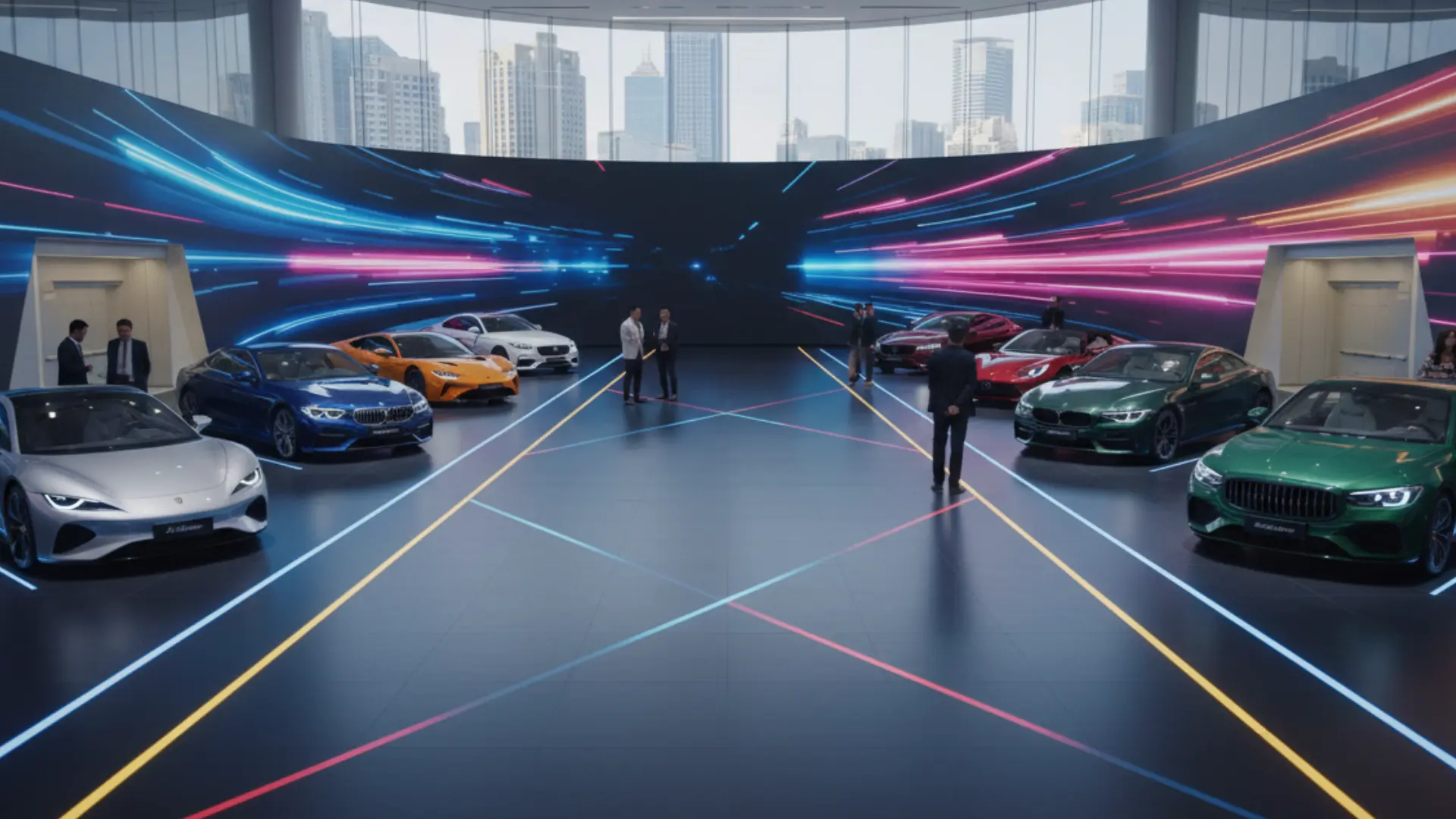
In China’s vast auto market, once a playground for European luxury badges, buyers are quietly turning to homegrown brands loaded with gadgets and offered at friendlier prices. This shift has left stalwarts like Porsche, Mercedes-Benz, and BMW watching their premium dominance slip away amid a cooling economy.
European carmakers, long accustomed to hefty profits from Chinese millionaires, now find themselves in a squeeze that’s as uncomfortable as a budget airline seat in first class. Sales plunges mean slimmer margins, forcing executives to confront “hyper-competition” that shows no signs of easing.
Meanwhile, domestic giants like BYD are revving ahead, slashing prices and innovating faster, turning what was a luxury slowdown into a full-blown market reshuffle where affordability trumps prestige.
The numbers tell a tale of reversal. Premium cars, priced above 300,000 yuan, saw their market share peak at around 15 percent by 2023 after doubling from 2017 levels.
Now, that share has dipped to 14 percent in 2024 and further to 13 percent in the first nine months of 2025, according to S&P Global Ratings.
Analysts point to a prolonged property slump leaving wallets lighter and a growing reluctance among the wealthy to flaunt extravagance. Paul Gong of UBS notes many prefer keeping a low profile these days.
A government subsidy of 20,000 yuan for trading in old vehicles toward electric or hybrid models has sweetened the deal for cheaper options. Buyers naturally gravitate where the discount stretches furthest—often entry-level Chinese-made cars.
Claire Yuan at S&P highlights slowing growth as a core culprit weakening demand for brands like Mercedes and BMW.
Chinese manufacturers have stepped up aggressively. BYD, for instance, has already eclipsed Volkswagen as China’s top seller and leads in new energy vehicles.
The company has trimmed prices on electrics and hybrids by up to 34 percent, pressuring rivals like Geely and Leapmotor.
Market shares reflect the change. Chinese brands claimed nearly 70 percent of passenger car sales in the first 11 months of this year.
German brands held 12 percent, Japanese around 10 percent, and U.S. brands nearly 6 percent, per the China Association of Automobile Manufacturers.
Specific hits are stark. Mercedes-Benz saw unit sales in China fall 27 percent in the July-September quarter.
BMW and Mini deliveries dropped 11.2 percent year-on-year in the first nine months of 2025.
Porsche and Aston Martin have flagged weaker Chinese demand. Even Ferrari reported a 13 percent drop in shipments to greater China in January-September—the only region with a decline.
Mercedes CEO Ola Källenius warned investors that intense competition in China persists. The company described the premium segment there as “tense.”
Dealerships feel the pinch acutely. In Beijing, a used 2024 Porsche Panamera with low mileage lists at 950,000 yuan—down sharply from its original 1.4 million yuan price tag.
Salesperson Li Yi attributes it to the sluggish economy, affecting not just Porsche but Benz, BMW, Bentley, and Rolls-Royce alike.
Other used-car dealers echo the gloom, noting premium models fetching far less over the past year.
One quipped that pockets are now cleaner than faces these days, as buyers think twice before splurging.
Overall production hit a record over 3.5 million units in November, but domestic sales dipped 4 percent as some subsidies phased out regionally.
Yet the broader trend favors innovation and value from local players, leaving foreign luxury icons to adapt or idle in the slow lane.




Leave a Reply