
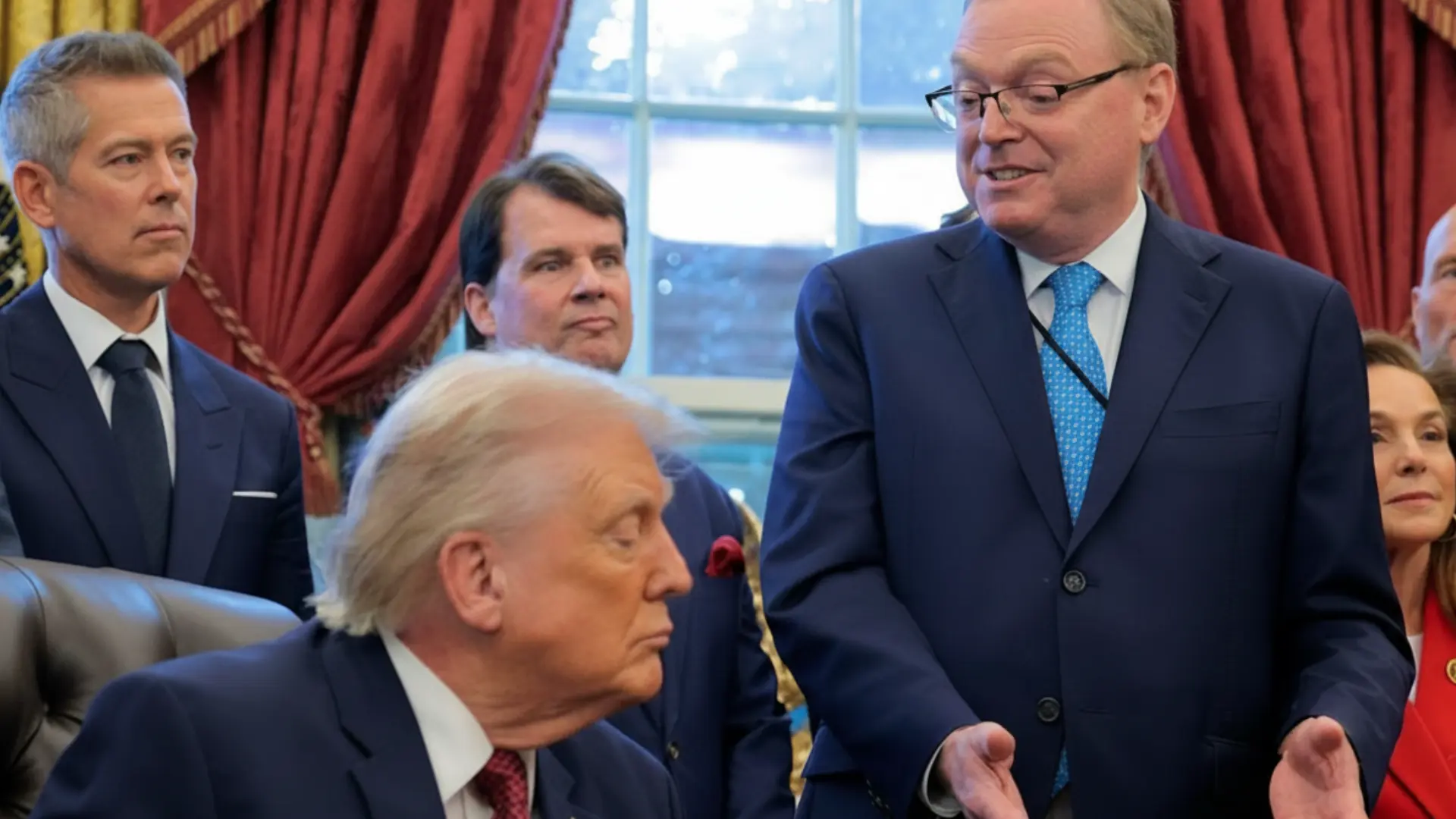
The Federal Reserve cut interest rates by a quarter point for the third time in 2025, only to face three dissents pulling in opposite directions. As attention shifts to Jerome Powell’s impending departure in May 2026, betting markets are buzzing over whether the next chair will be one Kevin or the other—both seen as friendly to lower rates.
Markets didn’t waste time reading the tea leaves. The dollar took a modest dip against a basket of currencies, as traders bet on a potentially friendlier Fed under new leadership.
Bond investors, long accustomed to the central bank’s steady hand as a reliable buffer against stock swings, now ponder if that calm anchor might wobble if policy tilts too far toward growth at the expense of taming prices.
The Federal Open Market Committee wrapped up its year with a 9-3 vote to lower the federal funds rate to 3.5%-3.75%.
One governor pushed for a bolder half-point slash, while two presidents preferred standing pat.
This marked the most contentious decision of 2025, with disagreements spanning both sides of the debate.
The Fed’s updated projections held steady: just one more cut expected in 2026.
Committee members appear cautiously optimistic about growth picking up, even as they keep a watchful eye on inflation lingering above target.
Meanwhile, the spotlight swung to who might succeed Chair Jay Powell when his term expires in May.
President Trump, in comments to the Wall Street Journal, praised both Kevin Hassett, current National Economic Council director, and former Fed governor Kevin Warsh as “great.”
He hinted at a couple of other strong contenders too.
Betting platforms like Polymarket had initially pegged Hassett as the heavy favorite.
A fresh report revived Warsh’s prospects, narrowing the gap in the odds.
Both candidates share a reputation for aligning with preferences for easier monetary policy.
Foreign exchange strategists note that anticipation of a Trump-aligned Fed chief has contributed to recent strength in other currencies against the dollar.
The broad rally suggests markets are factoring in a shift toward more accommodative stances.
In fixed income circles, analysts highlight how U.S. Treasurys have traditionally served as a steady counterweight to stock market turbulence.
That role hinges on the Fed’s perceived independence and commitment to stable prices.
Should the next leader appear to prioritize expansion over inflation control, expectations could shift unpredictably.
For now, markets seem content to extend the benefit of the doubt.
Yet the question lingers: will the institution’s hard-earned credibility hold firm under fresh direction?
As the year closes, the Fed’s deliberate pace contrasts with the swift drama unfolding in nomination speculation.
Investors brace for data-driven decisions ahead, while pondering how personal chemistry at the top might reshape the economic landscape.
One thing remains clear: in central banking, even a quarter point can spark outsized conversation.
Especially when the next chapter involves choosing between two Kevins.







Leave a Reply