
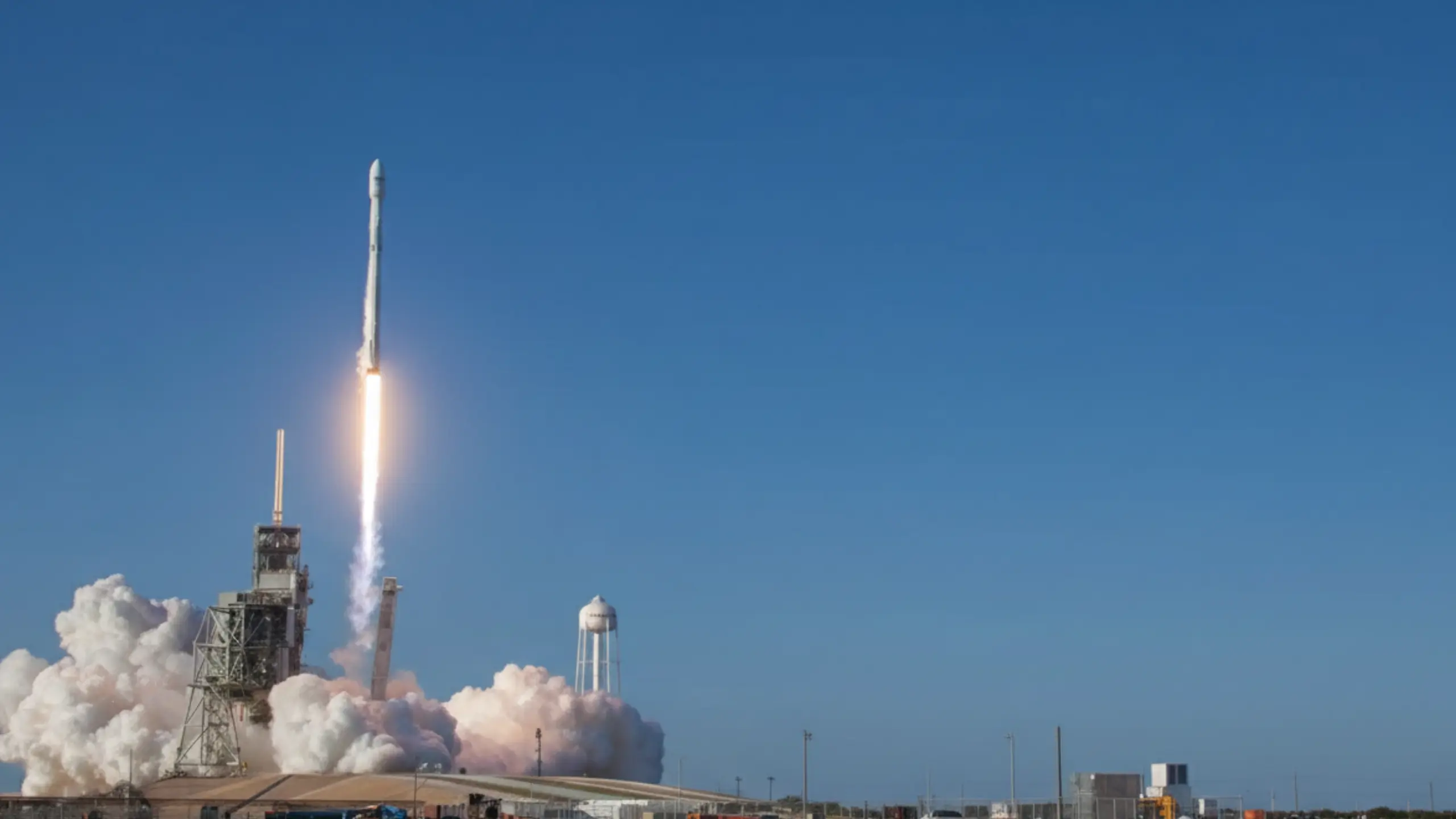
SpaceX is reportedly plotting an initial public offering as early as June, aiming to haul in over $25 billion to bankroll Elon Musk’s eternal crush on Mars colonization. Picture the scene: a private space behemoth, long teasing investors like a cosmic carrot on a stick, finally dangling shares that could value the whole shebang at a cool $1 trillion or more—because nothing says “reliable investment” like betting on humanity’s off-world vacation plans.
This potential IPO isn’t just ink on a prospectus; it’s a gravitational pull that could yank retail investors from their couches faster than a Black Friday stampede for discounted Teslas. With demand pegged as “substantial” by market watchers, expect grandma’s Roth IRA to pivot from blue chips to blue skies, all while hedge funds dust off their star charts for a slice of the action.
The real kicker? Proceeds could juice innovations like space-based data centers—think servers chilling in orbit, sipping on zero-gravity AC, and outpacing Earth’s sweaty server farms without breaking a sweat or the planet’s power grid.
But here’s the cosmic comedy: while Musk’s net worth already eclipses $460 billion—like he’s hoarding spare change in asteroid vaults—this windfall might just fund the ultimate billionaire flex: a one-way ticket to the Red Planet for his inner circle, leaving us Earthlings to foot the bill for the follow-up sequel, “Mars: The Budget Cut Edition.”
SpaceX, the rocket whisperer behind reusable boosters and a satellite swarm called Starlink that’s beaming internet to forgotten corners of the globe, has kept suitors at arm’s length for years. Now, with whispers from insiders hitting Reuters like a Falcon 9 liftoff, the company’s mulling a debut that could eclipse even the wildest dot-com dreams. Investors, those eternal optimists with portfolios as volatile as a solar flare, are licking their chops—not despite Musk’s flair for drama, but because of it.
Musk, ever the conductor of chaos in a tuxedo made of recycled rocket parts, runs five ventures with the precision of a caffeinated improv troupe. Take Tesla, his lone public play: it’s survived SEC smackdowns, tweet-fueled tumbles, and that time he dubbed regulators “bastards” after they yanked his chairman gig over a cheeky “funding secured” fib in 2018. Yet here we are, with shares still soaring higher than his Cybertruck’s hype.
Toss in his recent tango with politics—a four-month detour helming the Trump administration’s Department of Government Efficiency that left Tesla’s sales sputtering like a prototype engine on test day. Musk even dangled a Tesla exit threat unless the board greenlit a $1 trillion pay package spanning a decade, because why settle for billions when you can aim for galactic greed?
Analysts shrug it off as the spice in the stew: “The reward compensates for the risk,” quips Christopher Marangi of GAMCO Investors, whose firm already nibbles at SpaceX via satellite side deals.
And oh, the sizzle on that steak. Dan Hanson of Neuberger Berman calls it the rare beast with muscle now—launches clocking billions—and dreams deferred, like Mars taxis that might one day ferry us past traffic jams into asteroid traffic. Their $2.1 billion fund’s already parked 5% in private SpaceX slices, betting the farm on a valuation that blends today’s cash cows with tomorrow’s starships.
James St Aubin of Ocean Park sees it as tech’s next siren song, potentially crowning SpaceX in a “Great Eight” pantheon alongside the Magnificent Seven—because nothing says market maturity like expanding your tech gods from seven to eight, as if Wall Street’s collecting them like Pokémon cards. Shay Boloor of Futurum Equities dials up the delirium: “The craziest IPO ever,” he predicts, with a $1.5 trillion debut possibly ballooning to $2 trillion on opening bells, leaving underwriters scrambling for oxygen masks.
Yet, lest we all book front-row seats to the rocket parade, history waves a cautionary comet tail. Jay Ritter’s decades of IPO autopsies reveal that hyped-up newcomers, valued at 40 times sales or more, often fizzle faster than a spent stage booster. From 1980 to 2023, just seven of 45 such darlings traded higher after three years; the rest shed half their value, trailing the market by 63% like a lost probe in deep space.
Think Beyond Meat’s 2019 burger bonanza, which sizzled then splatted, or Palm’s 2000 handheld hubris that predated smartphones by assuming we’d all still crave flip phones forever. Snowflake and Datadog held the line in 2020’s frenzy, but Zoom’s pandemic perch was a fluke of face-time fate. Tesla? The golden glitch, debuting modestly in 2010 and rocketing past expectations, proving Musk’s magic sometimes defies gravity—or at least market math.
Ritter tempers the triumph: At these nosebleed valuations, even a double to $2 trillion nets a mere 100-200% pop—peanuts for speculators dreaming of infinite upside, but a tidy tidy for those who bet early on the unlisted unicorn. SpaceX’s blueprint? Solid launches funding Starlink’s global Wi-Fi web, plus wild cards like orbital data hubs that laugh at Earth’s energy hog.


Leave a Reply