
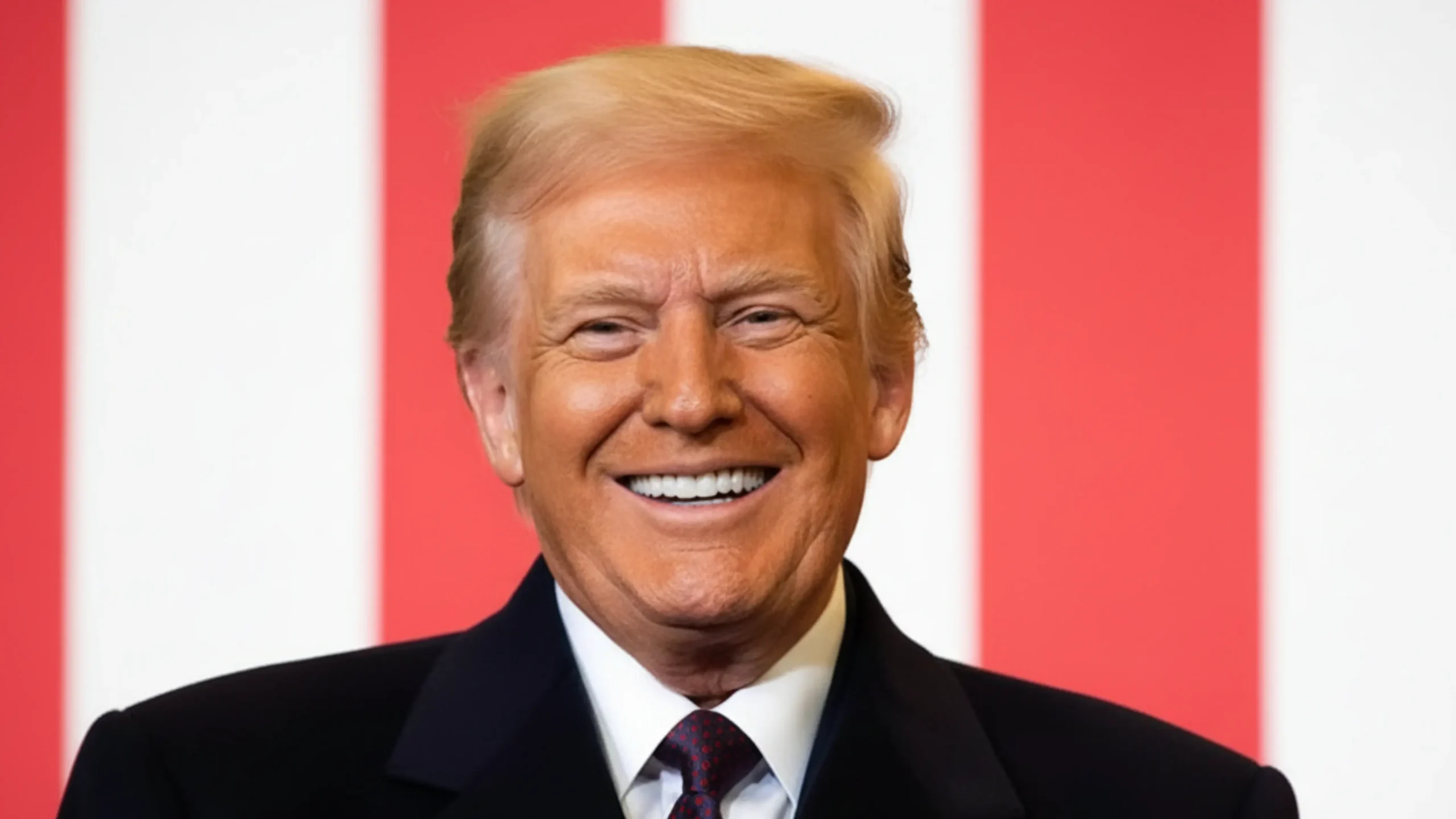
WASHINGTON — President Donald Trump declared Thursday that the federal government might soon collect so much cash from tariffs that income taxes could be slashed to zero within two years, leaving Americans to wonder whether their W-2s are about to become nostalgic collector’s items.
Speaking to U.S. troops via video call, the president delivered the fiscal bombshell with characteristic understatement: the tariff money, he said, would be “so large” that cutting income tax “completely” was suddenly on the table. Economists reached for their calculators, accountants reached for aspirin, and IRS employees reportedly began updating their résumés “just in case.”
The bold prediction rests on the administration’s belief that foreign countries — not American consumers — will cheerfully foot the entire tariff bill while simultaneously buying even more American goods. Recent data showing higher prices on everything from washing machines to soybeans was quietly filed under “fake news” or “temporary adjustment period.”
White House officials insist the revenue surge is imminent. One senior aide, speaking on condition of anonymity, said the plan is going so well that the Treasury is considering installing extra-large money bins à la Scrooge McDuck.
Meanwhile, the Supreme Court is preparing to rule on whether President Trump actually has the authority to impose sweeping tariffs under the 1977 emergency law he invoked. Legal experts note that Congress, not the president, traditionally handles taxation. The White House has already drafted a polite “Plan B” in case the justices disagree.
On a brighter note for shoppers, Trump expanded tariff exemptions for certain Brazilian goods, instantly making caipirinhas and flip-flops marginally less expensive. Grocery chains celebrated by lowering the price of frozen orange juice by three entire cents.
The president also revealed that Chinese President Xi Jinping “pretty much” promised to buy American farm products at warp speed following a “very good” phone call earlier this week. Trump accepted an invitation to visit Beijing in April and graciously offered Mar-a-Lago as the venue for Xi’s reciprocal trip, weather permitting.
In a rare moment of candor last week, Trump acknowledged that American consumers are indeed “paying something” for the tariffs. He quickly added that the pain would be short-lived because foreign nations would soon start writing very large checks directly to Uncle Sam out of sheer admiration for American negotiating prowess.
Wall Street reacted with its usual calm, with the Dow swinging 800 points in both directions before settling exactly where it started, as if nothing happened.
Treasury Secretary hopefuls have begun practicing their “no income tax” press conference faces, while the IRS website briefly crashed under the weight of citizens googling “Do I still need TurboTax if there’s no income tax?”
Democratic lawmakers, fresh from election wins powered by voter anger over grocery prices, called the proposal “mathematically adventurous.” Republicans called it “visionary.” Independent economists called it “a bold assumption about human behavior and trade flows.”
As the nation awaits both the Supreme Court decision and the promised tariff bonanza, Americans are left with one burning question: if income taxes really do disappear, who will we blame every April?





Leave a Reply