
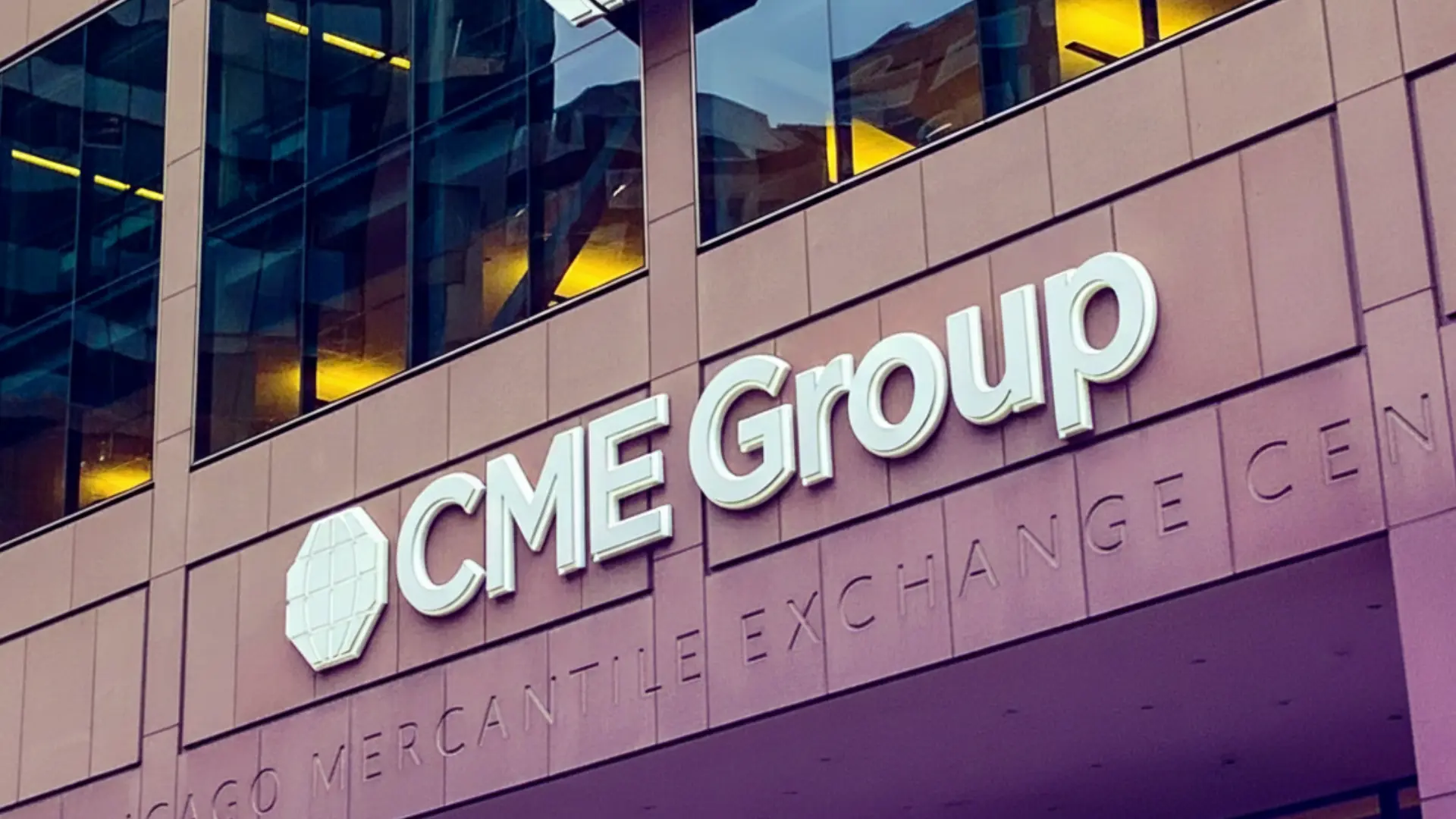
Chicago Mercantile Exchange halted all electronic futures and options trading for hours on Friday because its data center literally got too hot to handle.
Traders accustomed to moving billions with a click suddenly found themselves staring at frozen screens, experiencing the rare sensation of actual silence in dealing rooms. One Paris-based salesman described the feeling as “flying dark,” which is apparently finance-speak for realizing your multi-monitor cockpit just turned into expensive wallpaper.
Across the globe, gold quotes widened to Grand Canyon proportions, oil traders contemplated physical delivery of diesel they definitely didn’t have room to store, and options market-makers quietly removed every price from their screens like teenagers hiding report cards.
The notional $600 billion in S&P 500 options expiring that day now had all the hedging precision of throwing darts while wearing oven mitts.
The villain of the hour was a cooling system at a CyrusOne data center outside Chicago that decided Friday was the perfect day for an unscheduled vacation.
Engineers heroically restarted several chillers and wheeled in temporary cooling units, though they declined to promise when the machines would stop throwing a tantrum.
This outage has already outlasted the infamous 2019 glitch, proving that even financial infrastructure believes in sequel inflation.
Millions of contracts tracking everything from the S&P 500 to crude oil normally whirr around the clock on CME’s Globex platform. Today they took an unexpected snow day—without the snow.
In London, gold traders watched bid-ask spreads balloon to twenty times normal width, turning the safe-haven metal into the financial equivalent of shouting across a stadium.
Over in Malaysia, palm oil traders joined the party, because nothing says “global interconnectedness” like a Chicago air-conditioning failure ruining your breakfast spread futures.
US Treasury futures stopped dead, while European bond markets carried on trading like polite dinner guests pretending not to notice the host had passed out.
Foreign exchange platform EBS also caught the chill, leaving currency traders to discover prices the old-fashioned way: wild guessing.
Friday, of course, was the monthly contract rollover day. Countless traders now face the weekend holding positions they can neither adjust nor close, aging approximately ten years in ten minutes.
Gasoline and diesel futures expiring today carried the delightful threat of physical delivery. Somewhere a trader is measuring garage space for 42,000 gallons of unleaded.
Equity derivatives desks attempted creative hedging using ETFs and Euro Stoxx futures, achieving roughly the same accuracy as navigating Chicago with a map of Paris.
Market-makers simply vanished from screens faster than free samples at a grocery store. Clients asking for size were met with the gentle sound of crickets wearing noise-canceling headphones.
Liquidity fled to whatever alternative venues still worked, proving once again that money, like water, finds any available pipe when the main one freezes.
Remarkably, the outage struck the day after Thanksgiving, when US markets were already scheduled for a half-day. Traders briefly considered thanking the data center for the extra holiday hours.
With no US economic data or Fed speakers scheduled, the universe apparently decided to manufacture its own excitement via thermostat.
November had already delivered a 4.7% S&P 500 swoon followed by a heroic recovery. The index was one decent session away from erasing the entire monthly loss—until the machines demanded a dramatic pause.
CME Group, owner of the Chicago Board of Trade, NYMEX, and COMEX, watched its entire electronic empire reduced to a very expensive room heater.
Even the Gulf Mercantile Exchange, a CME stakeholder, sent out a notice blaming the same cooling issue, because solidarity in refrigeration failure is still solidarity.
CyrusOne remained unavailable for comment, presumably busy standing in front of large fans.






Leave a Reply