
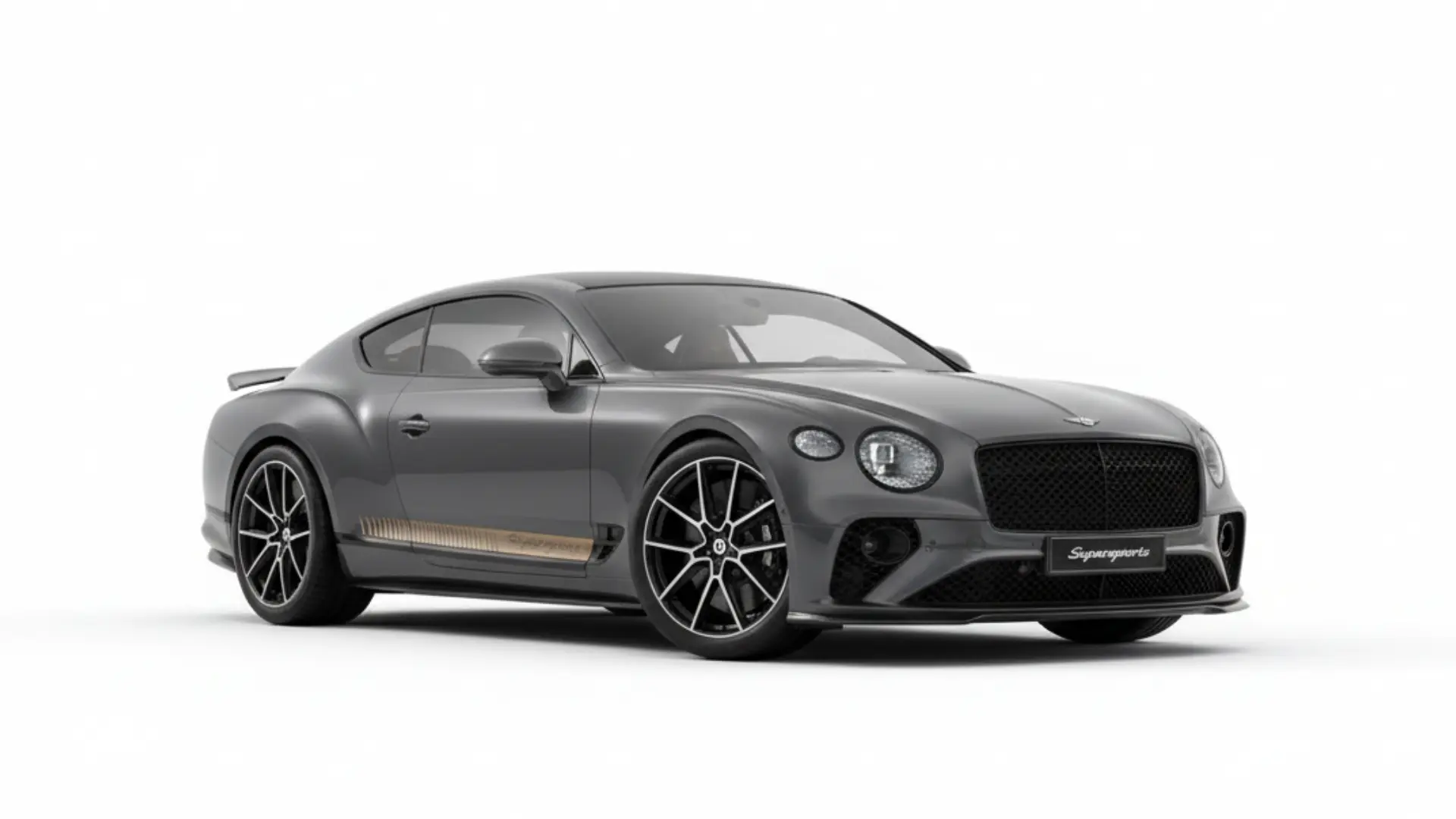
Bentley has birthed the Supersports, a featherweight beast of a coupe designed to lure thrill-seekers who grip their own steering wheels. Unveiled amid the hipster haze of New York City’s Chelsea district, this twin-turbo V8 rocket is rear-wheel drive only, hybrid-free, and poised to shatter the stereotype of Bentley’s buttoned-up brigade.
The ripple effects? Picture a seismic shift in luxury lanes: suddenly, the marque’s dusty drawing rooms are swapping crystal decanters for energy drinks, as younger drivers—armed with trust funds and TikTok tutorials—flood dealerships, leaving traditionalists clutching their pearls and plotting a comeback with even plusher armrests.
Sales might tickle last year’s numbers at a modest 1%, but with 500 units primed to vanish faster than a valet’s tip, Bentley’s coffers could swell like an overinflated ego, all while the economy plays coy with its uncertainty, forcing even tycoons to ponder if joyrides justify the jitters.
Last Thursday, the Supersports slinked onto the scene, a stripped-down evolution of the Continental GT that’s lighter than a politician’s promise and twice as exhilarating. Carbon fiber cloaks its frame like a supermodel’s gown, ensuring it corners with the grace of a gazelle on espresso.
Orders kick off in March 2026, with deliveries sauntering in during 2027—plenty of time for buyers to practice their victory laps in the driveway. Pricing? Bentley coyly hints at north of $350,000, a figure that buys not just horsepower, but enough bragging rights to fuel family feuds for generations.
Enter CEO Frank-Steffen Walliser, the Porsche pedigree transplant who’s steering Bentley toward a racier horizon. “We’re a driver’s brand,” he declared to Yahoo Finance, his words landing like a well-timed gear shift, emphasizing the marque’s hidden heritage of hoonigan hijinks beneath its posh veneer.
Walliser paraded the Supersports at Monterey for the old guard, those stalwarts who view speed as something best delegated to the help. To their credit, even these tweed-clad titans nodded approval, proving that even the most steadfast can be swayed by a whisper of 650 horses under the hood.
All 500 slots will evaporate upon launch, Walliser predicts, a “step change” that broadens Bentley’s appeal from cigar-chomping patriarchs to a kaleidoscope of clients. Young guns? Check. Female trailblazers? Absolutely. It’s as if the brand finally peeked at its own reflection and decided to flirt with the fun side of the family tree.
Yet the global gloom lingers like a bad aftershave. “Uncertainty rules,” Walliser sighed, pinpointing the U.S. wobbles, Europe’s equivalent of a collective hangover, and China’s leisurely trot. Still, he insists, the Supersports is the silver bullet—or turbocharger—that’ll pierce the malaise.
Bentley’s recent glow-up tells the tale: the entire fleet of Bentayga SUVs, Continental coupes, and Flying Spur sedans now hums on hybrid hearts, sans the Speed model’s optional gas-guzzler flex. This eco-ish pivot keeps the odometers spinning, with Q4 as the make-or-break sprint to match prior peaks.
Personalization remains the secret sauce, ballooning base prices from $210,000 for a Bentayga to stratospheric $2.1 million for rarities like the Batur. It’s customization on steroids, turning each Bentley into a rolling Rorschach test of the owner’s whims—diamond-encrusted dashboards, anyone?
Relief arrived via the U.S.-U.K. tariff truce, slashing import duties to 10% for the first 100,000 British beauties. Bentley halted U.S. shipments earlier this year but revved back in July, dodging the 15% sting that nips at Ferrari, Mercedes, Porsche, and BMW like fiscal mosquitoes.
For Bentley, this deal dangles a rare luxury: predictability in a world of wildcards. Walliser’s vision? A brand that doesn’t just pamper the elite but empowers them to punch the pedal, proving that even in choppy seas, a well-tuned engine can steer toward smoother shores.






Leave a Reply