
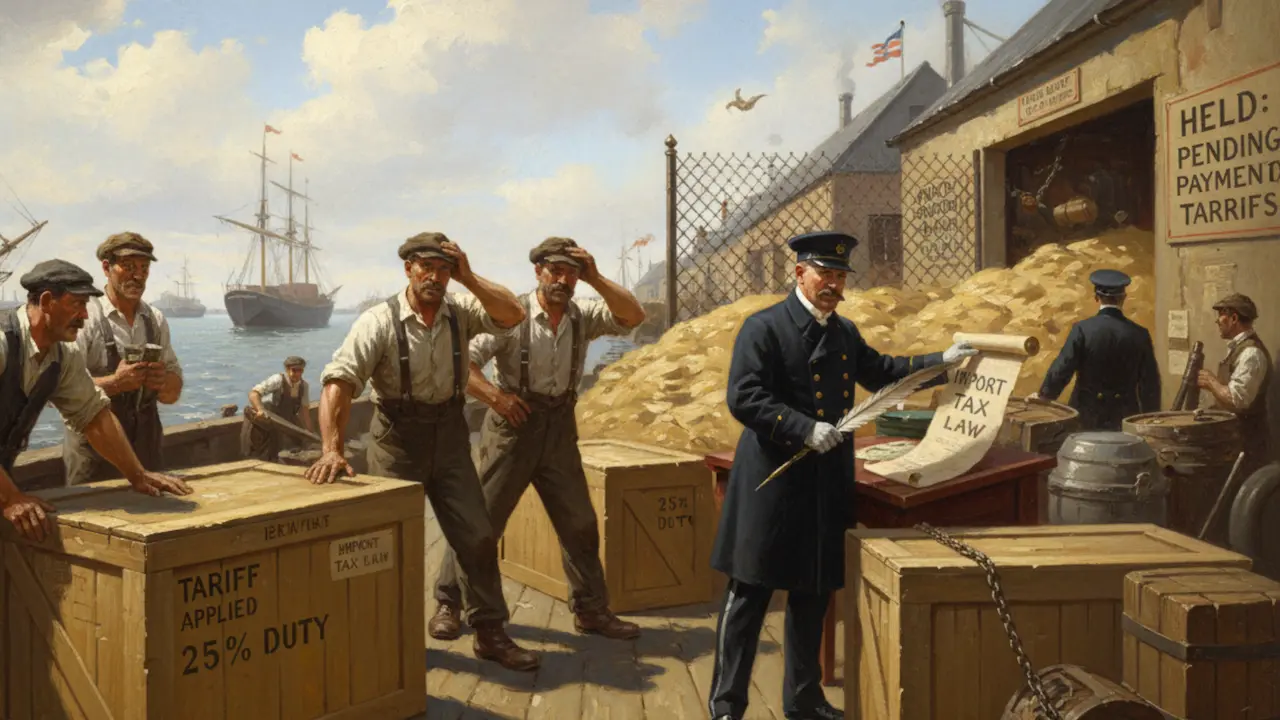
The Congressional Budget Office delivered a sobering reality check Thursday, announcing that President Trump’s tariffs will now shrink federal deficits by a mere $3 trillion through 2035, a full trillion dollars less than the rosy $4 trillion forecast issued just three months ago.
The downgrade arrived quietly in a blog post from CBO Director Phillip Swagel, who might as well have attached a frowny-face emoji for the White House staffers still printing “$2,000 Tariff Bonus Checks” mockups.
The impact hits hardest on ambitious fiscal promises. Those much-hyped $2,000 checks to every American household now face a funding gap roughly the size of the GDP of France, assuming anyone was seriously budgeting for them in the first place.
Grocery shoppers, meanwhile, are already reaping the benefits of the president’s recent mercy dashes. Coffee prices have begun sliding after duties on beans were eased, proving that nothing calms voter outrage like a cheaper morning jolt.
The CBO’s revised math reveals a delightful paradox. Tariffs designed to punish foreign exporters and fill government coffers have been quietly retreating whenever Americans notice higher prices at the checkout line.
Back in August, analysts calculated an 18 percentage point surge in the effective tariff rate. The new figure clocks in at a more modest 14 points, thanks largely to recent cuts on goods from China, the European Union, and Japan.
Auto parts received a reprieve. Lumber duties softened. Certain agricultural products suddenly found themselves welcomed like prodigal sons returning tariff-free.
Foreign exporters, it turns out, aren’t absorbing these costs with patriotic resignation. Many have simply lowered their prices, leaving fewer dollars flowing into Uncle Sam’s tariff piggy bank.
More goods than expected are slipping across the border duty-free, particularly from Mexico and Canada. The value of steel and aluminum embedded in imported products has also declined more than anticipated.
CBO economists now project $2.5 trillion in primary deficit reduction over the coming decade, plus $500 billion in saved interest payments. That’s down from August’s $3.3 trillion and $700 billion figures, respectively.
President Trump continues to insist tariff revenue will both mail out generous checks and whittle down the national debt. Observers note this claim predates the revisions and has grown only more optimistic since.
Recent tariff rollbacks followed public pressure over grocery costs. Beef and coffee duties were among the casualties, delivering immediate relief to consumers while shrinking projected revenue.
The CBO warns that further exemptions could materialize at any moment. Publicly announced exclusions were included in calculations, but history suggests more are always lurking.
A pending Supreme Court case threatens to upend key elements of presidential tariff authority. Refunds could even be ordered if the justices rule against the administration.
Trade experts remain skeptical of the remaining $3 trillion projection. Some argue the CBO still underestimates broader economic drag that could erode other tax revenues.
Director Swagel highlighted multiple uncertainties in his post. The president’s acknowledged flexibility to adjust rates on a whim makes decade-long forecasting feel somewhat like predicting tomorrow’s weather using a Magic 8-Ball.
For now, Americans enjoy lower coffee prices and modestly cheaper imports. The government enjoys slightly less revenue than hoped, but considerably more than if tariffs had stayed sky-high.
In Washington, where trillion-dollar swings are just another Thursday, budget planners have already begun sharpening their pencils for the next inevitable revision.






Leave a Reply