
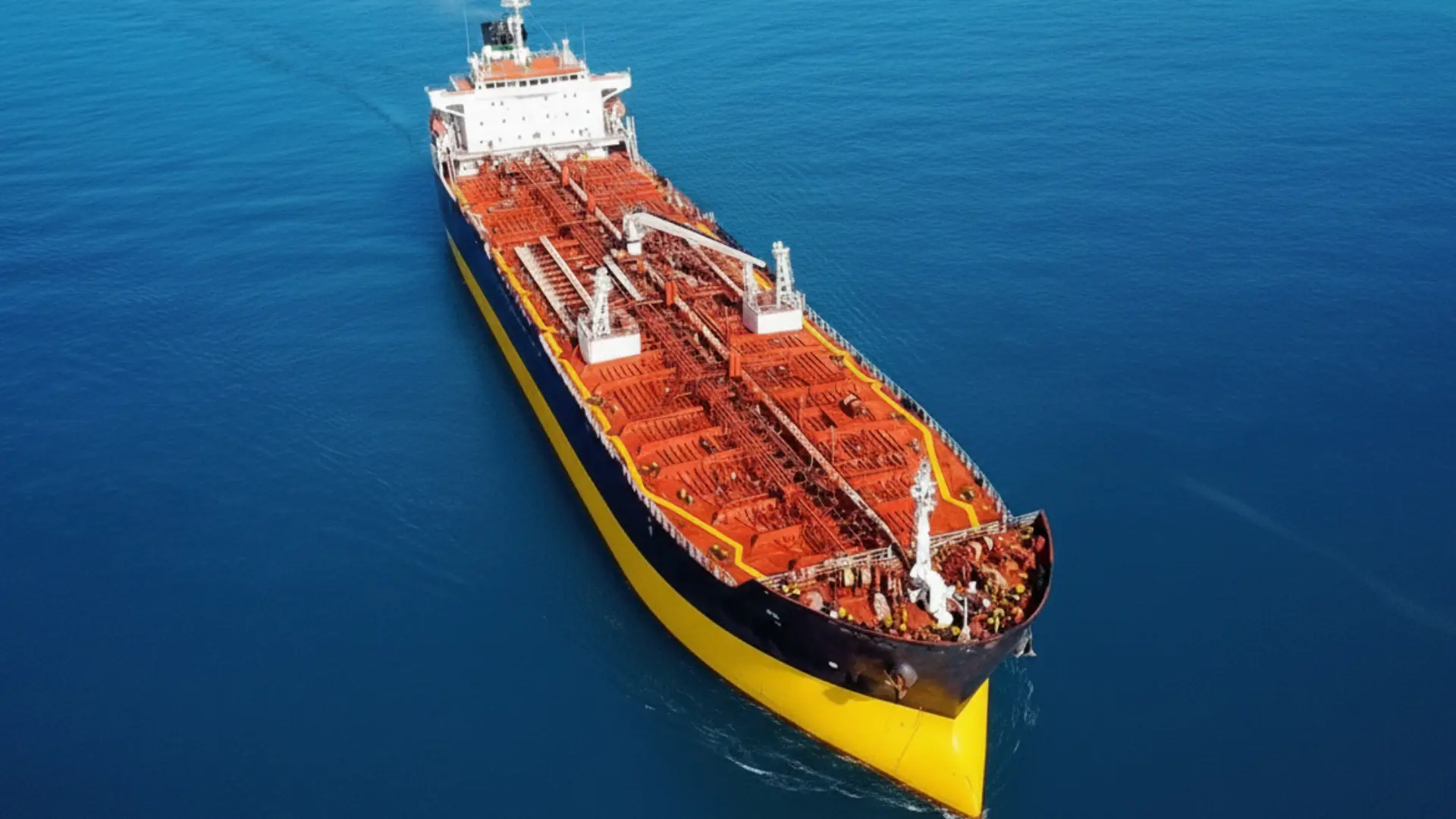
New US sanctions have left roughly 48 million barrels of Russian crude drifting aimlessly on tankers, forcing captains to play an expensive game of maritime hide-and-seek.
Oil traders are reportedly refreshing ship-tracking apps more often than their dating profiles. Freight rates from the Middle East to India have shot up to levels not seen since everyone still thought 2020 was going to be boring.
Meanwhile, the US Treasury has declared victory faster than a toddler finishing a participation-trophy race, pointing to widening discounts on Russian grades as proof the plan is working—because nothing says “success” like making someone else’s product cheaper for everyone except the intended buyer.
Washington’s latest sanctions package, which politely asked Rosneft and Lukoil to leave the global party, took effect Friday with all the subtlety of a foghorn at a library reading.
Almost immediately, fifty tankers woke up to discover their VIP invitations to India and China had been revoked.
Some captains simply turned their ships around mid-ocean, executing U-turns that would impress even the most jaded Uber driver.
The Spirit 2, carrying 730,000 barrels of Urals, performed a dramatic pirouette near the Suez Canal, lingered like it was waiting for a better offer, then sheepishly pointed itself back toward India over the weekend.
Its sister ship, the Furia, completed an even more theatrical loop in the Baltic Sea before deciding that, yes, India still sounded nice this time of year.
Other vessels have adopted a more mysterious lifestyle.
Cindy is currently cruising toward the waters off Singapore and Malaysia—the maritime equivalent of lingering outside a convenience store at 2 a.m. hoping someone needs a discreet transfer.
The Fortis, after a suspicious mid-ocean rendezvous off India and a sudden change of address from Ningbo, China, to Yeosu, South Korea, has clearly decided honesty is overrated on the high seas.
Russia continues pumping oil onto ships at a hearty 3.4 million barrels a day, demonstrating the same optimism as someone still cooking dinner for guests who texted “running late” three hours ago.
Analysts reassure everyone that the pain will be temporary—roughly three to four months—which in oil years is basically next Thursday.
Markets, displaying the emotional range of a caffeinated squirrel, have so far shrugged at the drama, keeping benchmark prices remarkably calm while dozens of tankers practice their best “nothing to declare” faces.
India, caught between its love of a good discount and its fear of American side-eye, has started booking Middle East tankers so frantically that shipping brokers are answering phones in their sleep.
China maintains its customary poker face, quietly calculating whether friendship with Moscow includes helping hide 770,000-barrel presents in international waters.
And somewhere in the South China Sea, a tanker captain is probably updating his résumé to include “professional loiterer” and “expert in creative destination labeling.”






Leave a Reply