
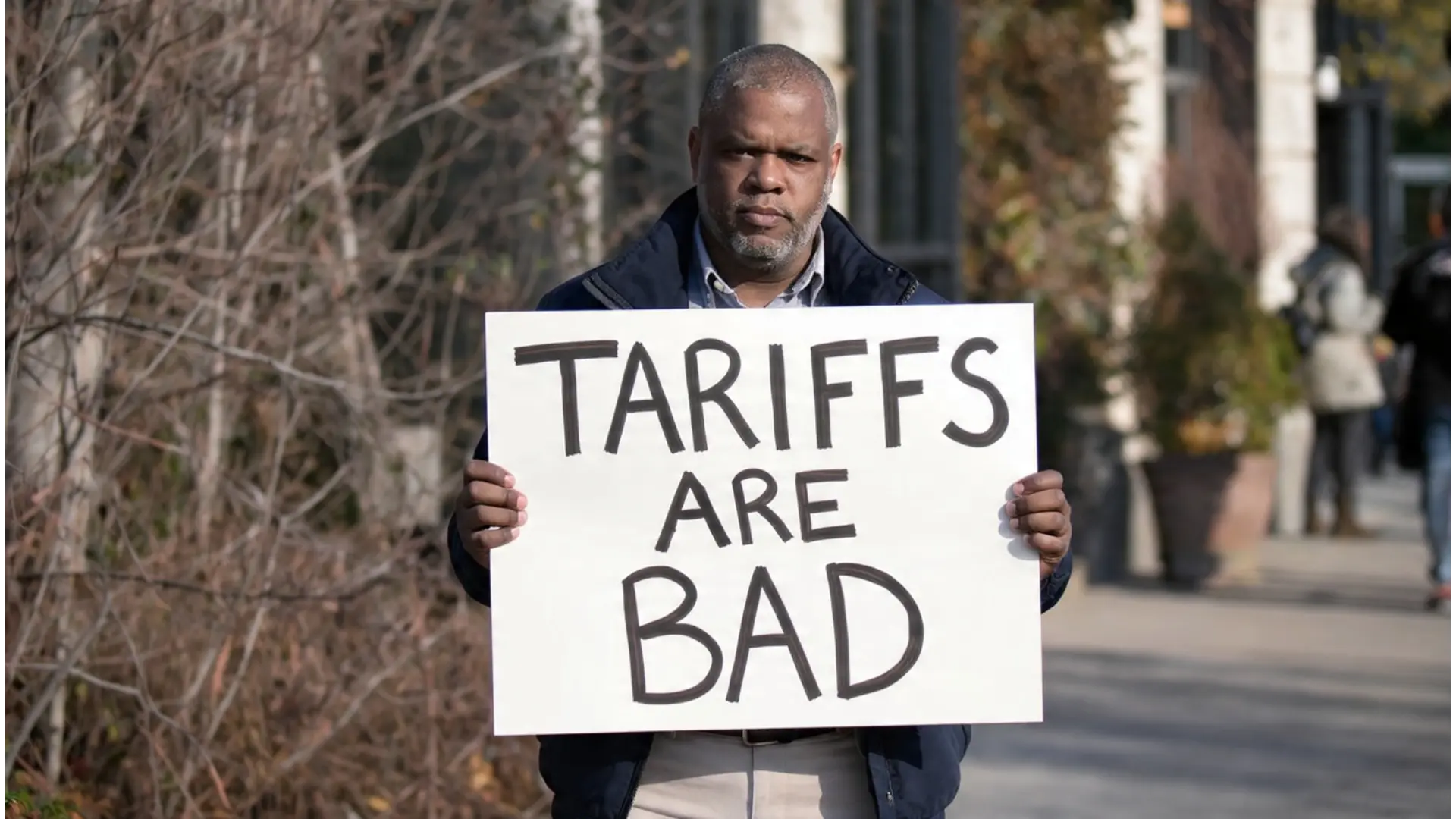
President Donald Trump announced this week that Americans of “moderate and middle income” can expect shiny $2,000 checks courtesy of the tariffs he loves almost as much as the checks themselves.
The president, speaking from the Oval Office, laid out the timeline with the calm certainty usually reserved for weather forecasts: dividends arriving “probably in the middle of next year or a little bit later,” followed, naturally, by paying down the national debt.
Tariff revenue for the just-ended fiscal year clocked in at a respectable $195 billion. The rest of the government, apparently unimpressed, managed to spend roughly ten times that amount.
Economists quickly performed the simple arithmetic and arrived at the same conclusion a kindergartener reaches when asked to share one cookie with thirty classmates.
A single round of $2,000 checks would cost an estimated $600 billion. That is, for the mathematically challenged, more than three times what the tariffs actually brought in.
The Committee for a Responsible Federal Budget gently pointed out that it would take about two years of tariff collections just to break even on one mailing.
Undeterred, the White House insists the plan will also reduce the national debt, a feat roughly equivalent to eating an entire cheesecake and expecting to lose weight because the fork was very small.
Republican lawmakers, fresh from passing what they affectionately call the One Big Beautiful Bill earlier this year, suddenly discovered fiscal religion when faced with another potential budget buster.
Many on Capitol Hill are reportedly practicing their concerned eyebrow raises in the mirror.
Treasury Secretary Scott Bessent, in a masterful display of diplomatic translation, suggested the “dividend” might simply be the tax cuts Republicans already love, just rebranded with better marketing.
Policy analyst Terry Haines of Pangaea Policy told clients the checks are “very likely,” citing Trump’s proven ability to turn campaign applause lines into actual legislation.
He apparently typed that note before double-checking the addition.
Critics note the delicious awkwardness of Republicans potentially mailing stimulus checks after spending years insisting Democratic stimulus checks caused inflation.
Some GOP strategists are already workshopping the phrase “good stimulus” versus “bad stimulus.”
The Cato Institute’s Scott Lincicome summed up academic sentiment in one devastating sentence: the plan fails on mathematical, economic, and legal grounds.
He delivered that verdict with the weary tone of a man explaining for the thousandth time that rain is, in fact, wet.
Markets, meanwhile, remain calmly schizophrenic—pricing in both massive tax cuts and the faint possibility that Americans might actually receive checks signed with presidential Sharpie.
For now, middle-income families are advised to keep an eye on their mailboxes sometime “in the middle of next year or a little bit later,” whenever that turns out to be.
And perhaps start saving for the higher prices those same tariffs are expected to bring.




Leave a Reply