
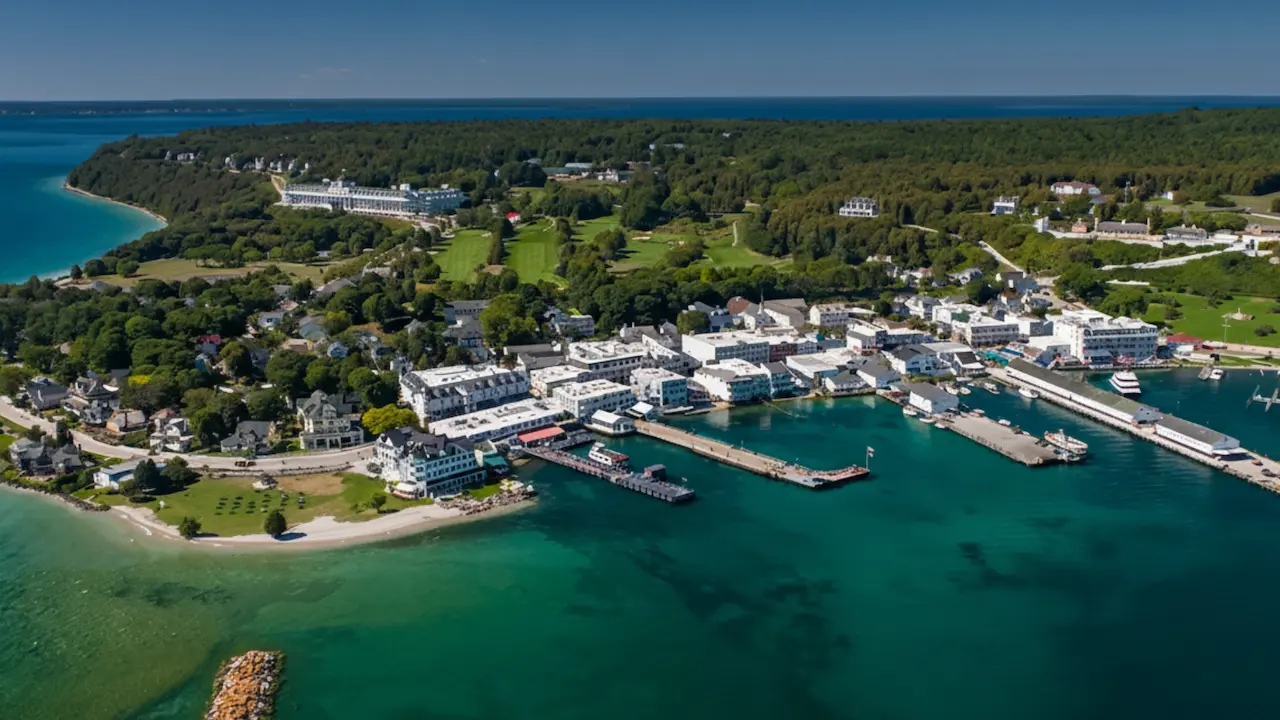
In the shadow of Detroit’s roaring assembly lines, where the automobile was born and bred, lies an island that treats cars like unwanted party crashers—banned since a single backfire sent equines into a full-blown equine panic in 1898.
Mackinac Island, a pint-sized 3.8-square-kilometer haven in Lake Huron, hums along with 600 residents, zero motorized vehicles, and enough horses to make a traffic jam feel like a medieval joust.
The ban started small, a village vote to soothe spooked steeds, then galloped island-wide by 1900, turning what could have been a gridlock nightmare into a symphony of clip-clops.
Today, these noble beasts haul fudge tourists, tote FedEx parcels, and even whisper sweet nothings to garbage bins, proving that in the car capital of the world, sometimes four legs beat four wheels for sheer charm.
Urvana Tracey Morse, owner of a craft shop hawking scrimshaw and sparkly baubles on the main drag, sums it up with equine elegance: “Horse is king here.”
She pedaled over from college curiosity in 1990 and never looked back, trading exhaust fumes for the daily delight of biking through whispering woods, where every downhill glide feels like cheating gravity with a side of serenity.
Summer swells the island’s population by a million ferry-hopping souls, all clamoring for the village’s legendary fudge—sweet enough to make dentists weep and dieters defect.
These visitors ditch their sedans for 1,500 rental bikes or horse-drawn taxis, pedaling past 70 miles of trails where geese honk like impatient cabbies and owls screech like faulty brakes, reminding everyone that nature’s got the sound effects department locked down.
But Mackinac isn’t just a nostalgic joyride; it’s layered like a seven-layer dip of history. Indigenous Anishinaabe communities fished and hunted here for millennia, dubbing it Michilimackinac—”place of the great turtle”—for its limestone bluffs poking up like a prehistoric prank from the waves.
Eric Hemenway, an Anishinaabe historian reviving these roots, calls it a sacred spot with 3,000-year-old burial sites, where the straits between Huron and Michigan serve as the Midwest’s original superhighway—minus tolls and tailgaters.
British forts followed in 1780, complete with cannon blasts that probably startled more than a few fish, and post-1812, the U.S. claimed it all, turning officer’s quarters into living museums where costumed guides fire replicas that echo like overzealous fireworks.
Hemenway’s triumph? The 2021 Mackinac Island Native American Museum at Biddle House, where he beams seeing fellow Natives uncover their story amid the tourist tide. “This is our story,” he says, peeling back the candy-coated layers to reveal a place that’s equal parts playground and pantheon.
By the late 1800s, Gilded Age tycoons from Chicago and Detroit swapped stock tickers for seaside siestas, flocking to unwind in waters clearer than a CEO’s conscience.
The Grand Hotel, a 138-year-old behemoth with the world’s longest porch—perfect for porch-sitting marathons without the sprint to parallel park—still dazzles with individually fancified rooms, evoking an era when “roughing it” meant lace doilies on the duvet.
Michigan Governor Gretchen Whitmer recently trotted out a cheeky X post, pitching the island as HBO’s next White Lotus lair for season four—because nothing says luxury drama like scheming socialites dodging horse apples.
Urvana Morse chuckles at the notion, proud yet protective: “You’re proud of where you live, but I kind of don’t want to tell people how cool it is here.” Wise words from a woman who knows overtourism could turn clip-clops into cattle calls.
Eighty percent state park, the island lures hikers to Arch Rock, a 50-foot limestone marvel that arches like it’s forever bowing to admirers. Circle the 8.5-mile perimeter trail by bike or boot, ogling the Mackinac Bridge from afar—America’s mightiest suspension span, a steel giant humbled by pebble beaches and whispering woods below.
Winter quiets the frenzy, with ice floes playing ferry blockade like a grumpy bouncer, stranding the hardy few. Yet 20 to 30 horses stick around, loyally looping trash routes and package drops, their breath fogging the chill like loyal steam engines in fur coats.
Hunter Hoaglund of Arnold Freight, ferry vets since 1885, ships in seasonal herds each April—200 to 300 strong—via trucks that arrive like equine Uber Eats, ensuring the island’s pulse never fully pauses.
For year-rounders like Morse, who two-wheels nine months strong, the car-free creed is catnip. “I just love getting on my bike and coming down through the trees—it sets me for the day,” she says, where every pedal stroke sparks hellos like confetti. Bikes rule the roost, but horses steal the show, their hoofbeats a time machine ticket that whispers, “Slow down, speed demon—life’s too short not to savor the scenic route.”
In a nation addicted to acceleration, Mackinac proves you can rev up joy without a single revving engine, one fudge-smeared, horse-hauled smile at a time.






Leave a Reply